ISO 14001 and Its Impact on Environmental Sustainability in India
ISO 14001 and Its Impact on Environmental Sustainability in India helps businesses improve compliance, reduce waste, and grow sustainably.
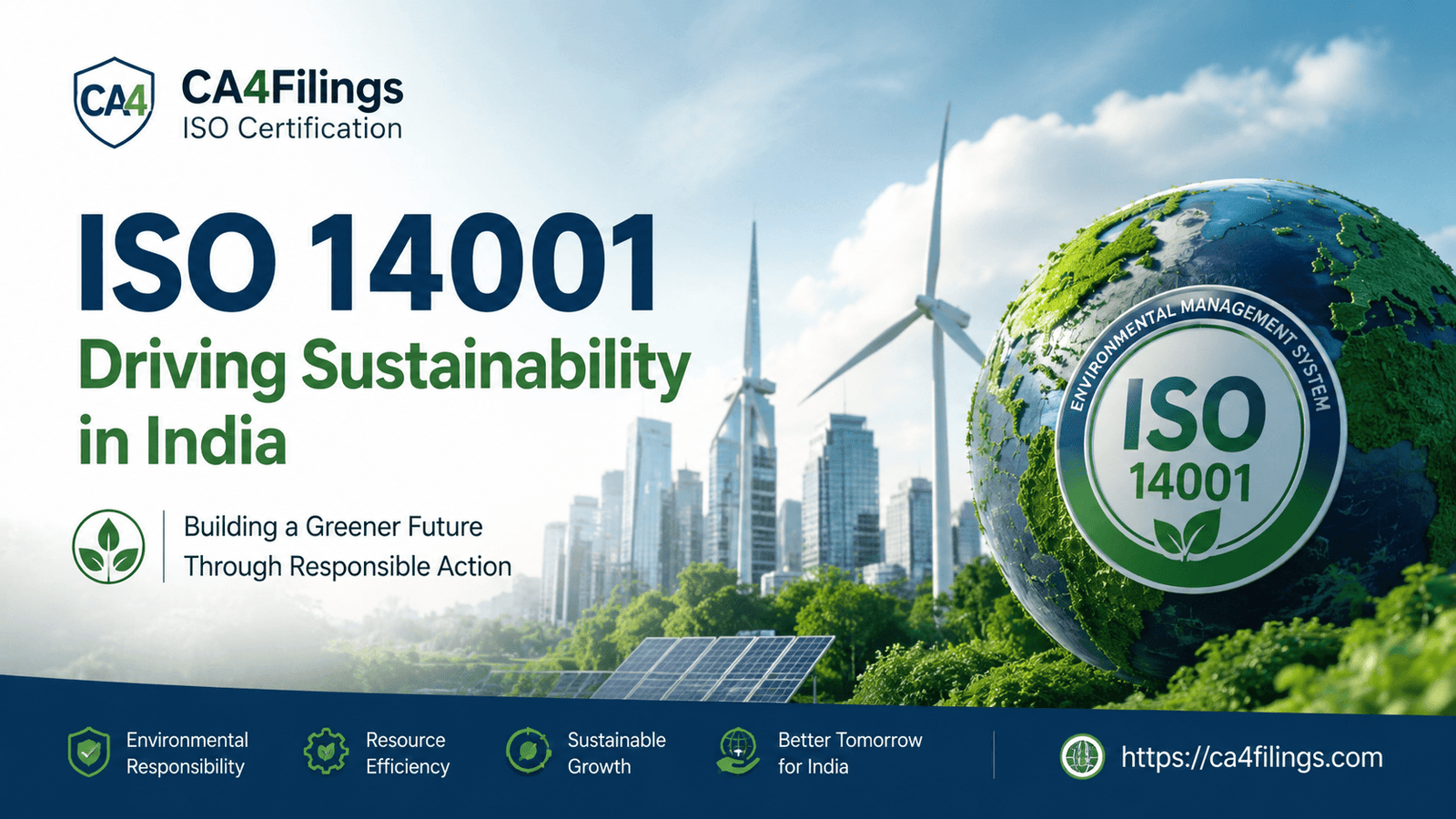
Environmental sustainability is no longer just a global concern; it has become a business necessity in India. With rising environmental regulations, growing customer awareness, and increasing pressure from investors, Indian businesses are actively adopting sustainable practices. This is where ISO 14001 and Its Impact on Environmental Sustainability in India becomes highly relevant for companies of all sizes.
At CA4Filings, we have observed that businesses adopting environmental management systems not only improve compliance but also gain a strong market reputation. Companies seeking ISO Certification are now focusing on ISO 14001 to build environmentally responsible operations while improving efficiency and profitability.
Understanding ISO 14001
ISO 14001 is an internationally recognized standard for Environmental Management Systems (EMS). It provides a framework that helps businesses identify, monitor, manage, and reduce their environmental impact.
The standard is designed to help organizations:
- Minimize pollution
- Reduce waste generation
- Improve energy efficiency
- Ensure legal compliance
- Promote sustainable business practices
ISO 14001 applies to manufacturing units, service providers, exporters, construction companies, logistics firms, and even small businesses.
Why ISO 14001 Matters for Indian Businesses
The discussion around ISO 14001 and Its Impact on Environmental Sustainability in India has become important because India is experiencing rapid industrial growth. While development creates economic opportunities, it also increases environmental challenges such as:
- Air pollution
- Water contamination
- Industrial waste
- Carbon emissions
- Excessive resource consumption
Government authorities are introducing stricter environmental regulations, and businesses that fail to comply may face penalties, legal issues, and reputational damage.
ISO 14001 helps organizations create a structured approach to environmental responsibility while maintaining operational efficiency.
ISO 14001 and Its Impact on Environmental Sustainability in India
Reducing Industrial Pollution
One of the biggest advantages of ISO 14001 and Its Impact on Environmental Sustainability in India is pollution control. Industries such as chemicals, textiles, pharmaceuticals, and manufacturing generate significant environmental waste.
ISO 14001 encourages companies to:
- Monitor emissions regularly
- Control hazardous waste
- Improve wastewater treatment
- Reduce harmful environmental practices
For example, many Indian manufacturing units have reduced water pollution by implementing better waste management systems under ISO 14001 guidelines.
Promoting Efficient Resource Utilization
India faces resource shortages in water, electricity, and fuel. ISO 14001 helps businesses optimize resource usage through systematic planning.
Organizations can:
- Reduce electricity consumption
- Minimize raw material wastage
- Improve recycling practices
- Lower fuel usage
This not only supports environmental sustainability but also reduces operational costs.
Improving Legal Compliance
Environmental laws in India are becoming stricter every year. Businesses must comply with regulations issued by authorities such as:
- Central Pollution Control Board (CPCB)
- State Pollution Control Boards
- Ministry of Environment, Forest and Climate Change
ISO 14001 helps organizations maintain proper documentation, monitoring systems, and compliance procedures. This reduces the risk of legal penalties and business interruptions.
Key Benefits of ISO 14001 for Businesses in India
Enhanced Brand Reputation
Consumers today prefer environmentally responsible businesses. Companies certified under ISO 14001 often gain a stronger reputation among customers, investors, and stakeholders.
A business that demonstrates sustainability practices is more likely to attract:
- International clients
- Government projects
- Corporate partnerships
- Eco-conscious consumers
Better Export Opportunities
Many international buyers prefer suppliers with environmental certifications. Indian exporters in sectors like textiles, food processing, and engineering often require ISO 14001 certification to compete globally.
ISO 14001 and Its Impact on Environmental Sustainability in India is particularly significant for export-oriented companies aiming to enter European and North American markets.
Cost Savings Through Waste Reduction
Businesses often assume sustainability increases costs. In reality, ISO 14001 helps reduce unnecessary expenses.
Companies save money by:
- Lowering energy bills
- Reducing material waste
- Preventing environmental fines
- Improving process efficiency
Over time, these savings can significantly improve profitability.
Employee Awareness and Participation
ISO 14001 encourages employee involvement in environmental practices. Staff members become more conscious about waste management, energy conservation, and workplace sustainability.
This creates a positive organizational culture focused on responsibility and continuous improvement.
Industries Benefiting from ISO 14001 in India
Manufacturing Sector
Manufacturing companies benefit greatly from environmental management systems due to high resource consumption and waste generation.
Construction Industry
Construction firms use ISO 14001 to manage:
- Dust pollution
- Construction waste
- Noise control
- Resource utilization
IT and Service Sector
Even service-based businesses adopt ISO 14001 to improve energy efficiency, reduce paper usage, and promote green office practices.
Logistics and Transportation
Transportation companies implement ISO 14001 to optimize fuel usage and reduce carbon emissions.
Steps to Implement ISO 14001
Businesses planning to adopt ISO 14001 can follow these practical steps:
Step 1: Conduct Environmental Assessment
Identify environmental risks and operational impacts within the organization.
Step 2: Develop Environmental Policies
Create clear sustainability objectives aligned with business operations.
Step 3: Train Employees
Employees should understand environmental responsibilities and compliance procedures.
Step 4: Implement Monitoring Systems
Track environmental performance regularly using measurable indicators.
Step 5: Conduct Internal Audits
Regular audits help identify gaps and improve environmental practices.
Step 6: Certification Audit
An accredited certification body evaluates the organization before issuing ISO 14001 certification.
Challenges Businesses Face While Implementing ISO 14001
Although ISO 14001 offers several benefits, businesses may face some initial challenges.
Lack of Awareness
Small businesses often lack understanding of environmental management systems.
Initial Investment
Implementing environmental controls may require initial investment in technology and training.
Documentation Requirements
Maintaining proper records and compliance documentation can be time-consuming.
However, with expert guidance from professionals like CA4Filings, businesses can simplify the entire certification process.
Government Support for Environmental Sustainability in India
The Indian government is encouraging industries to adopt environmentally responsible practices through various initiatives and regulations.
Programs promoting:
- Renewable energy
- Waste reduction
- Sustainable manufacturing
- Green business practices
are creating strong demand for ISO 14001 certification across industries.
This further strengthens the importance of ISO 14001 and Its Impact on Environmental Sustainability in India in today’s business environment.
Future of ISO 14001 in India
The future of environmental sustainability in India depends heavily on responsible business operations. As ESG (Environmental, Social, and Governance) standards become more important, ISO 14001 will continue to play a major role.
Businesses adopting ISO 14001 today are likely to gain long-term advantages such as:
- Better investor confidence
- Stronger market position
- Improved operational efficiency
- Higher customer trust
Environmental responsibility is no longer optional; it is becoming a critical factor for sustainable business growth.
FAQs on ISO 14001 and Its Impact on Environmental Sustainability in India
What is ISO 14001?
ISO 14001 is an international standard for Environmental Management Systems that helps organizations reduce environmental impact and improve sustainability practices.
Who should apply for ISO 14001 certification?
Manufacturers, exporters, service providers, construction firms, logistics companies, and small businesses can all apply for ISO 14001 certification.
Is ISO 14001 mandatory in India?
ISO 14001 is not legally mandatory, but many industries adopt it to improve compliance, business reputation, and global competitiveness.
How long does ISO 14001 certification take?
The timeline depends on the size and complexity of the organization. Generally, certification may take a few weeks to several months.
Does ISO 14001 help reduce business costs?
Yes. ISO 14001 improves operational efficiency by reducing waste, saving energy, and minimizing environmental penalties.
ISO 14001 and Its Impact on Environmental Sustainability in India is becoming increasingly important as businesses focus on sustainability, compliance, and long-term growth. Companies adopting ISO 14001 not only contribute to environmental protection but also improve efficiency, customer trust, and profitability.
At CA4Filings, we help businesses simplify the ISO certification process with expert guidance, proper documentation support, and end-to-end assistance. If you are planning to build a sustainable and compliant business, now is the right time to move toward ISO 14001 certification with CA4Filings.
Latest Updates
ca4filings.com Services


























-registration.png)