Avoiding Brand Conflicts: Pre-Start Up Registration Name Availability Checks
Avoid costly brand disputes with start up registration name availability checks. Learn how to verify company names, trademarks, and domains before launch.
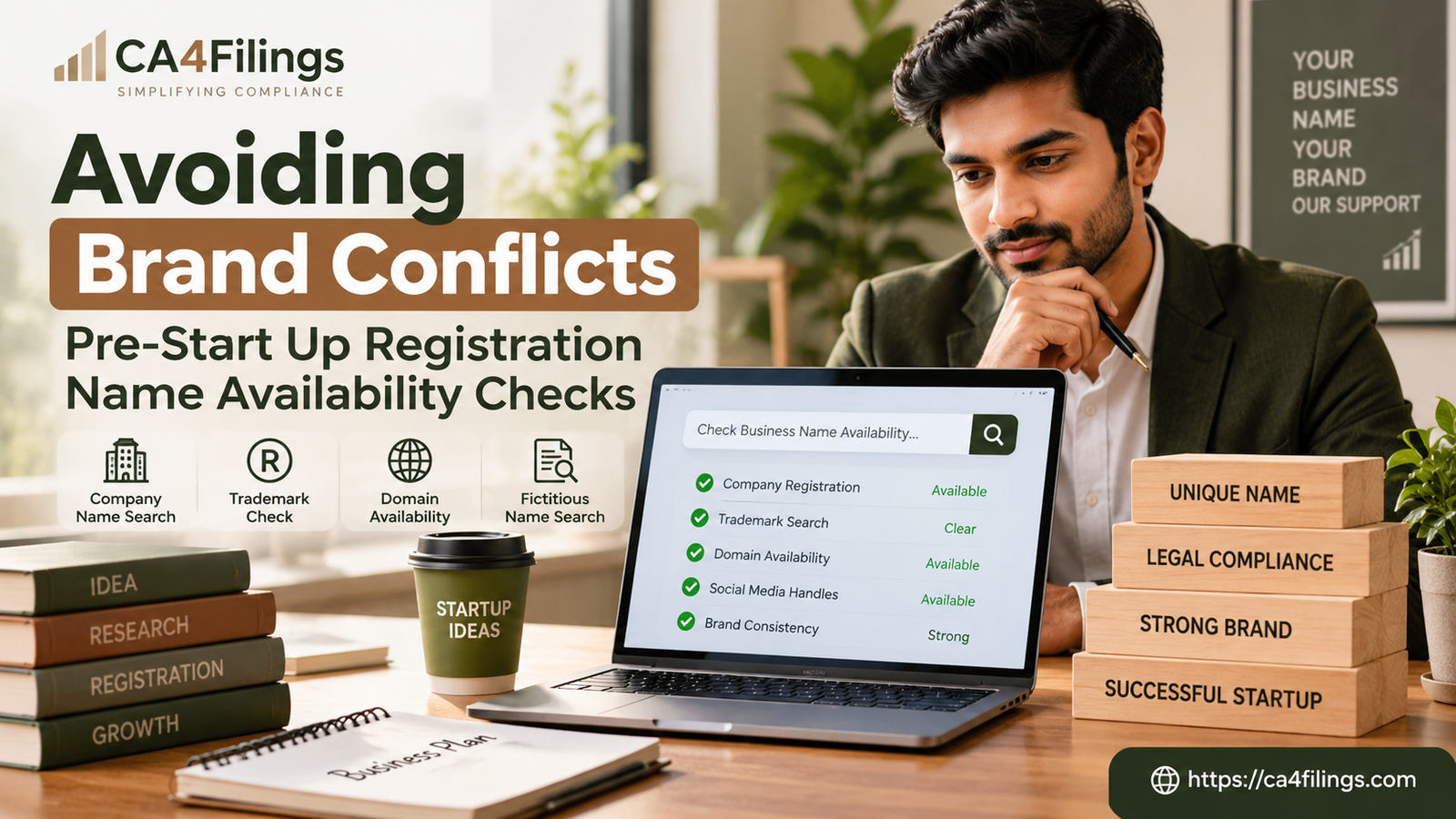
Why Name Availability Matters Before Start Up Registration
Choosing a business name is one of the most exciting steps when starting a new venture. It reflects your vision, builds customer trust, and creates the foundation of your brand identity. However, a name that sounds unique may already belong to another company or be protected under trademark law. This is why checking name availability before start up registration is essential for every aspiring entrepreneur.
Many founders focus on product development, funding, and marketing but overlook the legal risks associated with their proposed business name. A conflict discovered after launch can lead to rebranding expenses, customer confusion, legal notices, and unnecessary delays. Before proceeding with Company Registration, it is important to confirm that your proposed name is suitable for legal registration and does not infringe upon existing brand rights.
At CA4Filings, we recommend treating name verification as an early business priority rather than a last-minute compliance task. A few careful checks can help you protect your investment and establish a stronger foundation for long-term growth.
Why Name Availability Checks Are Important for Start Up Registration
A business name must do more than sound attractive. It should also meet applicable legal requirements and be distinguishable from existing businesses and protected trademarks.
In India, companies and Limited Liability Partnerships (LLPs) must follow the applicable naming rules administered through the Ministry of Corporate Affairs (MCA). A proposed name may be rejected if it is identical or too similar to an existing company or LLP, or if it violates other applicable naming requirements.
Consider an entrepreneur who wants to register a technology company called “BrightNova Solutions Private Limited.” If a similar company name already exists, the proposed name could face objections during the approval process. Even if the name is approved for incorporation, that approval does not automatically establish trademark ownership or eliminate the risk of infringement.
Proper checks before start up registration help entrepreneurs:
Reduce the likelihood of name rejection.
Identify potential trademark conflicts early.
Avoid unnecessary incorporation and rebranding expenses.
Build a distinctive identity in the marketplace.
Maintain consistent branding across websites, social media, and business documents.
Step-by-Step Guide to Checking Name Availability Before Start Up Registration
1. Search Existing Company and LLP Names
Begin with the MCA portal, where entrepreneurs can check existing company and LLP names. Review businesses operating in the same industry, along with names that use similar words, spellings, or combinations.
Do not limit your search to an exact match. For example, “GreenLeaf Organics” and “Green Leaf Organic Products” may appear different at first glance but could create confusion depending on the circumstances.
Prepare at least two or three alternative names before submitting an application. This gives you flexibility if the preferred option is unavailable.
2. Conduct a Trademark Availability Search
Company name approval and trademark clearance are separate exercises. A name may be available for incorporation but still conflict with an existing trademark.
Use the official Indian Trade Marks Registry search facility to identify registered trademarks and relevant pending applications. Search for:
Exact names and word combinations.
Similar spellings and phonetic variations.
Alternative spacing and plural forms.
Relevant trademark classes covering your goods or services.
The trademark electronic search system is a useful term often associated with the United States Patent and Trademark Office's search resources. However, businesses operating in India should prioritise the Indian Trade Marks Registry database for Indian trademark clearance.
For example, a startup selling skincare products should examine relevant trademarks in the applicable goods category, rather than assuming that a name is safe simply because no company with that exact name appears in the MCA records.
3. Check Domain Availability and Social Media Handles
Your online identity is just as important as your legal business name. Before finalising your name, check whether the preferred domain is available, particularly a suitable .in or .com address.
Also review the availability of matching social media usernames on platforms relevant to your target customers.
A business called “UrbanNest Interiors” may find that its preferred domain is already used by another interior design business. Choosing a slightly different name at this stage may be easier than changing the brand after launching advertisements and attracting customers.
Check for:
Domain availability across relevant extensions.
Similar websites operating in your industry.
Matching social media handles.
Existing brands with confusingly similar identities.
Remember that domain availability alone does not establish trademark rights or guarantee that using the name is legally safe.
4. Review Other Business Name Databases Where Relevant
For businesses expanding into international markets, additional checks may be necessary. For example, the secretary of state database in the United States can help identify business entities registered in a particular state.
Similarly, a fictitious name search may be relevant when researching assumed business names or trade names in certain US jurisdictions.
These searches are not substitutes for Indian regulatory checks. They are useful when your startup plans to enter overseas markets, establish foreign subsidiaries, or serve customers under a different trading name.
5. Evaluate the Name for Legal and Commercial Risks
Once the initial searches are complete, assess whether the proposed name is genuinely distinctive.
Ask yourself:
Is it too similar to a competitor's name?
Does it contain restricted or regulated expressions?
Could customers mistake the business for an established brand?
Is the name suitable for future products and services?
Can the brand maintain consistency across markets and digital channels?
Distinctive names are generally easier to identify and protect than names consisting entirely of common industry terms. If a potential conflict appears, seek professional advice before investing further in the brand.
Common Mistakes to Avoid During Start Up Registration
Even careful founders can overlook important details. The following mistakes deserve particular attention.
Assuming MCA approval means trademark clearance: Approval of a company name does not automatically provide exclusive trademark rights.
Checking only exact matches: Similar-sounding names, abbreviations, translations, and alternative spellings may also create conflicts.
Ignoring existing unregistered businesses: Depending on the circumstances, prior use and other legal rights may matter even when a trademark is not registered.
Registering a domain without further checks: Purchasing a domain does not guarantee the right to use the corresponding name commercially.
Finalising marketing materials too early: Printing packaging, launching paid campaigns, or signing promotional contracts before clearance can increase the cost of changing your brand.
At CA4Filings, we advise founders to complete these checks before committing substantial resources to a proposed identity.
A Practical Checklist Before Finalising Your Startup Name
Use this checklist before moving ahead with start up registration:
Search the MCA database for existing company and LLP names.
Review relevant trademarks through the Indian Trade Marks Registry.
Investigate similar names, spellings, and pronunciations.
Check domain availability and social media handles.
Review relevant foreign business databases if expanding internationally.
Prepare alternative names in case objections arise.
Obtain professional guidance if a potential conflict is identified.
Ensure that the final name supports long-term brand consistency.
Completing these steps does not guarantee approval or eliminate every legal risk, but it provides a more informed basis for making your decision.
Latest Updates
ca4filings.com Services

















-registration.png)