Startup Registration Secrets: How Tech Founders Protect Intellectual Property Early On
Share post:
Learn how startup registration helps tech founders protect IP early through agreements, trademarks, patents, copyrights, and legal setup.
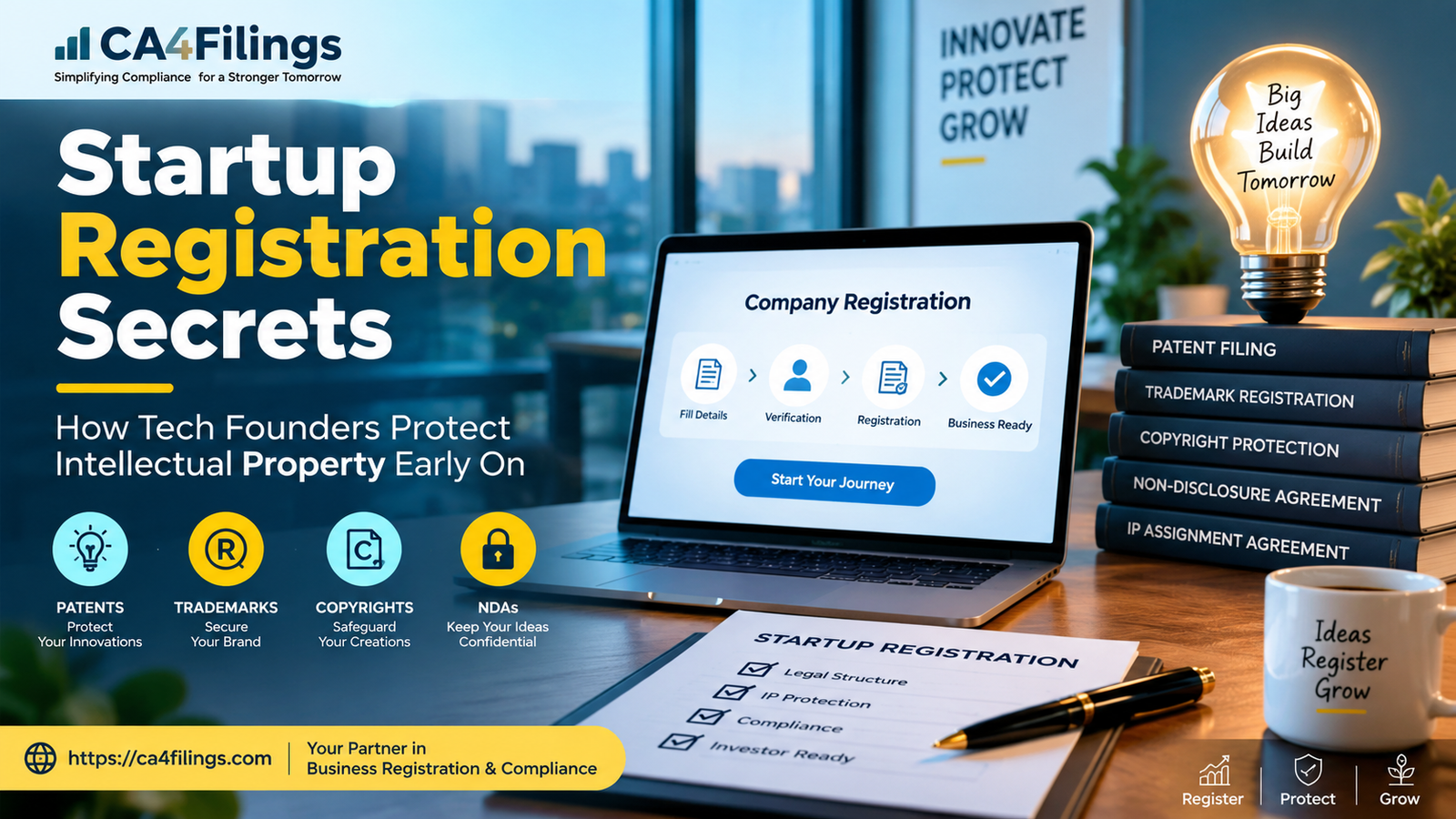
Why Startup Registration Matters for Tech Founders
For a technology founder, the most valuable asset may not be the office, laptop, or even the initial revenue—it could be the code, algorithm, brand, design, database, or business idea developed behind the scenes. That is why startup registration should be viewed as more than a compliance exercise. It is the foundation for building ownership, credibility, and legal protection around the business. If you are setting up a new venture, completing Company Registration early can also make it easier to establish clear ownership of the intellectual property created by the founders and team.
A common mistake is to think about intellectual property only after the startup receives funding or becomes successful. In practice, that can be too late. Investors, customers, employees, and potential acquirers may all want clarity about who owns the technology. A proper startup registration process, combined with an early legal tech setup, helps avoid these disputes.
Startup Registration Should Begin With IP Ownership
Before writing complicated agreements, founders should answer one simple question: Who owns the intellectual property?
Suppose two founders develop a SaaS platform together. One writes the backend, while the other creates the user interface and business model. Later, the company hires a developer who contributes significant code. If ownership was never documented, questions can arise about whether the intellectual property belongs to the individuals or the company.
During startup registration, founders should therefore establish a clear structure for transferring business-related intellectual property to the company.
Create an IP Assignment Agreement
An ip assignment agreement is particularly important for technology startups. It can document the transfer of rights in intellectual property created by founders, employees, consultants, or contractors.
The agreement should clearly cover relevant work such as:
- Source code and software architecture
- Website and application designs
- Technical documentation
- Algorithms and processes
- Business-related inventions
- Databases and original content
- Logos and creative material developed for the business
This becomes especially useful when the startup later approaches investors. An investor may conduct due diligence and ask whether the company actually owns the technology it claims to own.
Use a Non-Disclosure Agreement Before Sharing Sensitive Information
Technology founders often discuss their products with developers, agencies, potential partners, consultants, and investors. Not every conversation needs secrecy, but genuinely confidential information should be handled carefully.
A non-disclosure agreement (NDA) can establish obligations regarding confidential information shared with another party.
What Should an NDA Cover?
Depending on the situation, it may address:
- Product roadmaps
- Source code
- Technical specifications
- Customer information
- Pricing strategies
- Unreleased features
- Business plans
- Proprietary processes
An NDA does not automatically give a startup ownership of someone else's work. Its primary purpose is to establish confidentiality obligations and define how protected information can be used.
For founders, this is one of the relatively simple steps that can strengthen the startup's overall legal tech setup.
Trademark Registration Protects the Brand
A technology product can be built in months, but its brand may become valuable over many years. Founders should therefore consider trademark registration at an early stage.
Your startup name, product name, logo, or distinctive branding can become commercially important as the business grows.
Before investing heavily in a name, founders should consider:
- Conducting a trademark search.
- Checking whether similar marks already exist.
- Selecting the appropriate trademark class.
- Filing the application where appropriate.
- Maintaining records of ownership and usage.
For example, imagine a founder launches an app under a distinctive name and spends ₹10 lakh on marketing. Six months later, they discover that a similar trademark already belongs to another business. Rebranding at that stage could be expensive and disruptive.
This is why startup registration and brand protection should be considered together rather than as completely separate activities.
Patent Filing: Protecting Genuine Technical Innovation
Not every startup idea can be patented. However, some technology businesses develop inventions that may qualify for patent protection under applicable Indian law.
Patent filing can be relevant where the startup has developed a patentable invention rather than simply a business concept.
Founders should consider discussing the following with a qualified patent professional:
- What exactly has been invented?
- Is the invention new?
- Does it involve an inventive step?
- Is it capable of industrial application?
- Has the invention already been publicly disclosed?
One important practical point is timing. Founders should avoid casually publishing detailed technical information before taking appropriate professional advice on patent protection.
A founder who posts the complete technical mechanism of a potentially patentable invention online may create unnecessary complications.
Copyrighting Software: Don't Ignore the Code
Software startups sometimes focus heavily on patents and trademarks while overlooking copyright protection.
Copyrighting software can be relevant to the original expression contained in computer programs, including source code, subject to applicable law.
However, simply registering a company does not automatically establish that every piece of code belongs to the company. Ownership documentation still matters.
For example, if a freelance developer writes an application's core code, the startup should not simply assume that payment of the development fee settles every intellectual-property question. Appropriate contractual provisions should clearly address ownership and permitted use.
Startup Registration and Employee IP Protection
Founders often protect their own contributions but forget about employees.
Imagine a startup hires a software engineer who develops a major feature during employment. If the company's employment documentation does not properly address intellectual-property ownership, the business may later face uncertainty about the rights associated with that work.
A sensible documentation framework can include:
- Employment agreements
- Confidentiality provisions
- IP assignment clauses
- Invention-related provisions where applicable
- Access and data-security policies
- Exit and handover procedures
The objective is not to create unnecessary paperwork. It is to ensure that everyone understands who owns business-created intellectual property and how confidential information should be handled.
A Practical Startup Registration IP Checklist
Founders can use this simple checklist while setting up their business:
Step 1: Identify Your Intellectual Property
Make a list of everything valuable created by the founders and team.
Include:
- Brand names
- Logos
- Software
- Designs
- Documentation
- Inventions
- Databases
- Proprietary processes
Step 2: Establish Ownership
Determine whether each asset belongs to an individual founder, employee, contractor, or the company.
Where necessary, execute suitable assignment documents.
Step 3: Protect Confidential Information
Use NDAs and internal confidentiality procedures when sensitive information is shared.
Step 4: Evaluate Trademark Protection
Search and consider trademark registration for important brands before significant commercial investment.
Step 5: Evaluate Patent Protection
If the startup has developed a potentially patentable invention, obtain professional advice before public disclosure and consider patent filing where appropriate.
Step 6: Document Software Ownership
For internally developed or outsourced software, maintain appropriate contracts and records addressing ownership and usage rights.
Step 7: Maintain an IP Register
Keep a central record containing:
- IP description
- Owner
- Creation date
- Assignment documents
- Registration details
- Renewal deadlines, where applicable
- Supporting contracts
This simple habit can make future due diligence considerably easier.
Common IP Mistakes Tech Founders Should Avoid
Even after startup registration, founders can make mistakes that weaken their IP position.
Some common examples include:
- Using a brand name without checking existing trademarks.
- Hiring freelancers without clear IP clauses.
- Sharing confidential technical details without appropriate safeguards.
- Assuming company incorporation automatically transfers founder-owned IP.
- Delaying documentation until investors arrive.
- Failing to maintain records of who created particular assets.
- Copying third-party code without checking licence conditions.
The earlier these issues are addressed, the easier it generally is to keep the company's legal records organised.
FAQs About Startup Registration and Intellectual Property
Is startup registration enough to protect my intellectual property?
No. Company incorporation establishes the legal entity, but IP protection generally requires separate measures such as contracts, trademark protection, copyright-related registration where useful, or patent protection where applicable.
Should founders sign an IP assignment agreement?
Where founders have created intellectual property that is intended to belong to the company, appropriate assignment documentation can help establish clear ownership and reduce future disputes.
Is trademark registration necessary for every startup?
Not necessarily. However, startups building a valuable brand should consider trademark protection early, particularly before investing heavily in marketing.
Can software be protected through copyright?
Original computer programs can receive copyright protection under applicable law. The exact scope and ownership depend on the circumstances, including how and by whom the software was created.
When should a startup think about IP protection?
Ideally, IP planning should begin alongside startup registration, rather than after the business has already accumulated significant value.
Conclusion: Make Startup Registration Part of Your IP Strategy
For technology founders, startup registration is only the beginning. The real objective is to build a business where ownership of software, inventions, branding, designs, and confidential information is properly understood and documented.
An ip assignment agreement, non-disclosure agreement, trademark registration, patent filing, and appropriate approach to copyrighting software can each play a role depending on the startup's circumstances.
At CA4Filings, we help entrepreneurs approach startup registration with the bigger picture in mind—business structure, documentation, compliance, and practical legal preparedness. If you're launching a technology venture, getting the foundation right early can save considerable time, cost, and uncertainty as your startup grows.
Build your startup on a stronger foundation with CA4Filings. Start your registration and compliance journey with professional guidance today.
Latest Updates
ca4filings.com Services


























-registration.png)




Call Now