How to Respond to Form ASMT-10: Scrutiny Notice for Return Mismatches
Received Form ASMT-10? Don't panic. Learn how to respond to GST scrutiny notices for mismatches and ensure smooth gst filing with expert CA guidance.
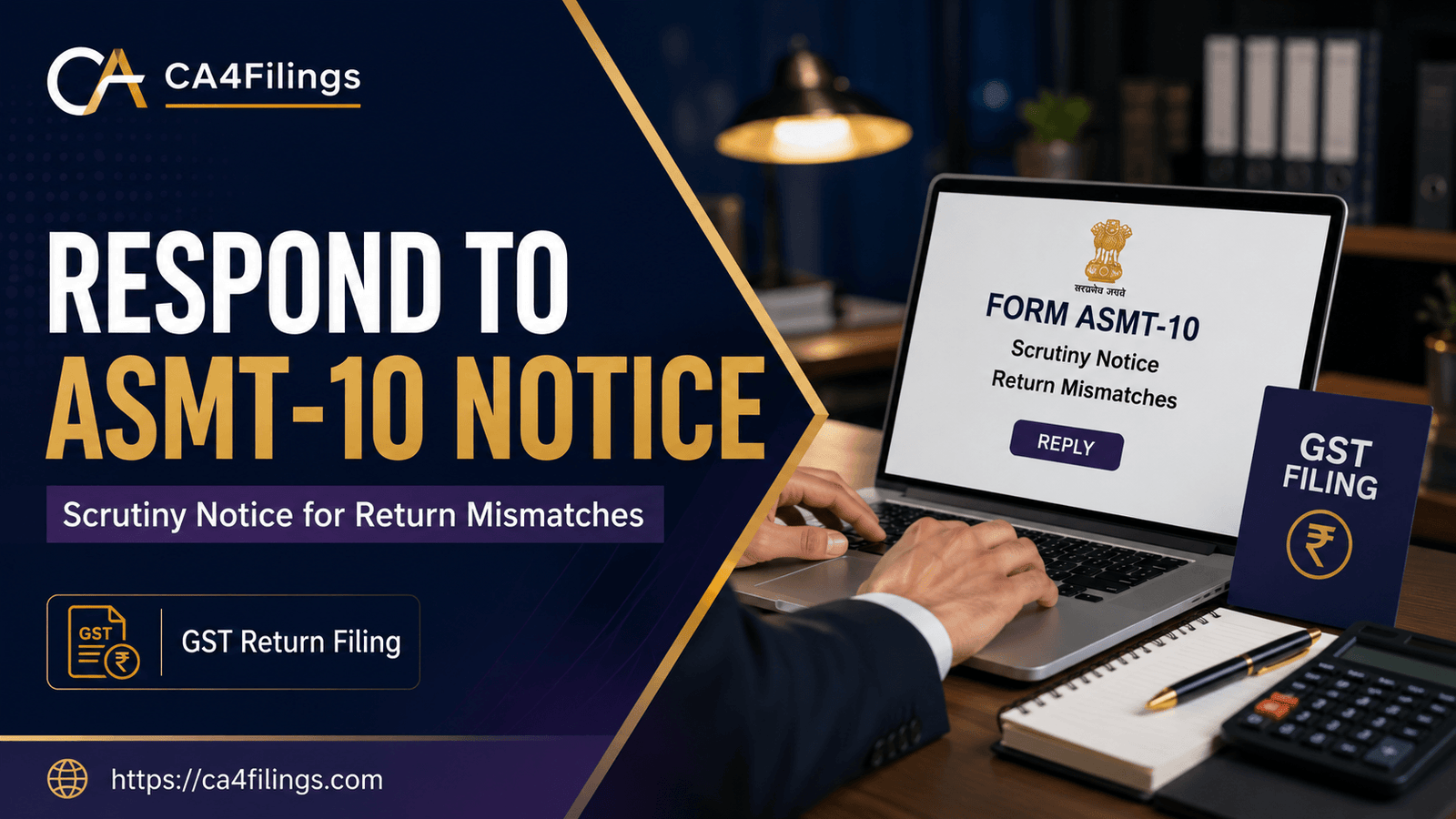
Receiving a notice from the GST department can be a nerve-wracking experience for any taxpayer. If you have logged into the portal and found a Form ASMT-10 waiting for you, please take a deep breath. It is not necessarily an indication of fraud or a massive tax liability; it is often a routine system-generated inquiry triggered by mismatches in your data. At CA4Filings, we help hundreds of businesses stay compliant, and we have seen that most scrutiny issues arise from simple clerical errors during regular GST Return Filing. By understanding the process, you can resolve these discrepancies efficiently and maintain a clean track record for your ongoing gst filing obligations.
Understanding Form ASMT-10
Form ASMT-10 is a notice issued by the proper officer under Section 61 of the CGST Act. Essentially, the system has identified a discrepancy between the data you declared in your returns and the data available in the GST network (such as GSTR-1, GSTR-3B, and GSTR-2A/2B).
Common triggers for these notices include:
Mismatch in Input Tax Credit (ITC) claimed versus what reflects in your GSTR-2B.
Differences in outward tax liability reported in GSTR-1 and GSTR-3B.
Non-payment of tax on reverse charge mechanism (RCM) supplies.
Under-reporting of exempt or zero-rated supplies.
The Strategy: How to Respond Effectively
When you receive this notice, you have 30 days to respond. Silence is not an option, as it may lead to an assessment order under Section 62 or Section 63, which could result in unnecessary interest and penalties. Here is the step-by-step approach we recommend at CA4Filings.
1. Perform a Thorough Reconciliation
Before drafting your reply, conduct a deep dive into your books of accounts. Compare your ledgers with the GST portal data. Often, the mismatch is just a timing difference or a document uploaded in the wrong tax period. Prepare a detailed matching charts presentation to visualize where exactly the gaps exist. This makes it significantly easier for the tax officer to understand your position.
2. Gather Your Tax Difference Defense Documentation
Evidence is your best friend. Do not simply write a letter saying "I am correct." You must attach supporting documents, such as:
Purchase invoices for disputed ITC.
Bank statements showing payments made to vendors.
Certificates from vendors confirming they have paid the tax.
Reconciliation statements explaining the specific reason for the mismatch.
This tax difference defense documentation serves as the backbone of your reply. If you can prove that the tax has already been paid or that the ITC claim is genuine, the officer is highly likely to drop the proceedings.
3. Drafting the Response
When you draft your reply, maintain a professional and objective tone. You should use a formal explanation letter template that clearly states the notice reference number, the specific observation made by the officer, and your point-by-point rebuttal. Avoid overly emotional language; keep it focused on the facts and the legal provisions of the GST Act.
Navigating the Reply Portal Workflow
The reply portal workflow is relatively straightforward, but it must be followed precisely. Once you have prepared your reconciliation and documentation:
Log in to the GST portal using your credentials.
Navigate to Services > User Services > View Additional Notices/Orders.
Click on "View" against the relevant ASMT-10 notice.
Select the "Replies" tab.
Upload your formal response and all supporting annexures in PDF format.
Digitally sign the submission using an EVC or DSC.
Once submitted, the officer will review your documents. If they are satisfied, they will issue Form ASMT-12, which marks the closure of the scrutiny proceedings for that period.
Frequently Asked Questions
What happens if I ignore the ASMT-10 notice?
Ignoring the notice is the worst course of action. The officer will assume the discrepancy is admitted and may proceed to issue a show-cause notice (SCN) or finalize the tax demand along with interest and hefty penalties.
Can I rectify my returns instead of filing a reply?
In some cases, if the error is genuine, you may choose to pay the tax along with interest and rectify the return. However, it is always advisable to consult a CA before making any payments, as you want to ensure the liability is genuine.
Is it necessary to hire a CA for this?
While you can file a response yourself, a CA can help you identify subtle issues that might lead to future notices. We ensure that your response is legally sound and minimizes your tax exposure.
How long does the scrutiny process take?
Generally, after you submit your reply, the officer reviews it. If further clarification is needed, they may call you for a personal hearing. The process usually concludes within a few weeks to a couple of months depending on the complexity of the case.
Expert Assistance from CA4Filings
Managing notices while keeping up with the constant changes in gst filing requirements can be overwhelming. At CA4Filings, we specialize in simplifying tax compliance for businesses of all sizes. Whether you are struggling with a complex reconciliation or need help drafting a strong response to Form ASMT-10, our team is here to assist.
Latest Updates
ca4filings.com Services



























-registration.png)