The Role of a Section 8 Company in Promoting Social Welfare
Discover the role of a Section 8 Company in promoting social welfare. Learn how this legal entity fosters positive change for community development.
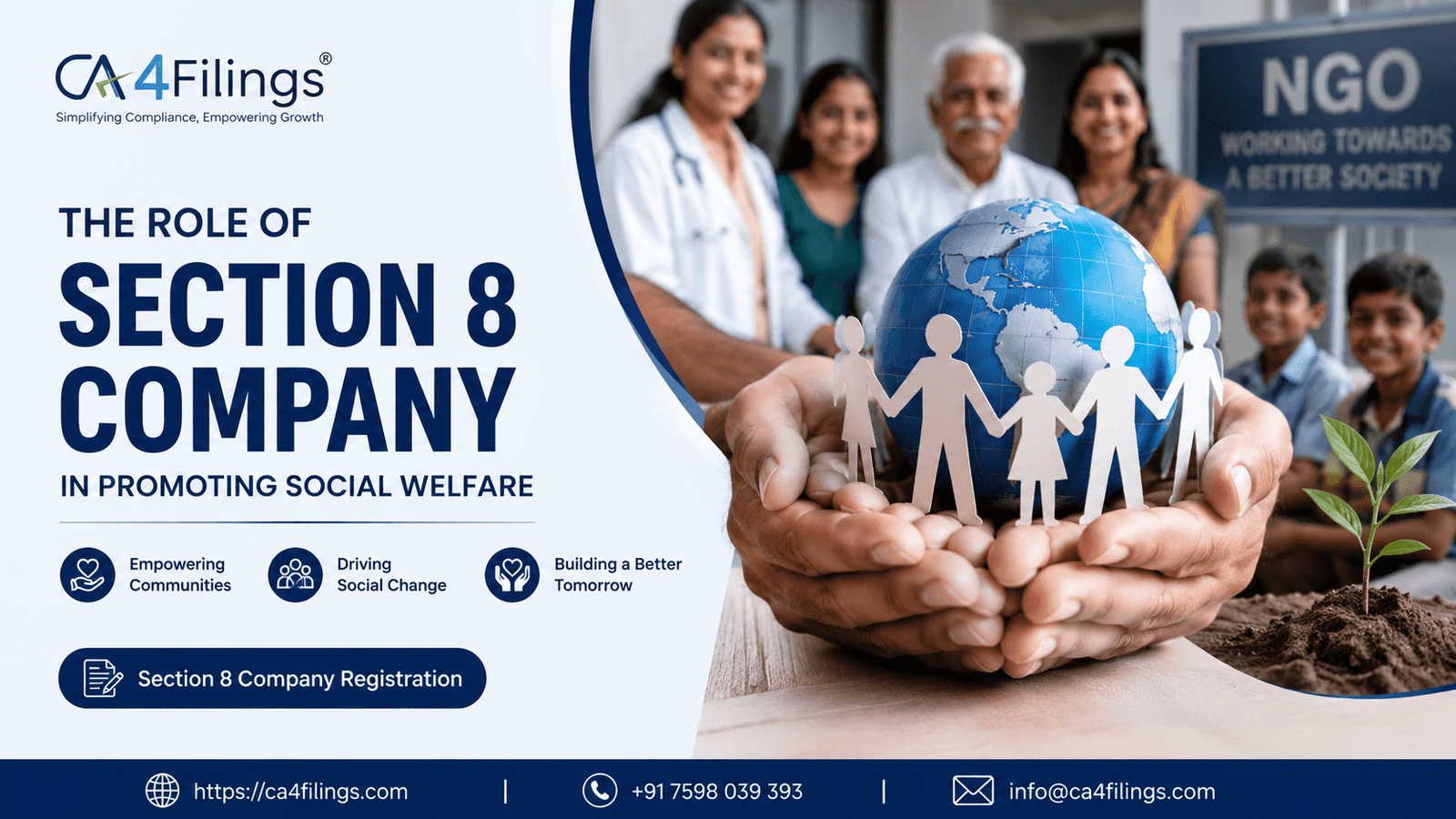
Running a business is often about profits, but many entrepreneurs today are driven by a deeper purpose—to give back to society. If you are passionate about making a difference, you might be considering a non-profit organization to formalize your vision. At CA4Filings, we often advise clients that the most robust way to structure a mission-driven organization in India is through a Section 8 Company. Understanding The Role of a Section 8 Company in Promoting Social Welfare is essential for anyone looking to turn their philanthropic passion into a structured, sustainable reality. If you are ready to take the first step, our team provides seamless Section 8 Company Registration support to help you navigate the legalities with ease.
Understanding the Legal Structure of a Section 8 Company
When we discuss the nonprofit sector in India, people often confuse a trust or a society with a company limited by guarantee. However, a Section 8 Company is unique. It is a legal entity specifically designed to promote commerce, art, science, sports, education, research, social welfare, religion, charity, or any other useful object.
Unlike traditional commercial businesses, these entities are strictly prohibited from paying dividends to their members. Every rupee of profit generated must be reinvested back into the organization to ensure it continues promoting social welfare. This legal framework provides immense credibility, which is vital when you are engaging in community service or seeking donors to fund your social impact projects.
How Section 8 Companies Drive Positive Change
The Role of a Section 8 Company in Promoting Social Welfare is multifaceted. Because it is governed by the Companies Act, 2013, it operates with a level of transparency and corporate governance that many trusts and societies lack. Here is how these entities foster societal benefits:
Professionalism: With strict compliance requirements, these companies are managed with high levels of accountability.
Scalability: Because it is a corporate entity, it can attract large-scale funding, including from Corporate Social Responsibility (CSR) initiatives.
Perpetual Succession: The organization exists independently of its founders, ensuring that your social welfare initiatives continue long after you have moved on.
The Impact on Community Development and Philanthropy
When we assist clients at CA4Filings, we see firsthand how these organizations act as catalysts for community development. Whether it is setting up a vocational training center for rural youth, running a healthcare clinic in an underserved area, or spearheading environmental awareness campaigns, the impact is tangible.
By focusing on serving the community, these entities bridge the gap between resources and those who need them most. Philanthropic activities are no longer just ad-hoc donations; they become organized, strategic efforts. When a Section 8 company operates, it doesn’t just provide a one-time service; it creates a framework for sustainable, long-term improvement in the lives of the people they serve.
Corporate Social Responsibility and Section 8 Companies
One of the most significant advantages of this structure is its synergy with the corporate world. Many large corporations look for credible charity organization partners to implement their CSR mandates. Because a Section 8 company maintains rigorous standards, it becomes an ideal partner for positive change.
When an organization is dedicated to promoting social welfare, it can easily demonstrate its track record to corporate partners. This partnership model allows for larger, more impactful projects that would be difficult to fund through individual contributions alone. This is where the true power of scaling lies—connecting corporate resources with the on-the-ground expertise of the nonprofit sector.
FAQs About Section 8 Companies
What is the primary purpose of a Section 8 Company?
The primary purpose is to promote non-profit objectives like art, charity, social welfare, or science, with all profits reinvested into those activities.
Is it difficult to manage the compliance for these companies?
While there are compliance requirements, they ensure your organization is trusted. At CA4Filings, we simplify the process so you can focus on serving the community.
Can a Section 8 Company accept foreign donations?
Yes, but you must register under the Foreign Contribution (Regulation) Act (FCRA) to legally accept foreign funds for your social welfare initiatives.
How does this differ from a Trust?
A Section 8 Company offers better legal recognition, corporate-level transparency, and a more structured management hierarchy compared to a traditional Trust.
Partner with CA4Filings for Your Vision
Embarking on the journey of promoting social welfare is a noble endeavor. However, the legal landscape can be complex. You need a partner who understands both the regulatory requirements and the heart behind your mission. At CA4Filings, we are committed to helping you establish a firm foundation. Whether you are launching a new charity organization or restructuring an existing project, our expertise ensures you can focus entirely on the positive change you wish to bring to the world. Contact us today, and let’s work together to make your vision a reality.
Latest Updates
ca4filings.com Services





















-registration.png)