LLP Registration for Startups: A Comprehensive Guide
LLP Registration for Startups made simple with this comprehensive guide covering benefits, process, compliance, and expert tips.
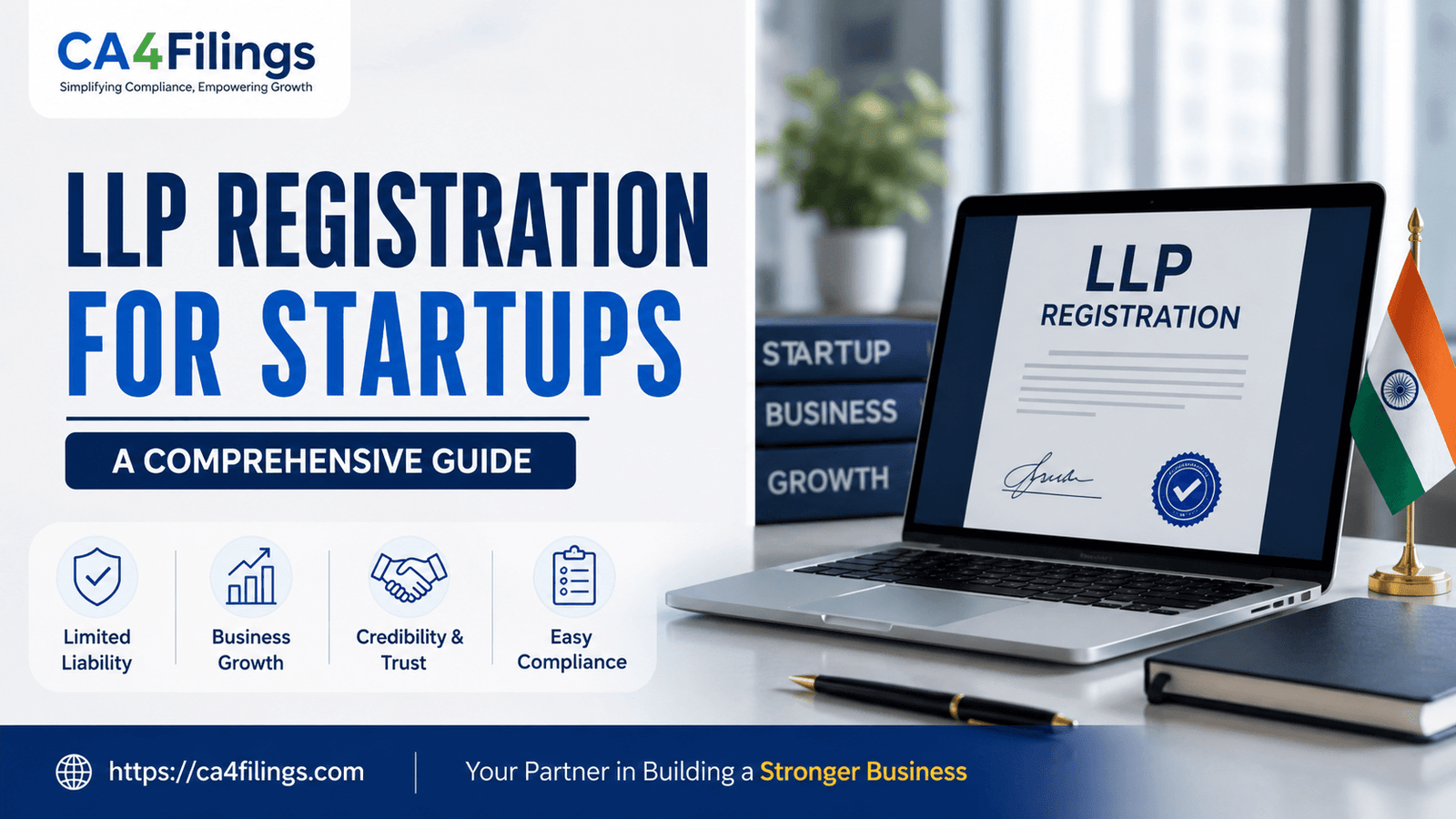
Starting a business is exciting, but choosing the right legal structure can shape your startup's future. Many entrepreneurs in India begin with a simple partnership and later realize the need for legal protection, credibility, and structured growth. This is where LLP Registration for Startups becomes an important consideration.
At CA4Filings, we regularly work with startup founders who want flexibility in operations while limiting personal liability. If you're planning to launch a technology startup, consultancy, digital agency, trading business, or service-based venture, understanding LLP Registration at the initial stage can save you from future complications.
This guide will help you understand everything about LLP Registration for Startups, including benefits, eligibility, registration process, compliance requirements, and practical insights from a professional perspective.
What is LLP Registration for Startups?
LLP Registration for Startups refers to establishing a business as a Limited Liability Partnership under the Limited Liability Partnership Act, 2008.
An LLP combines features of both a traditional partnership and a private limited company. It offers operational flexibility similar to partnerships while providing limited liability protection to partners.
In simple words, if your startup faces business losses or legal liabilities, personal assets of partners generally remain protected.
For example, suppose two friends start a digital marketing agency in Delhi. If they operate as a normal partnership, personal assets may become exposed to business liabilities. However, with an LLP structure, their financial risk remains largely restricted to their agreed contribution.
Why LLP Registration for Startups is Becoming Popular
Over the last few years, startups have increasingly preferred LLP structures due to practical advantages.
Some major reasons include:
- Limited liability protection
- Lower compliance burden compared to companies
- Separate legal identity
- Easy management structure
- No minimum capital requirement
- Better credibility among clients and investors
- Perpetual succession
For startups operating with limited initial funding, these benefits can make a significant difference.
Benefits of LLP Registration for Startups
Limited Liability Protection
One of the biggest advantages of LLP Registration for Startups is protecting personal assets.
If the business incurs debts, partners are generally liable only to the extent of their contribution.
Separate Legal Entity
An LLP has its own legal identity.
This means it can:
- Own property
- Open bank accounts
- Enter contracts
- File lawsuits
- Continue operations independently
Lower Compliance Burden
Compared to private limited companies, LLPs usually have fewer compliance requirements.
For startups with small teams and limited resources, this becomes a major operational advantage.
No Minimum Capital Requirement
Many founders believe large capital investment is necessary for business registration.
In reality, LLP Registration for Startups does not require a fixed minimum capital amount.
You can start according to your business requirements.
Flexibility in Internal Management
Partners can mutually define operational responsibilities through the LLP Agreement.
This provides flexibility in decision-making and management.
Eligibility Criteria for LLP Registration for Startups
Before applying, startups should understand the basic requirements.
Minimum Requirements
Your startup generally needs:
- Minimum two designated partners
- One designated partner should be an Indian resident
- Valid PAN and Aadhaar
- Address proof
- Registered office address
- Digital Signature Certificate (DSC)
There is no upper limit on the number of partners.
Step-by-Step Process of LLP Registration for Startups
Understanding the registration process helps avoid delays and documentation issues.
Step 1: Obtain Digital Signature Certificate (DSC)
Designated partners need Digital Signature Certificates for electronic filing with the Ministry of Corporate Affairs (MCA).
Step 2: Apply for Director Identification Number (DIN)
DIN is required for designated partners who manage LLP operations.
Step 3: Name Reservation
The proposed LLP name is submitted for approval.
While selecting a name:
- Avoid similarity with existing entities
- Ensure uniqueness
- Follow MCA naming guidelines
Step 4: Prepare Incorporation Documents
Required documents usually include:
- PAN card
- Aadhaar card
- Passport-size photographs
- Address proof
- Registered office proof
- Utility bill
Step 5: Filing Incorporation Forms
The incorporation forms are filed with MCA along with supporting documents.
Step 6: LLP Agreement Filing
The LLP Agreement defines:
- Profit-sharing ratio
- Rights and responsibilities
- Duties of partners
- Operational procedures
This agreement is a crucial document for long-term business clarity.
Step 7: Obtain Certificate of Incorporation
After successful verification, MCA issues the Certificate of Incorporation.
Your LLP becomes legally operational.
Common Mistakes Startups Should Avoid During LLP Registration
At CA4Filings, we often notice startups making avoidable mistakes.
Selecting the Wrong Business Structure
Not every startup fits into the LLP model.
Businesses expecting large external investments may sometimes prefer a company structure.
Poor Drafting of LLP Agreement
A generic agreement may create future conflicts among partners.
Always define:
- Roles
- Investment responsibilities
- Exit conditions
- Decision-making authority
Ignoring Compliance Requirements
Many founders assume LLP registration ends all legal obligations.
In reality, annual filing and tax compliance remain important.
Compliance Requirements After LLP Registration for Startups
Once your LLP is registered, certain obligations continue.
Annual Return Filing
LLPs must file annual returns with MCA.
Statement of Accounts and Solvency
Financial statements need periodic filing.
Income Tax Return Filing
LLPs must file income tax returns every financial year.
GST Registration (If Applicable)
GST registration becomes mandatory when prescribed turnover limits are crossed.
Proper compliance helps avoid penalties and maintains credibility.
Is LLP Registration for Startups Suitable for Every Business?
The answer depends on your business model.
LLP can be highly suitable for:
- Consulting firms
- IT service companies
- Digital agencies
- Freelance collaborations
- Trading businesses
- Professional service providers
However, startups actively seeking venture capital funding often prefer private limited companies because investors may be more comfortable with that structure.
This decision should be made after evaluating business goals.
Expert Advice from CA4Filings
As professionals assisting startups across India, our suggestion is simple: don't choose a business structure based solely on trends.
Understand your:
- Business objectives
- Funding plans
- Compliance capacity
- Expansion goals
- Risk exposure
A well-planned registration decision at the beginning can prevent unnecessary restructuring expenses later.
Frequently Asked Questions (FAQs)
Is LLP Registration for Startups mandatory?
No. Startups can choose among various structures such as sole proprietorship, partnership, private limited company, or LLP depending on requirements.
How many partners are required for LLP registration?
A minimum of two partners is required.
Can LLP have foreign partners?
Yes. Foreign nationals and foreign entities can become partners subject to applicable regulations.
What is the minimum capital required?
There is no mandatory minimum capital requirement for LLP registration.
Can an LLP convert into a private limited company later?
Yes. Subject to legal provisions and conditions, conversion is possible.
Choosing the right legal structure is one of the earliest and most important decisions for entrepreneurs. LLP Registration for Startups offers an excellent balance of flexibility, legal protection, and manageable compliance requirements. It is particularly suitable for service-based businesses and startups looking for operational ease without extensive regulatory obligations.
At CA4Filings, we simplify the complete process of LLP Registration for Startups, from documentation and filing to compliance guidance. Our experienced professionals ensure a smooth registration journey so that you can focus on building your business while we handle the legal formalities.
Ready to register your startup with confidence? Connect with CA4Filings today and let our experts help you build a strong foundation for your business growth.
Latest Updates
ca4filings.com Services




























-registration.png)