Common Misconceptions About Section 8 Company Registration
Common Misconceptions About Section 8 Company Registration explained simply. Know myths, legal facts, and expert guidance.
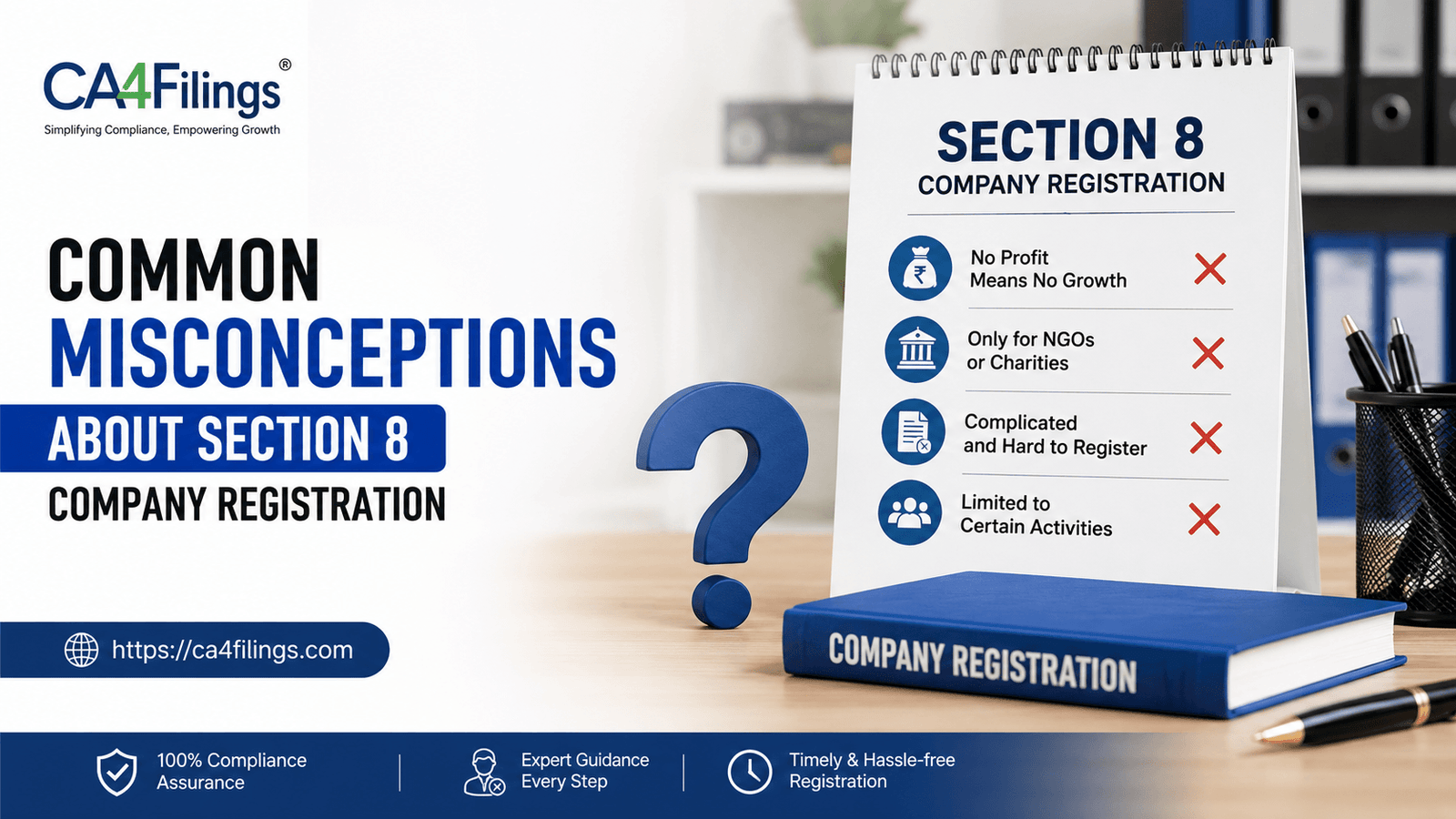
When individuals or groups plan to start a non-profit organization in India, one of the most preferred structures is a Section 8 company. However, many entrepreneurs, social workers, and charitable organizations hesitate because of several myths and assumptions surrounding the registration process.
At CA4Filings, we regularly interact with NGOs, startups, and social entrepreneurs who have questions regarding legal requirements, ownership structure, funding, and compliance obligations. Many decisions are delayed simply because people believe inaccurate information. If you are considering Section 8 Company Registration, understanding the reality behind these misconceptions can help you make informed business decisions.
In this article, we will discuss the Common Misconceptions About Section 8 Company Registration, separate facts from myths, and help you understand what actually applies under Indian law.
Understanding Common Misconceptions About Section 8 Company Registration
A Section 8 company is established under the Companies Act, 2013 for promoting charitable objectives such as:
- Education
- Social welfare
- Arts and culture
- Environmental protection
- Research activities
- Sports development
- Healthcare initiatives
Unlike ordinary companies, its profits are used to fulfill its objectives rather than being distributed among members.
Despite this simple purpose, misconceptions continue to create confusion.
Common Misconceptions About Section 8 Company Registration: Myth vs Reality
Misconception 1: Section 8 Companies Cannot Earn Revenue
This is one of the most common misunderstandings.
Many people assume a non-profit organization cannot generate income. In reality, a Section 8 company can legally earn revenue through its activities.
Examples include:
- Conducting educational programs
- Organizing workshops
- Providing consultancy services
- Receiving grants
- Accepting donations
- Running social projects
The important condition is that profits cannot be distributed among members or directors.
Instead, earnings must be reinvested into the organization's objectives.
For example, if an educational NGO charges a nominal fee for training programs, it can use those funds for expanding educational initiatives.
Misconception 2: Registration Is Only for Large NGOs
Another major point among the Common Misconceptions About Section 8 Company Registration is the belief that only large organizations should register.
This is incorrect.
Even small groups of individuals with social objectives can register a Section 8 company.
Consider these examples:
- Two professionals starting a skill development initiative
- A small community group promoting environmental awareness
- Individuals supporting rural education projects
There is no requirement that an organization must operate on a large scale before registration.
Starting with a proper legal structure often helps small organizations build credibility from day one.
Misconception 3: Foreign Funding Is Automatically Allowed
Many individuals believe that registering a Section 8 company automatically permits international funding.
The reality is different.
Receiving foreign contributions requires compliance with separate regulations, including registration under applicable foreign contribution laws.
Without the required approvals, accepting foreign funds may create legal issues.
Before accepting overseas donations, organizations should:
- Understand applicable legal requirements
- Maintain proper documentation
- Seek professional compliance support
- Follow reporting obligations
At CA4Filings, we advise organizations to carefully plan funding structures before beginning operations.
Misconception 4: Section 8 Companies Do Not Have Compliance Requirements
Some founders believe that non-profit status means "no compliance burden."
This is completely inaccurate.
Section 8 companies have legal responsibilities similar to other companies.
Regular compliance requirements may include:
- Maintaining books of accounts
- Conducting board meetings
- Filing annual returns
- Financial reporting
- Statutory audits
- Maintaining proper records
Ignoring compliance obligations can lead to penalties and operational challenges.
Think of it this way: being non-profit does not mean being non-regulated.
Misconception 5: Directors Can Freely Use Company Funds
Among the major Common Misconceptions About Section 8 Company Registration, misuse of funds is often misunderstood.
Some assume that directors can access organizational funds for personal use.
The law does not permit this.
Funds must be used strictly for:
- Charitable purposes
- Organizational objectives
- Approved operational activities
Personal withdrawals or unofficial use of money can attract serious legal consequences.
Proper financial transparency is essential.
Misconception 6: Registration Is Extremely Complicated
Many aspiring founders postpone registration because they assume the process is very difficult.
The process is actually structured and manageable when handled correctly.
Typical registration steps include:
Step 1: Obtain Digital Signature Certificates (DSC)
Digital signatures are required for filing documents online.
Step 2: Obtain Director Identification Number (DIN)
Directors need a valid DIN.
Step 3: Reserve Company Name
The proposed name should comply with legal naming guidelines.
Step 4: Draft Legal Documents
Key documents generally include:
- Memorandum of Association (MOA)
- Articles of Association (AOA)
Step 5: File Registration Application
The application is submitted with required supporting documents.
Step 6: Certificate of Incorporation
After approval, the company receives registration certification.
Professional guidance significantly reduces delays and errors.
Why These Common Misconceptions About Section 8 Company Registration Exist
Several reasons contribute to confusion:
Lack of legal awareness
Many people rely on informal advice from friends or online discussions.
Mixing NGO structures
People often confuse:
- Trusts
- Societies
- Section 8 companies
Each structure has different legal and compliance requirements.
Outdated information
Regulations and procedures change over time. Information available on older websites may no longer be accurate.
Practical Advice from CA4Filings
Before starting a Section 8 company, consider these practical points:
- Clearly define your social objective
- Prepare realistic financial plans
- Understand compliance requirements
- Keep financial records transparent
- Seek professional guidance before filing
For example, we have seen organizations face avoidable delays simply because objectives were drafted vaguely or documentation was incomplete.
Planning correctly at the beginning saves time and costs later.
FAQs on Common Misconceptions About Section 8 Company Registration
Is a Section 8 company completely tax-free?
No. Tax benefits depend on registrations and applicable provisions. Certain exemptions may apply only after fulfilling legal requirements.
Can one person register a Section 8 company?
Registration requirements depend on the structure selected and current legal provisions. Proper consultation helps determine eligibility.
Can directors receive salaries?
Yes, directors may receive reasonable remuneration for genuine services, subject to legal provisions and transparency requirements.
Can a Section 8 company own property?
Yes. A Section 8 company can legally acquire, hold, and manage assets in its own name.
Is registration faster than society registration?
Timelines vary depending on documentation, approvals, and compliance requirements.
Understanding the Common Misconceptions About Section 8 Company Registration is essential before making decisions regarding non-profit incorporation. Believing myths can lead to unnecessary fear, delays, and poor planning.
The truth is that Section 8 companies offer a structured and credible framework for organizations working toward social and charitable objectives. However, success depends on proper compliance, planning, and legal understanding.
If you are planning to establish a non-profit organization and need expert assistance, CA4Filings can guide you through every step—from documentation and registration to ongoing compliance support. Connect with our experts today and build your organization on a strong legal foundation.
Latest Updates
ca4filings.com Services
























-registration.png)