The Role of Local Communities in NGO Registration and Sustainability
The Role of Local Communities in NGO Registration and Sustainability helps NGOs build trust, impact, and long-term success.
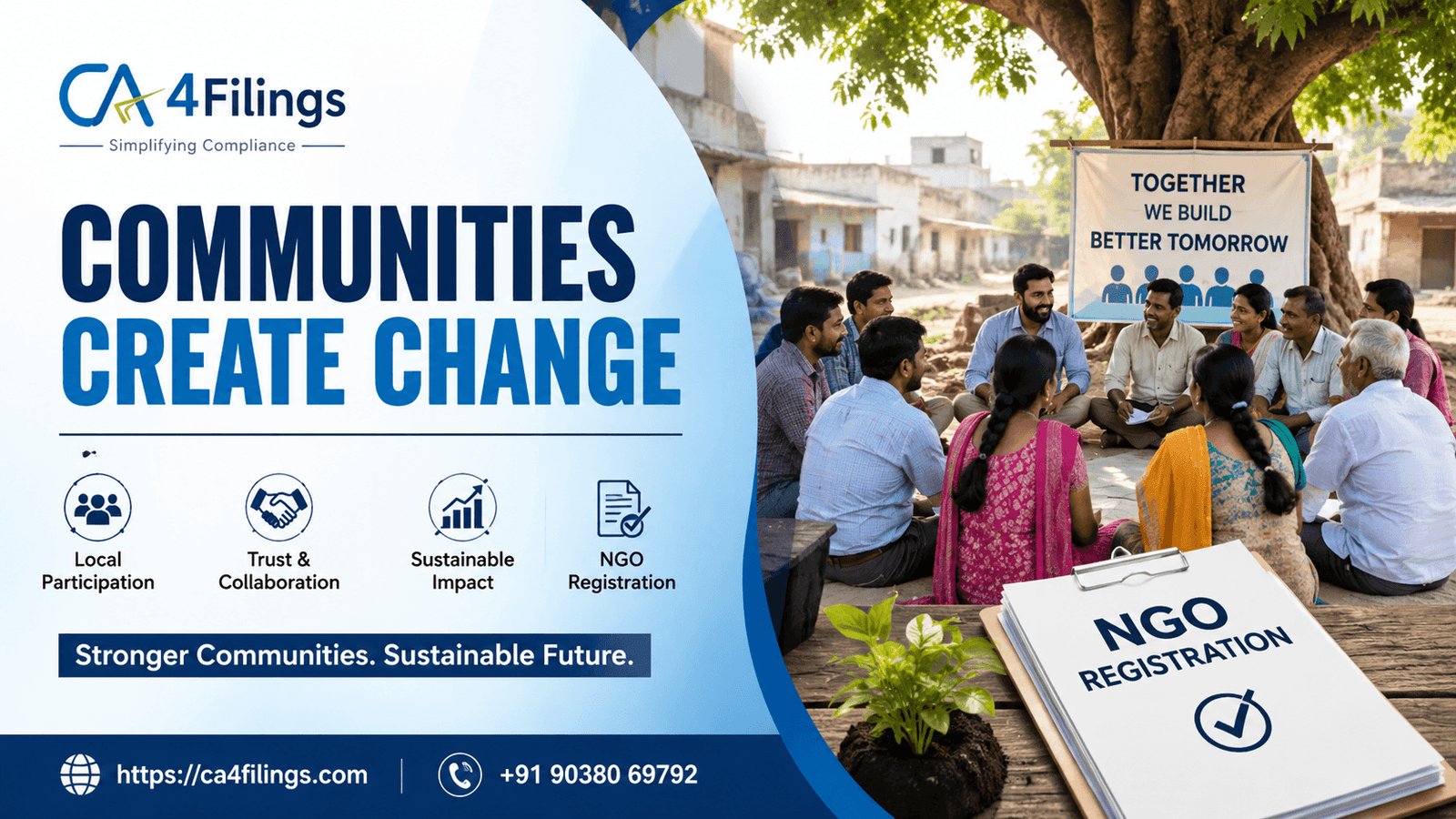
Non-Governmental Organizations (NGOs) play a major role in addressing social, educational, healthcare, environmental, and community development challenges in India. However, an NGO's success is not determined only by legal registration or funding support. Long-term impact largely depends on how deeply it connects with the people it aims to serve. This is where The Role of Local Communities in NGO Registration and Sustainability becomes extremely important.
Many organizations begin with a strong vision but struggle to sustain themselves because they fail to build genuine community participation. At CA4Filings, we often advise social entrepreneurs and charitable groups that legal compliance and local engagement must work together. While starting a charitable organization, proper NGO Registration creates a legal foundation, but local community support becomes the backbone of its growth and sustainability.
Understanding how communities contribute can help NGOs establish stronger roots and achieve meaningful long-term outcomes.
Understanding The Role of Local Communities in NGO Registration and Sustainability
The Role of Local Communities in NGO Registration and Sustainability goes beyond simple participation. Local communities contribute through ideas, volunteer support, trust-building, resource sharing, and long-term involvement.
When an NGO actively involves local people, it gains:
- Better understanding of local issues
- Improved credibility
- Increased volunteer participation
- Stronger donor confidence
- Better project execution
- Sustainable operations
Communities are not merely beneficiaries; they become partners in the NGO's journey.
Why Local Communities Matter During NGO Registration
Registration is usually considered a legal process involving documentation and government approvals. However, local community support can significantly influence the foundation of an NGO.
Community Support Establishes Purpose
Before registering an NGO, founders should identify real social issues affecting people in a particular region.
For example:
A group in rural Uttar Pradesh may wish to start an NGO for improving educational opportunities for girls. Before registration, interacting with parents, schools, and local leaders helps determine actual challenges such as:
- Lack of transportation
- Financial constraints
- Limited awareness
- Infrastructure gaps
This practical understanding strengthens the NGO's objectives.
Community Participation Improves Credibility
Donors and stakeholders often assess whether an NGO has genuine local acceptance.
When community members actively support the organization, it demonstrates:
- Trustworthiness
- Relevance
- Transparency
- Social impact potential
This credibility becomes valuable during fundraising and grant applications.
The Role of Local Communities in NGO Registration and Sustainability Through Participation
Active participation creates a sense of ownership among people.
Volunteer Support Strengthens Operations
Most newly formed NGOs operate with limited financial resources. Volunteers from local communities often become an organization's first support system.
Volunteers can help with:
- Awareness campaigns
- Event management
- Educational programs
- Healthcare camps
- Fundraising activities
- Administrative support
For instance, a local health NGO conducting vaccination awareness programs may receive tremendous support from village youth volunteers who understand local languages and cultural practices.
Local Knowledge Helps Better Decision-Making
Communities understand their own challenges better than outsiders.
An NGO may assume that drinking water scarcity is the primary issue in an area, while local residents may identify sanitation or healthcare access as more urgent.
Community involvement helps NGOs:
- Avoid incorrect assumptions
- Design relevant programs
- Reduce implementation risks
- Increase project effectiveness
Building Trust: The Foundation of Sustainability
One of the strongest aspects of The Role of Local Communities in NGO Registration and Sustainability is trust-building.
Without trust, NGOs often face resistance despite good intentions.
How NGOs Can Build Community Trust
NGOs should focus on:
- Transparent communication
- Regular meetings
- Public reporting of activities
- Involving local leaders
- Listening to community feedback
Trust develops gradually through consistent action.
Real-World Example
Consider an NGO working on women's skill development in a semi-urban area.
Initially, participation may be low because families hesitate to send women for training. By involving community elders and conducting awareness sessions, the NGO gains acceptance over time.
Eventually:
- More women join training programs
- Local businesses support initiatives
- Community participation increases
This demonstrates practical The Role of Local Communities in NGO Registration and Sustainability.
Financial Sustainability Through Community Engagement
Many NGOs face challenges in maintaining stable funding.
Community involvement can reduce dependency on external sources.
Ways Communities Support Financial Sustainability
Local communities may contribute through:
- Small donations
- Voluntary services
- Infrastructure support
- Local sponsorships
- Fundraising activities
For example:
A community may allow free use of a school building for educational workshops, reducing operational costs.
Small contributions from many people often create stronger sustainability than dependence on a single funding source.
Steps NGOs Can Take to Encourage Community Participation
Step 1: Understand Local Needs
Conduct surveys and meetings to identify real problems.
Step 2: Include Community Leaders
Local leaders often influence participation and acceptance.
Step 3: Encourage Volunteer Networks
Build teams of local volunteers who understand regional needs.
Step 4: Maintain Transparency
Share achievements and financial updates regularly.
Step 5: Seek Continuous Feedback
Ask community members:
- What is working?
- What needs improvement?
- What additional support is required?
Challenges in Community Involvement
Although The Role of Local Communities in NGO Registration and Sustainability is significant, NGOs may face certain challenges.
Limited Awareness
Communities may initially misunderstand the NGO's purpose.
Cultural Differences
Different social practices can affect acceptance.
Lack of Participation
People may hesitate due to time or financial limitations.
Managing Expectations
Communities may expect immediate solutions to long-term issues.
To address these challenges, NGOs should focus on patience, communication, and relationship-building.
FAQs
1. Why are local communities important for NGO sustainability?
Local communities provide trust, volunteer support, resources, and long-term participation, which help NGOs operate successfully.
2. Can an NGO function without community involvement?
An NGO may operate initially, but long-term sustainability becomes difficult without active community support and engagement.
3. How can NGOs encourage local participation?
NGOs can encourage participation through awareness programs, transparency, volunteer opportunities, and regular interaction with local people.
4. Does community support help with funding opportunities?
Yes. Donors often prefer NGOs that demonstrate strong local engagement and measurable community impact.
5. How does community feedback improve NGO performance?
Feedback helps identify actual problems and improve project effectiveness.
The Role of Local Communities in NGO Registration and Sustainability cannot be overlooked in today's social development environment. Registration provides legal identity, but local communities provide purpose, trust, support, and continuity.
An NGO that actively involves the people it serves is more likely to achieve meaningful and lasting impact. Communities help transform an organization from a registered entity into a genuine movement for social change.
At CA4Filings, we believe successful NGOs are built not only through compliance and documentation but also through strong community relationships. If you are planning to establish an NGO and want expert assistance with registration and compliance requirements, CA4Filings can guide you at every stage. Connect with our experts today and build a legally strong and socially impactful organization.
Latest Updates
ca4filings.com Services
























-registration.png)