FSSAI Regulations for Genetically Modified Foods
Understand FSSAI Regulations for Genetically Modified Foods in India, compliance rules, approvals, labeling, and legal requirements.
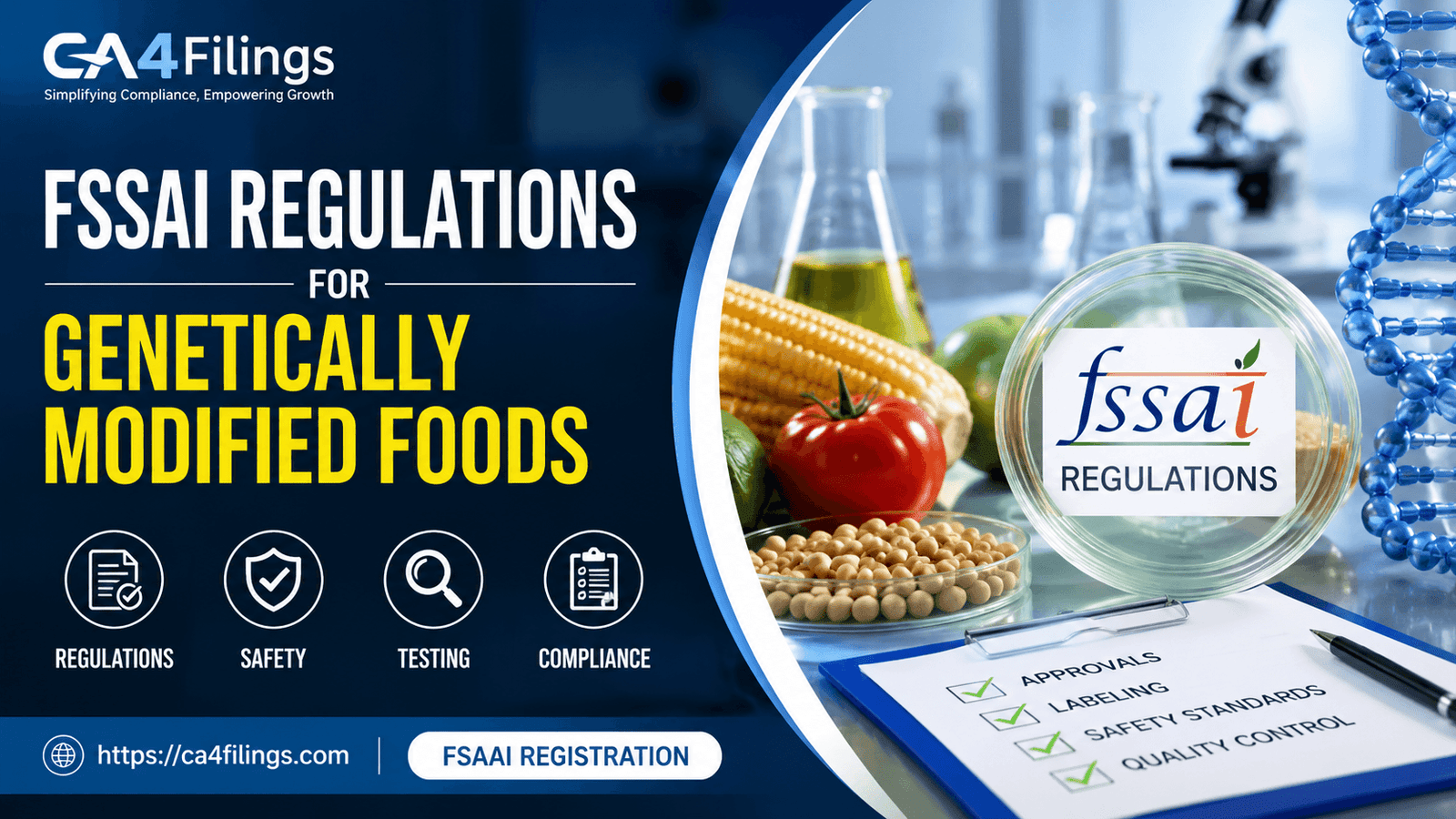
The food industry in India is evolving rapidly, and advancements in biotechnology have introduced genetically modified (GM) foods into global markets. As businesses, importers, manufacturers, and food entrepreneurs expand product offerings, understanding FSSAI Regulations for Genetically Modified Foods has become increasingly important. Regulatory compliance is not only a legal requirement but also a crucial factor in maintaining consumer trust and ensuring food safety.
At CA4Filings, we regularly guide businesses on regulatory compliance requirements related to food businesses. Before entering the food sector, obtaining proper FSAAI Registration is an essential step that helps businesses operate legally and smoothly in India.
With increasing consumer awareness and government monitoring, businesses dealing with genetically modified food products need a clear understanding of the rules, approvals, and compliance obligations under Indian law.
Understanding FSSAI Regulations for Genetically Modified Foods
FSSAI Regulations for Genetically Modified Foods refer to the legal framework established by the Food Safety and Standards Authority of India (FSSAI) to regulate the manufacturing, import, sale, distribution, and consumption of genetically modified food products in India.
Genetically Modified (GM) foods are products obtained from organisms whose genetic material has been altered through biotechnology to introduce specific characteristics such as:
- Pest resistance
- Improved nutritional content
- Better crop yield
- Enhanced shelf life
- Resistance to environmental conditions
Examples commonly discussed globally include:
- GM corn
- GM soybean
- GM canola oil
- GM cottonseed oil
However, India has strict regulatory oversight before such products can enter the market.
Why FSSAI Regulations for Genetically Modified Foods Matter
Food safety remains a sensitive issue because it directly impacts public health. The purpose of FSSAI Regulations for Genetically Modified Foods is to ensure that GM products entering the Indian market are thoroughly evaluated for safety and quality.
Key objectives include:
- Protecting consumer health
- Ensuring scientific assessment of GM products
- Preventing unauthorized GM food circulation
- Creating transparency through labeling requirements
- Monitoring food imports
Without proper regulations, unsafe products could create health risks and legal complications for businesses.
Key Legal Framework Governing GM Foods in India
Several laws and regulatory bodies work together to regulate genetically modified products.
Food Safety and Standards Act, 2006
The Food Safety and Standards Act serves as the primary law regulating food safety in India.
Under this Act, FSSAI has authority to:
- Establish food standards
- Issue regulations
- Conduct inspections
- Take enforcement actions
Environment Protection Act, 1986
GM products may also fall under environmental regulations because genetic modification can impact biodiversity and ecosystems.
Biotechnology Regulatory Authorities
Approvals may involve multiple government bodies, including:
- Genetic Engineering Appraisal Committee (GEAC)
- Ministry of Environment, Forest and Climate Change
- FSSAI
Businesses must often obtain approvals from multiple authorities depending on product type.
Important Provisions Under FSSAI Regulations for Genetically Modified Foods
Businesses should understand the following major provisions under FSSAI Regulations for Genetically Modified Foods.
Mandatory Approval Requirements
Any food product involving genetically modified organisms generally requires approval before sale or import.
Products cannot be introduced directly into the market without:
- Scientific evaluation
- Risk assessment
- Regulatory clearance
- Safety verification
Labeling Requirements
Transparency is becoming increasingly important in food products.
Food labels may need to provide:
- Information regarding GM ingredients
- Product composition details
- Consumer disclosures
Proper labeling allows consumers to make informed purchasing decisions.
Import Restrictions
Imported GM foods face strict scrutiny in India.
Importers may need:
- Product approval certificates
- Safety reports
- Laboratory testing records
- Regulatory documentation
Failure to comply may lead to:
- Shipment rejection
- Financial losses
- Legal action
- Product recalls
Scientific Risk Assessment
Risk assessments evaluate:
- Toxicity levels
- Allergenicity
- Nutritional impact
- Environmental impact
- Long-term health implications
This process ensures consumer safety before products reach the market.
Step-by-Step Compliance Process for Businesses
If your business deals with genetically modified food products, following a structured process can help avoid legal issues.
Step 1: Identify Product Classification
Determine whether your product falls under GM food categories.
Questions to assess:
- Does it contain genetically modified ingredients?
- Is biotechnology involved in production?
- Is the product imported?
Step 2: Gather Technical Documentation
Prepare documents such as:
- Product specifications
- Ingredient lists
- Scientific reports
- Safety studies
- Manufacturing details
Step 3: Obtain Regulatory Approvals
Submit applications to relevant authorities where necessary.
Step 4: Meet Labeling Requirements
Ensure packaging complies with applicable regulations.
Step 5: Maintain Compliance Records
Businesses should maintain:
- Approval documents
- Testing reports
- Import records
- Quality control documentation
Proper record maintenance helps during inspections and audits.
Real-World Example of Regulatory Importance
Consider an importer bringing soybean oil into India from international markets. If the product contains genetically modified soybean extracts but lacks proper regulatory clearance, customs authorities may stop the shipment.
Potential consequences include:
- Heavy financial losses
- Delayed market entry
- Regulatory penalties
- Brand reputation damage
Such situations highlight why understanding FSSAI Regulations for Genetically Modified Foods is essential before product launch.
Challenges Businesses Face in GM Food Compliance
Many businesses encounter practical challenges during compliance.
Regulatory Complexity
Multiple authorities may be involved, making compliance procedures difficult to navigate.
Changing Rules
Food regulations evolve periodically based on scientific developments and policy changes.
Documentation Burden
Businesses often struggle with:
- Technical paperwork
- Scientific data collection
- Regulatory filings
Consumer Perception
Some consumers remain cautious regarding genetically modified foods, making transparency and proper communication important.
Best Practices for Businesses
Businesses can reduce compliance risks by adopting proactive measures.
Recommended practices include:
- Conduct internal compliance reviews
- Maintain complete documentation
- Verify ingredient sourcing
- Stay updated with regulatory changes
- Seek professional guidance
Working with experts often reduces delays and compliance errors.
FAQs on FSSAI Regulations for Genetically Modified Foods
Is genetically modified food completely banned in India?
No. Certain genetically modified products may be allowed subject to regulatory approvals and safety assessments.
Who regulates genetically modified food in India?
FSSAI plays a major role along with authorities such as GEAC and relevant government departments.
Are imported GM foods subject to regulations?
Yes. Imported products undergo strict scrutiny and may require approvals and documentation.
Is labeling mandatory for genetically modified foods?
Labeling requirements may apply depending on applicable regulations and product composition.
Why should food businesses understand FSSAI Regulations for Genetically Modified Foods?
Understanding regulations helps businesses avoid penalties, shipment issues, product recalls, and legal complications.
As biotechnology continues transforming the food industry, understanding FSSAI Regulations for Genetically Modified Foods is becoming increasingly important for manufacturers, importers, distributors, and food entrepreneurs. Regulatory compliance is not simply about meeting legal requirements—it protects consumers, strengthens brand credibility, and ensures long-term business sustainability.
At CA4Filings, we help businesses navigate complex food regulatory requirements with practical guidance and professional support. Whether you are starting a food business, planning registrations, or ensuring regulatory compliance, our team can help simplify the process and keep your business on the right side of the law.
Latest Updates
ca4filings.com Services


























-registration.png)