The Connection Between DSC and Digital Identity Verification
The Connection Between DSC and Digital Identity Verification: Understand how DSC ensures secure, trusted, and legally valid digital transactions.
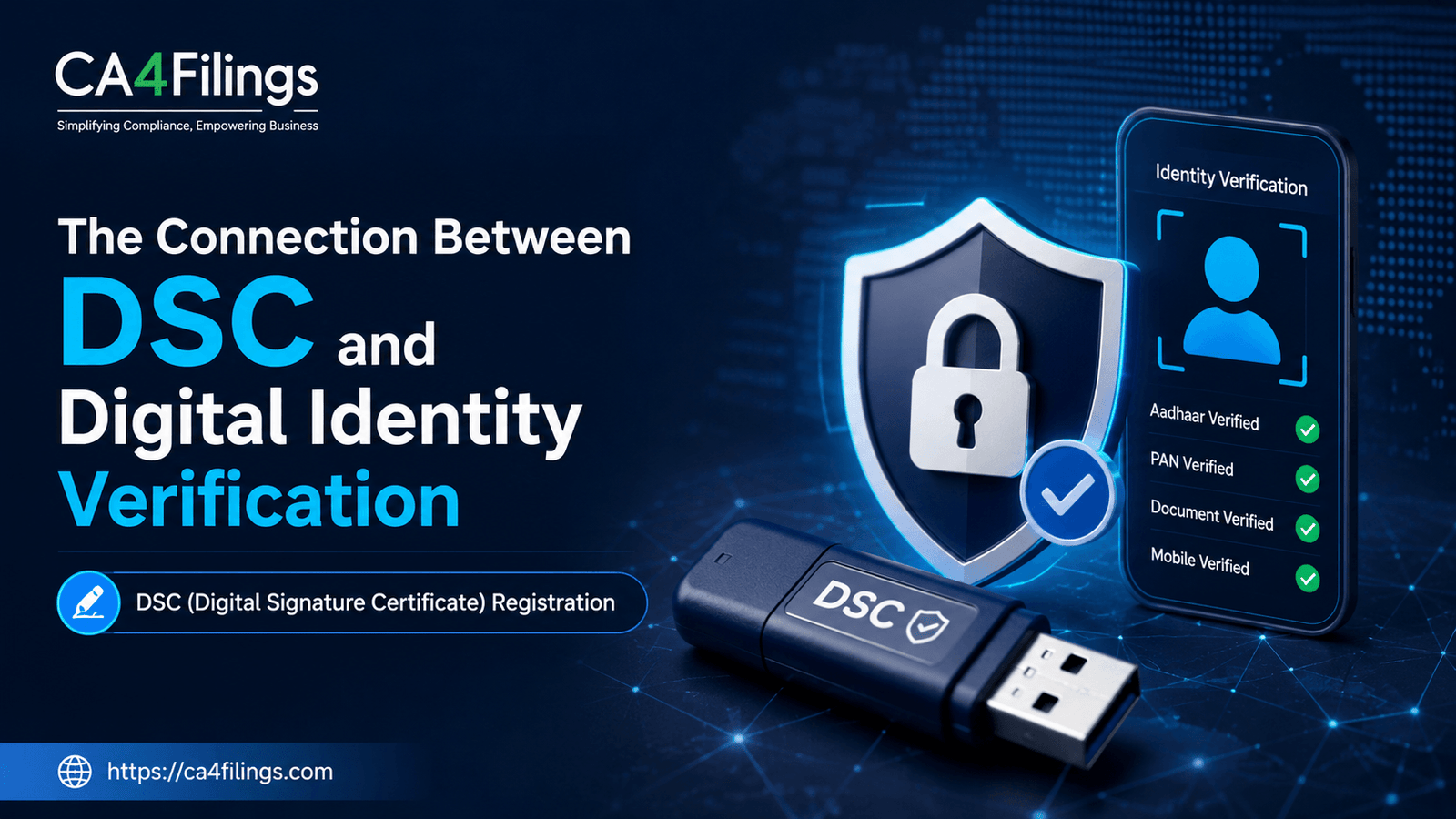
In today's rapidly evolving digital world, identity verification has become one of the most important aspects of online transactions. Whether an individual is filing tax returns, a business owner is signing contracts, or a company is submitting government forms, confirming the authenticity of the person behind the action is critical. This is where The Connection Between DSC and Digital Identity Verification becomes highly relevant.
At CA4Filings, we frequently guide businesses and individuals who want secure and legally accepted digital transactions. As online compliance and paperless systems continue to grow in India, Digital Signature Certificates (DSCs) are no longer just optional tools; they have become essential components of digital trust. If you are planning to obtain a digital signature for your compliance requirements, our DSC (Digital Signature Certificate) Registration service can help streamline the process with professional guidance.
Understanding DSC and Digital Identity Verification
Before understanding The Connection Between DSC and Digital Identity Verification, it is important to understand both concepts separately.
What is a Digital Signature Certificate (DSC)?
A Digital Signature Certificate (DSC) is an electronic form of a physical signature. It is issued by a Certifying Authority and helps verify the identity of the person signing a digital document.
DSCs are commonly used for:
- Income Tax filing
- MCA filings
- GST applications
- Company incorporation
- Tender submissions
- Signing legal agreements
A DSC ensures that a document has been signed by the authorized person and has not been altered after signing.
What is Digital Identity Verification?
Digital identity verification is the process of confirming that an individual or business is genuinely who they claim to be in the online environment.
This process generally involves:
- Identity proof verification
- PAN validation
- Aadhaar authentication
- Mobile and email verification
- Biometric authentication
- Document verification
Its primary purpose is to prevent fraud and establish trust in online transactions.
The Connection Between DSC and Digital Identity Verification
The relationship between these two concepts is stronger than many people realize. The Connection Between DSC and Digital Identity Verification lies in the fact that a DSC itself acts as a trusted digital identity proof.
A Digital Signature Certificate cannot simply be issued without verification. Before a DSC is granted, the Certifying Authority verifies the applicant's identity using authorized methods.
Once issued, the DSC becomes a secure representation of that verified identity.
Think of it this way:
Physical world:
Identity Card → Verification → Signature
Digital world:
Identity Verification → DSC Issuance → Digital Signature
This process creates a secure and trusted digital ecosystem.
How DSC Strengthens Digital Identity Verification
Authentication of User Identity
One major reason The Connection Between DSC and Digital Identity Verification is important is authentication.
Whenever someone signs a document using a DSC:
- The person's identity gets validated
- The signer can be authenticated
- Unauthorized access can be prevented
For example, when a company director signs MCA forms through DSC, the system verifies that the signature belongs to the authorized person.
Ensures Document Integrity
Digital identity verification is not only about identifying people; it also involves ensuring that information remains unchanged.
DSCs provide:
- Data integrity
- Tamper detection
- Encryption security
If even a small change occurs in a digitally signed document after signing, the system immediately detects it.
Supports Non-Repudiation
Non-repudiation means that the signer cannot later deny signing the document.
This is another strong aspect of The Connection Between DSC and Digital Identity Verification.
For instance:
If a vendor digitally signs a contract using a DSC, they cannot later claim that they never signed it.
This creates accountability and legal protection.
Real-Life Examples of DSC and Identity Verification
Income Tax Return Filing
When taxpayers file returns online using a DSC:
- Identity gets authenticated
- Filing becomes secure
- Risk of fraud decreases
Company Registration
Directors signing incorporation forms through MCA portals use DSCs to verify identity before document submission.
E-Tendering Processes
Government departments frequently require DSCs in tender applications.
Benefits include:
- Genuine bidder verification
- Prevention of fake submissions
- Enhanced security
Banking and Financial Transactions
Several financial institutions now use DSC-enabled systems to verify customers during digital transactions.
Step-by-Step Process Linking DSC and Digital Identity Verification
Understanding the process can help you see The Connection Between DSC and Digital Identity Verification more clearly.
Step 1: Submission of Identity Documents
Applicants provide:
- PAN card
- Aadhaar card
- Address proof
- Photograph
Step 2: Verification Process
Authorities verify:
- Personal details
- Mobile number
- Email address
- Supporting documents
Step 3: DSC Issuance
After successful verification, the Digital Signature Certificate gets issued.
Step 4: Usage for Secure Transactions
Users can then sign:
- Government forms
- Legal agreements
- Financial documents
- Corporate filings
Benefits of Understanding The Connection Between DSC and Digital Identity Verification
Businesses and individuals gain several advantages by understanding this relationship.
Key benefits include:
- Stronger security
- Reduced risk of identity fraud
- Faster online transactions
- Improved compliance
- Legally valid digital signatures
- Increased customer trust
- Better document security
As digital transactions continue increasing across India, these benefits become even more valuable.
Challenges Businesses Sometimes Face
Although DSC implementation is beneficial, users occasionally face certain issues.
Common challenges include:
- Expired DSC certificates
- Incorrect identity documents
- Delays in verification
- Technical errors during installation
- Lack of awareness about renewal
At CA4Filings, we regularly help clients overcome these issues smoothly.
FAQs
Is a DSC legally valid in India?
Yes. Under the Information Technology Act, digital signatures are legally recognized and accepted in India.
Can DSC prevent identity fraud?
A DSC significantly reduces fraud risk because it verifies user identity and secures digital transactions.
Who requires a Digital Signature Certificate?
DSCs are commonly needed by:
- Company directors
- Business owners
- Professionals
- Taxpayers
- Government contractors
Does a DSC expire?
Yes. DSCs generally have a validity period and require renewal after expiry.
Is digital identity verification mandatory before issuing a DSC?
Yes. Identity verification is a mandatory process before a DSC can be issued.
The Connection Between DSC and Digital Identity Verification
As India moves toward a digitally driven economy, understanding The Connection Between DSC and Digital Identity Verification has become increasingly important. A Digital Signature Certificate is not merely an electronic signature; it is a trusted digital identity tool that helps maintain security, authenticity, and legal validity in online transactions.
Businesses that adopt secure digital practices today will be better positioned for the future. At CA4Filings, we help individuals and organizations simplify the DSC process with expert support and reliable assistance.
Looking to obtain or renew your DSC without complications? Connect with CA4Filings today and let our experts help you secure your digital identity with confidence.
Latest Updates
ca4filings.com Services






















-registration.png)