Exploring Funding Opportunities for Section 8 Companies in India
Looking for growth? We are Exploring Funding Opportunities for Section 8 Companies in India to help your non-profit scale impact. Learn the options today!
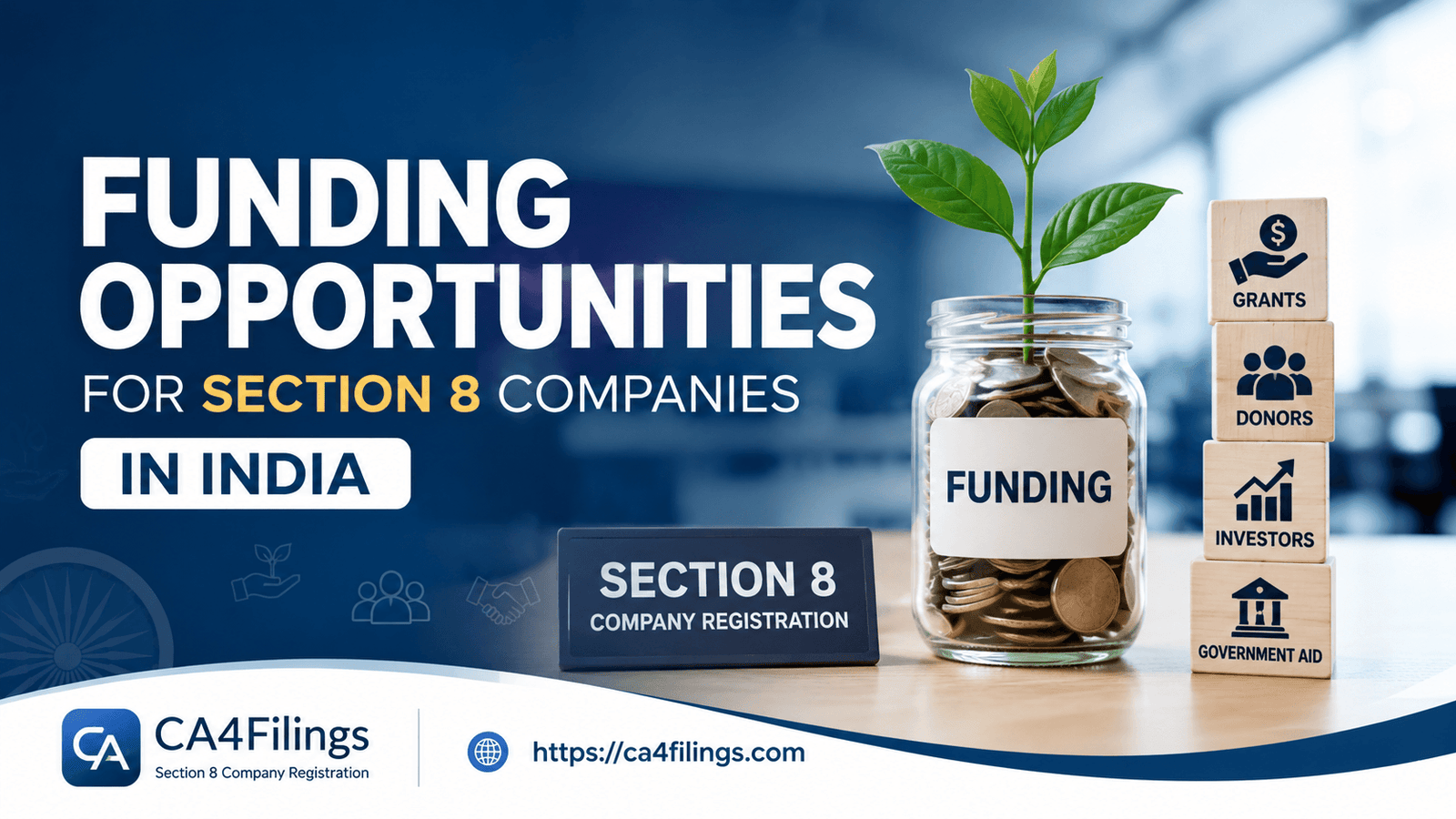
Many social entrepreneurs and visionaries today choose the non-profit route to address systemic issues, and Exploring Funding Opportunities for Section 8 Companies in India is often the first major challenge they face. While these entities are governed by the Companies Act, 2013, they operate with a noble mission, making their financial structure unique. If you are just starting your journey, the first step is ensuring your entity is legally sound; you can check our Section 8 Company Registration services to ensure your documentation is perfect from day one. Once established, the focus naturally shifts toward sustainability. Many believe that non-profits only rely on charity, but in reality, Section 8 companies can tap into a diverse ecosystem of capital to fuel their mission.
Understanding the Financial Landscape for Section 8 Entities
When we talk about Exploring Funding Opportunities for Section 8 Companies in India, it is vital to understand that your source of funds must align with your objects. Unlike private limited companies, Section 8 entities cannot distribute dividends to members; all profits must be reinvested into the stated social objectives.
Because of this "profit-reinvestment" mandate, investors and grantors view these companies differently. You aren't just selling a product; you are selling a social outcome. This changes the pitch and the process of securing capital.
Primary Funding Avenues Available
If you are currently Exploring Funding Opportunities for Section 8 Companies in India, you should consider these four main pillars of capital:
1. Corporate Social Responsibility (CSR) Grants
This is perhaps the most significant avenue. Under Section 135 of the Companies Act, large corporations in India are mandated to spend a portion of their profits on social welfare. A Section 8 company with a valid 80G and 12A registration is an ideal partner for these corporates.
Pro Tip: Build a project proposal that maps directly to the themes listed in Schedule VII of the Companies Act, such as education, healthcare, or environmental sustainability.
2. Government Grants and Subsidies
Government ministries often float tenders or grant schemes for NGOs and Section 8 companies working on public welfare. Whether it is the Ministry of Social Justice or local state-level development boards, these funds are substantial if your compliance track record is spotless.
3. Impact Investing and Social Venture Capital
This is a modern approach. Some venture capitalists and impact investors are specifically looking for entities that generate measurable social impact alongside financial sustainability. While they don't get dividends, they may provide "soft loans" or equity-like instruments that help you scale your operations.
4. Crowd-funding and Public Donations
With the rise of digital platforms, raising small amounts from thousands of individuals has become easier. This is excellent for specific project-based funding rather than general administrative costs.
Strategic Steps for Securing Funding
Exploring Funding Opportunities for Section 8 Companies in India is not just about having a great idea; it is about transparency. Before you approach a donor, follow these steps:
Ensure Regulatory Compliance: You must hold a valid 12A and 80G certificate. Without these, you cannot offer tax exemptions to donors, which kills most funding discussions instantly.
Maintain Audit-Ready Books: Donors want to see where every rupee goes. Professional accounting is not optional; it is a prerequisite for credibility.
Draft an Impact Report: Don’t just show a balance sheet. Show the number of lives impacted. Quantitative data is the language of modern philanthropy.
H3: Managing Donor Relations
Once you find a funding source, the relationship shouldn't end with the receipt. Providing timely utilization certificates and periodic impact updates is what turns a one-time donor into a long-term partner.
Frequently Asked Questions
Can a Section 8 company take loans from directors?
Yes, a Section 8 company can accept loans from directors, provided the terms are clearly defined and the transaction is recorded in the board minutes. However, this should not be treated as a substitute for long-term sustainable funding.
Is foreign funding possible for Section 8 companies?
Yes, but you must obtain FCRA (Foreign Contribution Regulation Act) registration. Never accept foreign funds without this registration, as it is a severe violation of Indian law.
How does CSR funding benefit a donor?
CSR funding is mandatory for large companies. By partnering with a compliant Section 8 company, they fulfill their statutory obligations while ensuring their brand is associated with a credible social cause.
Do I need a professional to handle my compliances?
Absolutely. Given the stringent reporting requirements under the Ministry of Corporate Affairs (MCA) and the Income Tax Department, having a professional firm like CA4Filings manage your annual filings ensures that you remain eligible for grants.
Partnering for Success
Exploring Funding Opportunities for Section 8 Companies in India is a continuous process that requires a mix of legal compliance, strategic networking, and transparent reporting. You do not have to navigate this complex regulatory and financial landscape alone.
At CA4Filings, we specialize in helping social enterprises streamline their operations and maintain the high level of compliance necessary to attract top-tier donors and investors. Whether you are in the early stages of incorporation or looking to scale your existing non-profit, our team of experienced professionals is here to guide you. Reach out to CA4Filings today, and let us help you turn your social vision into a sustainable reality.
Latest Updates
ca4filings.com Services


























-registration.png)