How to Use DSC for Signing PDF Documents
Learn How to Use DSC for Signing PDF Documents step-by-step. Ensure legal compliance, secure documents, and create legally binding electronic signatures easily.
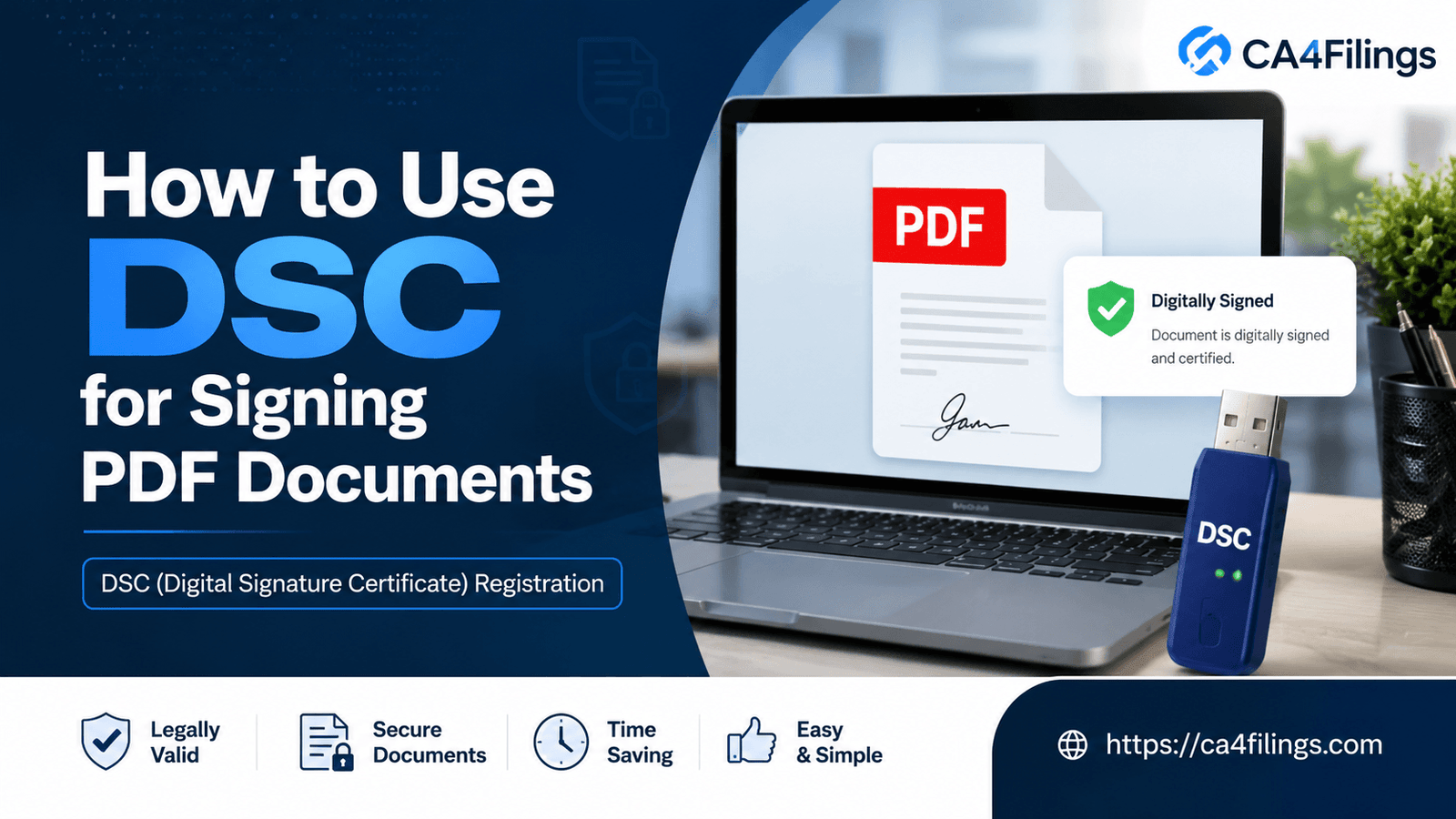
In today's fast-paced corporate landscape, traditional paperwork is rapidly becoming a relic of the past. As a business owner, director, or working professional in India, you have likely encountered situations where physical signatures create unnecessary administrative bottlenecks. Whether you are filing statutory returns with the Ministry of Corporate Affairs (MCA), submitting income tax forms, or finalizing commercial vendor agreements, digital transformation is no longer optional—it is statutory. Understanding How to Use DSC for Signing PDF Documents has become an essential operational skill. Utilizing electronic signatures ensures that your critical business documentation remains pristine, fast to process, and impervious to physical tampering.
At CA4Filings, we frequently see entrepreneurs struggling with traditional verification methods when transitioning to digitized processes. To make things frictionless, obtaining a validated token through our professional DSC (Digital Signature Certificate) Registration service is the critical first step. Once you possess a valid certificate housed securely inside a cryptographic USB token, you gain the technical capability to deploy valid signatures across your official electronic paperwork. In this comprehensive guide, we will provide exhaustive, step-by-step instructions on How to Use DSC for Signing PDF Documents seamlessly, keeping you fully aligned with the technical mandates of the Information Technology Act, 2000.
Why Use a Digital Signature Certificate for PDF Signing?
Before jumping straight into the technical setup, it is vital to clarify why a standard handwritten signature or a simple scanned image placeholder falls short. A Digital Signature Certificate (DSC) provides an advanced cryptographic layer that links your identity directly to the data payload of the electronic file. When you are signing PDF documents using a physical token, you are embedding an unalterable code that immediately breaks if any unauthorized alteration occurs post-signature.
From a regulatory standpoint, relying on robust DSC for PDF signing provides multiple structural advantages:
Legally Binding: Under Section 5 of the IT Act, 2000, digital signatures are explicitly recognized on par with physical ink signatures, creating perfect legal compliance across courtrooms and regulatory bodies.
Data Integrity and Secure Documents: The moment you complete the process of signing PDF documents via your cryptographic token, the underlying layout gets permanently locked. Any subsequent edit immediately invalidates the cryptographic seal.
Enhanced Security: Unlike superficial e-signatures, which can easily be copied, pasted, or spoofed by bad actors, a DSC requires physical possession of a password-protected hardware token (typically a Class 3 USB drive), ensuring robust, secure signing workflows.
Prerequisites: Before You Begin the PDF Signing Process
To implement the workflow outlined below for How to Use DSC for Signing PDF Documents, you must have the necessary technical prerequisites properly configured on your desktop or laptop. Ensure you have the following elements ready:
A Valid Digital Signature Certificate: Ensure your Class 3 token is valid and active. If your token has expired, you must complete your registration renewal immediately.
Cryptographic USB Token Drivers: Insert your hardware device (e.g., ePass2003, CryptoID) into your system port and run the built-in driver installer executable.
Adobe Acrobat Reader DC: This is the industry-standard software required to deploy valid signatures. Ensure you use the native application rather than a regular web browser extension.
Step-by-Step Instructions: How to Use DSC for Signing PDF Documents
Follow these precise, field-tested instructions to master How to Use DSC for Signing PDF Documents using Adobe Acrobat Reader DC. This configuration ensures that all your business files contain authentic, valid signatures recognized by Indian authorities.
Step 1: Connect Your USB Token and Launch Adobe Acrobat
Plug your physical USB crypto-token directly into your machine's USB port. Open Adobe Acrobat Reader DC and navigate to File > Open to select the specific PDF document that requires your legal authorization.
Step 2: Locate the Certificates Tool Panel
Once your file is loaded, click on the Tools tab located in the upper-left corner of the primary application interface. Scroll down through the utility options until you find the gold-colored icon labeled Certificates. Click Open to trigger the specialized menu overlay directly on top of your open document.
Step 3: Choose the "Digitally Sign" Option
In the newly appeared horizontal toolbar at the top of your workspace, select the option labeled Digitally Sign. A small popup window will prompt you to use your mouse cursor to drag and draw a designated rectangular box in the specific location where you want your electronic validation stamp to display.
Step 4: Select Your Valid Digital Signature Certificate
As soon as you finish drawing the box, Adobe will scan your local hardware keychains and present a dialog box listing the active certificates found on your connected USB drive. Select your official name from the list and hit Continue. A visual preview window will appear, displaying your name, date, time stamp, and hashing details.
Step 5: Lock Document and Execute Signature
For ultimate legal compliance and secure signing, check the box that says "Lock document after signing" if you are the final or sole signee. Click the blue Sign button. The program will prompt you to save the newly updated file; give it a revised name (e.g., "Agreement_Signed.pdf") and click Save.
Step 6: Enter Your Security User PIN
To finalize the cryptographic handshake, your token software provider will show a secure prompt requesting your confidential User PIN. Input your private access passcode and click OK. Your document is now fully secure, finalized, and legally binding.
Advanced Expert Tips: Troubleshooting & Valid Signatures
Knowing How to Use DSC for Signing PDF Documents is only half the battle. As Chartered Accountants, we frequently resolve technical snags for our clients regarding validation status. If a document shows a confusing question mark badge stating "Signature Validity Unknown", do not panic. This simply means Adobe's trust store has not yet registered the root certificate of the Indian Certifying Authority (like Pantasign, Capricorn, or VSign).
To fix this and force the document to show green checkmarks for all valid signatures, right-click the signature box, select Signature Properties > Show Signer's Certificate. Navigate over to the Trust tab, click on Add to Trusted Certificates, check all checkboxes for certified documents, and click OK. Refresh the page, and your file will transform into a fully compliant, secure document with a trusted green badge.
Frequently Asked Questions (FAQs)
Q1: Can I use basic e-signatures instead of a Class 3 DSC for legal business contracts?
While simple e-signatures are acceptable for informal internal memos, official government compliance filings (MCA, GST, Income Tax) and high-value vendor contracts explicitly mandate a cryptographic Class 3 DSC to fulfill absolute legal compliance.
Q2: Why does my signed PDF document show an error when I try to make structural edits?
This is the intentional security mechanism of a secure signing framework. If a PDF document is structurally edited after a digital signature is placed, the cryptographic hash breaks instantly, alerting all stakeholders that the document has been tampered with.
Q3: How can I perform multiple independent signatures on a single official PDF report?
When configuring the setup on How to Use DSC for Signing PDF Documents for multiple parties, make sure the first signee does NOT check the "Lock document after signing" box. This leaves the file open for subsequent stakeholders to apply their respective credentials sequentially.
Q4: Do I need an active internet connection every single time I sign a document?
An active connection is recommended to connect to a secure timestamping server, ensuring the time and date of your signature are legally verifiable and cannot be falsified by changing your local system clock.
Streamline Your Corporate Identity with CA4Filings
Transitioning away from physical paper trails saves significant administrative hours, reduces manual handling errors, and establishes bulletproof operational records. Mastering the procedure of How to Use DSC for Signing PDF Documents empowers business leaders to execute cross-border deals, regulatory filings, and corporate resolutions instantly from any location globally.
However, maintaining active compliance begins with securing the correct, officially audited cryptographic credentials. Do not let complex setup guidelines slow your growth down. Let our seasoned corporate advisory team handle your end-to-end statutory registrations seamlessly. Contact CA4Filings today, and let us fast-track your business verification infrastructure with zero manual hassle!
Latest Updates
ca4filings.com Services

























-registration.png)