How to Handle Trademark Disputes in India
Learn how to handle trademark disputes in India effectively. Discover expert strategies, legal remedies, and brand protection tips from CA4Filings.
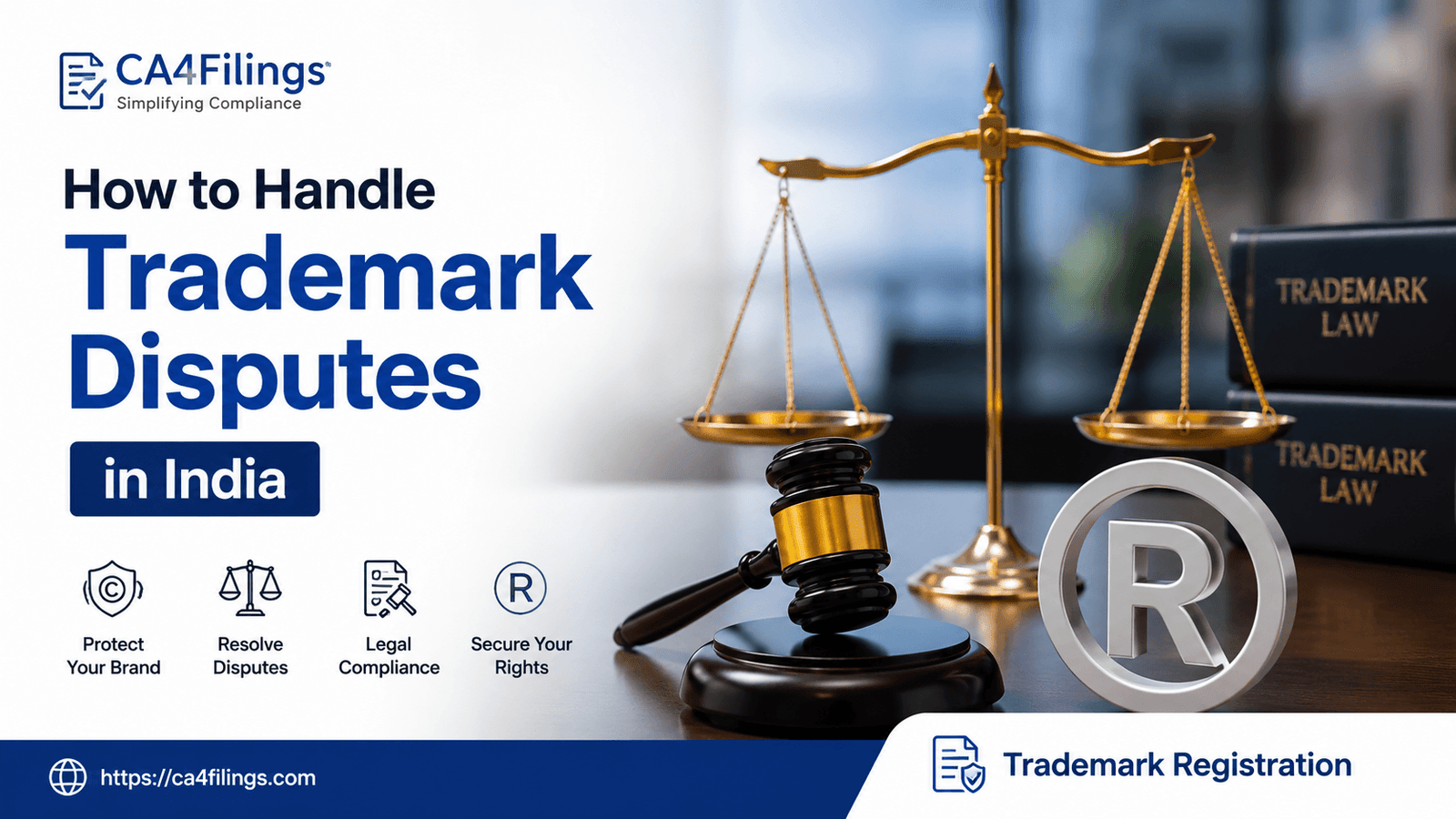
Imagine working tirelessly for years to build a brand, only to discover another business using a nearly identical name, logo, or tagline. It is a frustrating situation that many Indian business owners face. Your brand identity is your most valuable asset, and protecting it requires a solid understanding of intellectual property laws. If you find yourself in a position where someone is copying your brand, or if you have been accused of copying another, knowing how to handle trademark disputes in India is critical to safeguarding your business.
At CA4Filings, we regularly assist entrepreneurs and established enterprises with secure Trademark Registration to prevent these exact headaches. However, even with a registered mark, conflicts can still arise. When they do, navigating the legal maze of Indian IP law requires a strategic approach.
Understanding Trademark Disputes in India
A trademark dispute usually occurs when two parties claim rights over the same or deceptively similar brand assets. This conflict resolution process typically involves either an infringement claim or a passing off action.
Infringement: This applies when your mark is officially registered. It is a statutory remedy under the Trade Marks Act, 1999, giving you the exclusive right to use the mark and seek legal remedies if someone copies it.
Passing Off: This is a common-law remedy used for unregistered trademarks. If someone rides on your goodwill and tries to pass off their goods as yours, you can still take legal action, though the burden of proof is much higher.
Preventing these conflicts begins with strong brand protection and a thorough search before launching any brand name.
Steps on How to Handle Trademark Disputes in India
If you find your business entangled in a brand conflict, a systematic, calm approach will save you time, money, and stress. Here is the step-by-step roadmap we recommend at CA4Filings.
1. Evaluate the Merits of the Case
Before rushing to court, take a step back and analyze the situation. Look closely at the competing marks. Are they visually, phonetically, or conceptually similar? Are both businesses operating in the same industry or geographic region? Gather your evidence, including your registration certificates, proof of first use (like older invoices, website launch dates, or newspaper ads), and examples of the conflicting mark.
2. Issue or Respond to a Legal Notice
The formal journey of dispute resolution almost always begins with a Cease-and-Desist notice.
If you are the aggrieved party: Have a qualified professional send a formal notice demanding the other party stop using your mark immediately.
If you received a notice: Do not panic, but do not ignore it either. Ignoring a legal notice can weaken your position if the matter goes to court. Take expert legal advice to evaluate if the claim holds water or if it is just a case of bullying.
3. Explore Amicable Settlement Strategies
Litigation can be lengthy and expensive in India. Often, the smartest business move involves alternative dispute resolution methods like negotiation or mediation. Many disputes end successfully with settlement strategies where one party agrees to slightly modify their logo, restrict their business to a specific territory, or phase out the problematic name over a few months.
4. Initiate Legal Proceedings (Litigation)
When negotiations fail, you must enforce your trademark rights through the courts. This involves filing a lawsuit in a District Court or High Court having jurisdiction. You can seek interim injunctions (temporary stay orders to stop the other party immediately) while the main lawsuit is being decided.
Legal Considerations and Remedies Under Indian Law
When handling a dispute, it helps to understand what the law actually offers you. Under the framework of Indian IP law, the courts can grant several types of relief to protect your business.
Injunctions: This is the most crucial remedy. A temporary or permanent injunction restrains the infringer from using your brand name during or after the lawsuit.
Damages or Accounts of Profits: You can ask the court to award monetary compensation for the losses your business suffered, or demand the profits the infringer made by using your name.
Delivery up and Destruction: The court can order the infringing party to erase the logos from their products or completely destroy the counterfeit packaging and marketing materials.
Practical Tips for Robust Brand Protection
To ensure you never have to worry about how to handle trademark disputes in India, proactive trademark enforcement is key.
Document Everything: Always maintain a file of your earliest invoices, marketing campaigns, and press releases. In trademark law, the "prior user" (the one who used the mark first) holds massive leverage.
Monitor the Trademark Journal: The government regularly publishes trademark applications. Keep an eye out for similar names so you can file an opposition before their mark gets registered.
Act Quickly: If you spot an infringement, do not wait. Delaying action can be interpreted by courts as acquiescence, meaning you slept on your rights and let the other party grow.
Frequently Asked Questions (FAQs)
What is the difference between infringement and passing off?
Infringement is a legal remedy available only to registered trademark owners when their rights are violated. Passing off applies to unregistered marks, where a business must prove that they have significant goodwill and that the competitor is deceiving the public.
How long does it take to resolve a trademark dispute in India?
If resolved through mutual settlement or a cease-and-desist notice, it can take anywhere from a few weeks to a few months. However, if the dispute goes to full-scale court litigation, it can take a few years to reach a final judgment, though temporary stay orders can be obtained much faster.
Can a prior user defeat a registered trademark owner in India?
Yes. Indian trademark law highly respects the rights of a "prior user." If you can conclusively prove that your business was using a brand name continuously before the other party registered it, you can successfully defend your brand or even challenge their registration.
Do I need a trademark attorney to handle a dispute?
While you can handle initial correspondence yourself, it is highly recommended to involve a specialized trademark attorney or consultant when dealing with legal notices, filing court cases, or drafting settlement agreements to protect your commercial interests.
Securing Your Brand with CA4Filings
Knowing how to handle trademark disputes in India protects your hard-earned reputation from being diluted by copycats. While legal battles can look intimidating, approaching them with clear documentation, a solid understanding of trademark law, and the right strategic guidance can help you resolve conflicts efficiently.
The absolute best defense against future disputes is a clean, undisputed registration right at the start. If you are looking to secure your brand, resolve a brand conflict, or need reliable legal advice on protecting your intellectual property, our team at CA4Filings is here to guide you every step of the way. Reach out to us today, and let us ensure your business's identity remains exclusively yours.
Latest Updates
ca4filings.com Services




















-registration.png)