The Importance of ROC Compliance for Franchise Businesses
The Importance of ROC Compliance for Franchise Businesses ensures legal safety, transparency, and smooth growth for franchises in India.
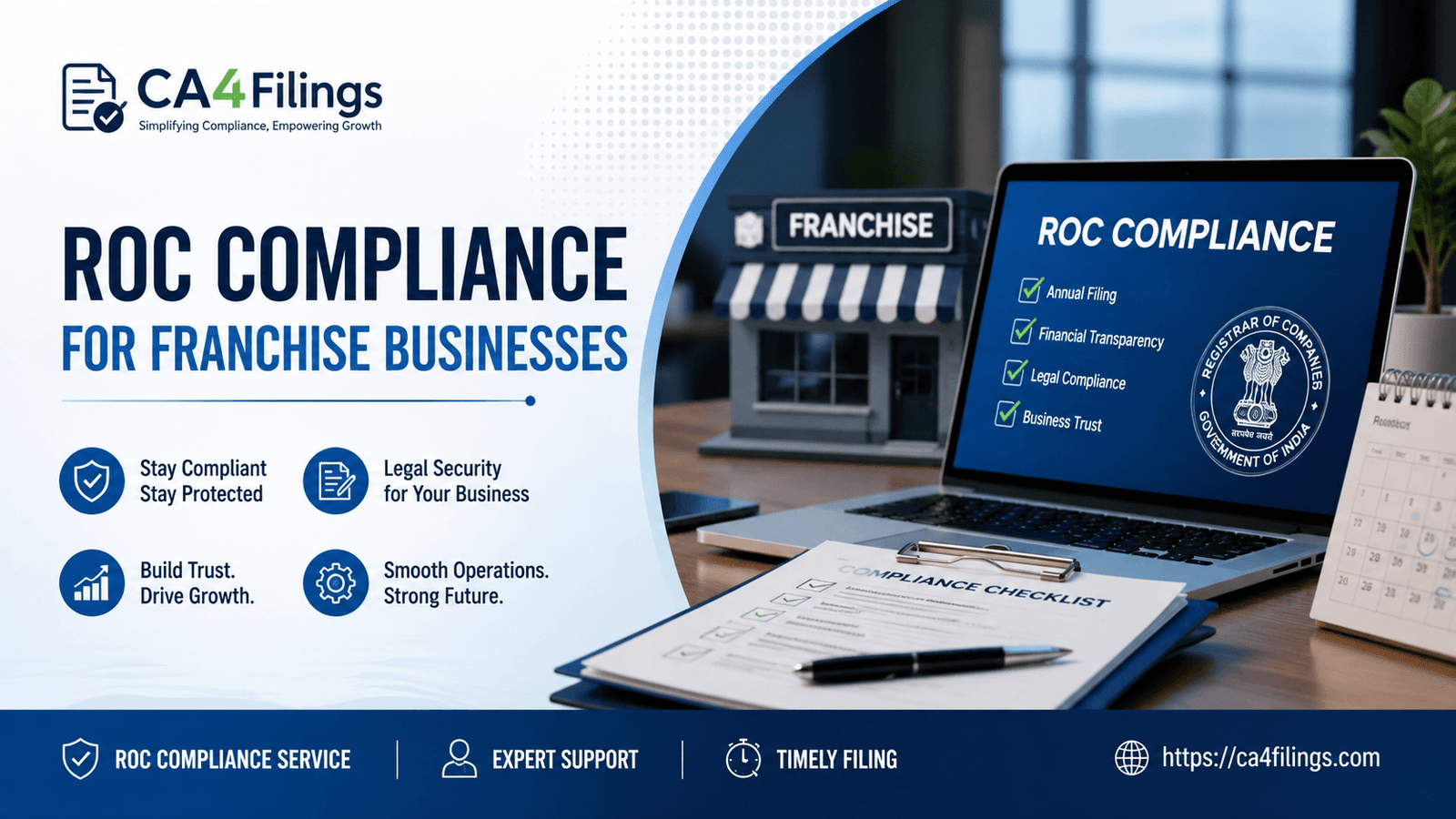
Running a franchise business in India can be highly rewarding, especially in today’s fast-growing market where brands are expanding rapidly across cities and towns. However, many franchise owners focus only on sales, expansion, and operations while ignoring one critical aspect — compliance with the Registrar of Companies (ROC). Understanding The Importance of ROC Compliance for Franchise Businesses is essential for avoiding legal complications and ensuring sustainable growth.
Whether you operate a food chain franchise, retail outlet, education center, or service-based franchise, ROC compliance plays a major role in maintaining the legal and financial health of your business. At CA4Filings, we often see franchise businesses facing penalties simply because they were unaware of filing obligations or annual compliance requirements.
If your franchise entity is registered as a Private Limited Company or LLP, regular ROC filings are mandatory. Businesses seeking professional support often choose our ROC Compliance Service to ensure timely filings and complete compliance management without stress.
In this article, we will explain The Importance of ROC Compliance for Franchise Businesses, key filing requirements, practical benefits, common mistakes, and how proper compliance helps franchise businesses grow confidently.
Understanding ROC Compliance for Franchise Businesses
Before discussing The Importance of ROC Compliance for Franchise Businesses, it is important to understand what ROC compliance actually means.
ROC compliance refers to the legal filing and reporting requirements that companies and LLPs must fulfill under the Companies Act, 2013 and LLP Act, 2008. These compliances are monitored by the Registrar of Companies under the Ministry of Corporate Affairs (MCA).
For franchise business compliance in India, ROC obligations generally include:
- Annual return filing
- Financial statement filing
- Director disclosures
- Maintaining statutory registers
- Board meeting documentation
- Auditor appointment filings
- Event-based filings
Even if your franchise business is inactive or newly established, compliance obligations usually continue.
The Importance of ROC Compliance for Franchise Businesses in India
Ensures Legal Continuity of the Franchise Business
One of the biggest reasons why The Importance of ROC Compliance for Franchise Businesses cannot be ignored is legal continuity. Non-compliance can result in heavy penalties, director disqualification, or even company strike-off by ROC.
For example, many franchise operators assume that once GST and Income Tax are filed, all legal requirements are complete. However, ROC filings are entirely separate and equally important.
Timely compliance ensures:
- Your company remains legally active
- Directors avoid penalties
- Franchise agreements remain legally secure
- Investors maintain trust in the business
Builds Financial Transparency for Franchise Businesses
Financial transparency for franchise businesses is crucial when dealing with franchisors, investors, banks, and vendors.
ROC filings create a documented financial history of the business, including:
- Revenue records
- Profitability
- Liabilities
- Shareholding structure
- Director information
This transparency becomes especially useful when:
- Applying for loans
- Expanding to new franchise locations
- Seeking investors
- Renewing franchise agreements
The importance of ROC compliance becomes even more visible during audits or due diligence processes.
Helps in Protecting Franchise Through Compliance
Protecting franchise through compliance is not just about avoiding penalties. It is also about safeguarding the reputation and operational continuity of the business.
Imagine a scenario where a popular franchise outlet wants to expand into multiple states. During the verification process, the franchisor discovers pending ROC filings and legal notices against the franchise company. This can delay approvals or even terminate partnership opportunities.
Proper ROC compliance helps in:
- Maintaining brand reputation
- Avoiding litigation risks
- Preventing operational disruptions
- Supporting smooth business expansion
Key ROC Compliance Requirements for Franchise Businesses
Annual Filing Requirements
Most franchise businesses registered as companies must file:
Financial Statements (AOC-4)
This filing includes:
- Balance sheet
- Profit & loss statement
- Auditor report
Annual Return (MGT-7)
This includes:
- Shareholding details
- Director information
- Registered office details
Late filing attracts additional government fees and penalties.
Event-Based ROC Filings
Certain business events also require ROC reporting, such as:
- Change in directors
- Increase in share capital
- Change in registered office
- Appointment of auditors
- Changes in company structure
Ignoring these filings can create legal complications later.
Maintaining Statutory Registers
ROC regulations require companies to maintain proper records including:
- Register of members
- Register of directors
- Minutes of meetings
- Share certificates
These records are often checked during inspections or audits.
Benefits of Ensuring ROC Compliance
Understanding the benefits of ensuring ROC compliance helps franchise owners treat compliance as a business investment rather than an expense.
Improved Business Credibility
A compliant franchise business appears more trustworthy to:
- Customers
- Investors
- Banks
- Vendors
- Franchisors
This credibility supports long-term business relationships.
Easier Funding and Loan Approvals
Banks and NBFCs usually verify ROC records before approving loans.
A franchise business with updated ROC filings has a better chance of:
- Securing business loans
- Getting working capital finance
- Attracting private investment
Smooth Franchise Expansion
Compliance for thriving franchise businesses becomes essential when scaling operations.
For example, if a franchise wants to open outlets in multiple cities, franchisors usually verify:
- ROC status
- Filing history
- Financial records
- Director compliance
Regular ROC filings create confidence among stakeholders.
Avoidance of Heavy Penalties
One of the practical reasons behind The Importance of ROC Compliance for Franchise Businesses is avoiding unnecessary penalties.
ROC late filing fees can increase significantly over time. In some cases:
- Directors may face disqualification
- Companies may become inactive
- Legal notices may be issued
Timely compliance saves both money and stress.
Common ROC Compliance Mistakes Franchise Businesses Make
Ignoring Annual Filings
Many small franchise operators believe compliance is required only when business activity is high. This misconception often leads to penalties.
Even dormant companies must complete mandatory filings.
Missing Filing Deadlines
Late filing is one of the most common issues in franchise business compliance in India.
Businesses should maintain:
- Compliance calendars
- Reminder systems
- Professional support
Poor Documentation
Improper maintenance of board resolutions, financial statements, or statutory registers can create future legal problems.
Good documentation is essential for smooth compliance management.
Practical Tips for Franchise Businesses to Stay ROC Compliant
Hire Professional Compliance Experts
Working with professionals ensures:
- Accurate filing
- Timely submissions
- Proper documentation
- Reduced legal risk
Maintain Proper Accounting Records
Updated accounting records simplify ROC filings and reduce errors.
Businesses should regularly:
- Reconcile accounts
- Maintain invoices
- Record expenses properly
Use Compliance Tracking Systems
Digital compliance tracking tools help franchise owners monitor deadlines and avoid delays.
FAQs on The Importance of ROC Compliance for Franchise Businesses
Is ROC compliance mandatory for all franchise businesses?
ROC compliance is mandatory for franchise businesses registered as Private Limited Companies, OPCs, or LLPs.
What happens if a franchise business misses ROC filing deadlines?
Late filing can result in additional fees, penalties, director disqualification, and legal complications.
How does ROC compliance help franchise expansion?
ROC compliance builds trust with franchisors, investors, and banks, making expansion smoother and legally secure.
Can small franchise businesses ignore ROC compliance?
No. Regardless of business size, companies and LLPs must fulfill ROC filing obligations.
Why is financial transparency important for franchise businesses?
Financial transparency helps attract investors, secure loans, and strengthen business credibility.
Understanding The Importance of ROC Compliance for Franchise Businesses is essential for every franchise owner who wants to build a legally secure and financially stable business in India. ROC compliance is not merely a legal formality — it directly impacts your credibility, expansion opportunities, financial transparency, and long-term business success.
From avoiding penalties to protecting franchise through compliance, proper ROC management plays a crucial role in helping businesses operate smoothly and confidently. Franchise owners who prioritize compliance are better prepared for growth, funding, and operational stability.
At CA4Filings, we help franchise businesses manage ROC filings professionally, accurately, and on time. Whether you are starting a new franchise or managing multiple outlets, our expert team can simplify your compliance journey and help your business stay legally protected at every stage.
Latest Updates
ca4filings.com Services



























-registration.png)