Trends in ESIC Registration: What Employers Should Know
Discover Trends in ESIC Registration: What Employers Should Know. Stay compliant, boost employee welfare, and avoid penalties with CA4Filings' expert help.
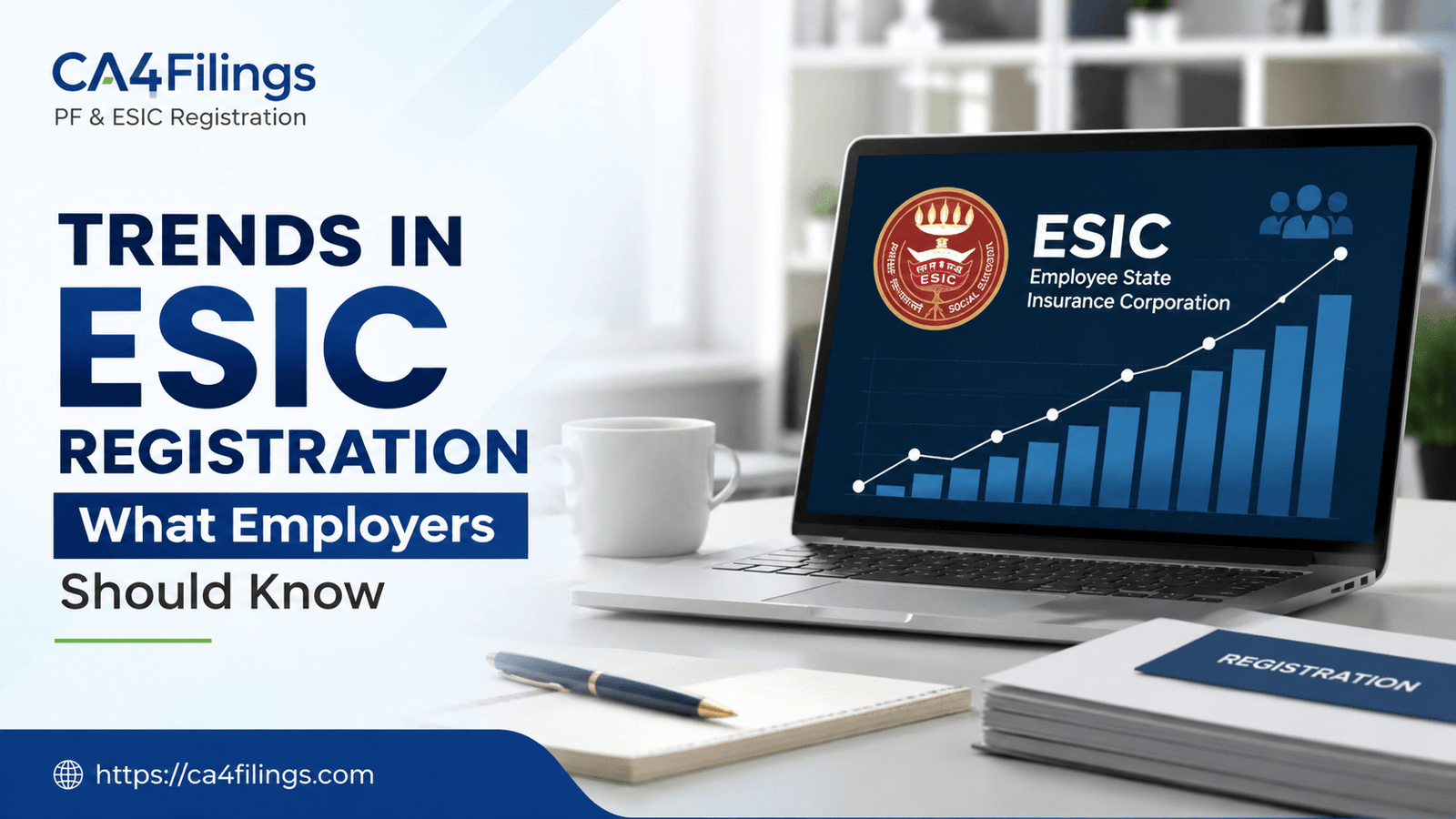
Hello business owners and entrepreneurs! As a Chartered Accountant consulting numerous businesses across India, I often get questions about statutory compliances. One area that is evolving rapidly is employee social security. If you are managing a growing team, keeping up with the Trends in ESIC Registration: What Employers Should Know is absolutely crucial for your company’s long-term success and legal safety. Ignorance of the law is never an excuse, and staying updated protects both your business and your hardworking staff.
The Employee State Insurance Corporation (ESIC) is no longer just a basic statutory checkbox; it is a vital component of modern workplace regulations. Managing these rules can sometimes feel overwhelming, but securing PF & ESIC Registration on time is the best step toward ensuring financial stability and insurance coverage for your team. Let me walk you through the current landscape, practical insights, and how these ongoing shifts impact your day-to-day business operations.
Why Tracking Trends in ESIC Registration: What Employers Should Know Matters
You might wonder why you need to track these trends instead of just doing a one-time registration. The truth is, Indian labor laws are undergoing significant transformations. The government is actively pushing to bring more unorganized workers into the formal sector, meaning the regulatory net is widening.
When you understand the Trends in ESIC Registration: What Employers Should Know, you do more than just avoid fines. You actively contribute to employee welfare and employment rights. A compliant business attracts better talent because employees feel secure knowing their employer takes their health insurance and social security seriously. Moreover, proactive compliance ensures uninterrupted business operations, keeping you far away from the stress of show-cause notices or legal disputes.
Major Trends in ESIC Registration: What Employers Should Know Today
In my daily practice, I have noticed several shifts in how the ESIC department operates and enforces rules. Here are the top trends you need to implement in your business strategy:
1. Complete Digitalization of Compliances
Gone are the days of manual registers and standing in long queues at government offices. One of the biggest Trends in ESIC Registration: What Employers Should Know is the shift to the Shram Suvidha portal and the ESIC’s own upgraded digital infrastructure. Everything from initial ESIC registration to monthly challan generation is now online. This integration means the government can track delays in real-time. If you miss a deadline, the system automatically flags your establishment.
2. Broader Focus on Employee Healthcare and Safety
The pandemic fundamentally changed how we view employee safety. The ESIC is aggressively expanding its network of hospitals and dispensaries. They are also partnering with private hospitals to ensure workers get timely medical care. As an employer, this means your ESIC contributions directly translate to tangible, life-saving employee benefits. Promoting this within your company can boost morale and loyalty.
3. Integration with EPFO and Income Tax Portals
Another critical shift in workplace regulations is data sharing among government departments. Your ESIC portal, Provident Fund (PF) filings, and Income Tax returns are increasingly cross-referenced. If you declare a certain number of employees or wage expense in your income tax audit but show lower numbers in your ESIC filings, you are inviting regulatory scrutiny. Honesty and consistency across all compliance platforms are non-negotiable.
4. Stricter Penalties for Non-Compliance
With digital tracking comes stricter enforcement. The authorities are imposing heavy penalties, damages, and even prosecuting habitual defaulters. Understanding Trends in ESIC Registration: What Employers Should Know means recognizing that delayed payments will incur interest at 12% per annum, alongside penal damages that can go up to 100% of the arrears. Ensuring financial stability requires paying these statutory dues on or before the 15th of every month.
Employer Responsibilities and Best Practices
To navigate these regulatory changes seamlessly, you must have a clear understanding of your employer responsibilities. Any factory or establishment with 10 or more employees (20 in some states) drawing wages up to ₹21,000 per month must register under the ESI Act.
Here are a few practical tips from my desk to yours:
Maintain Accurate Records: Always keep your attendance and payroll registers updated. Discrepancies here are the first thing inspectors look for.
Timely KYC Updates: Ensure that the Aadhaar and bank account details of your employees are seeded into the ESIC portal promptly. This ensures they can access their benefits without running around for approvals.
Educate Your Staff: Many employees do not realize the extent of their ESIC benefits, which include maternity leave, sickness benefits, and dependents' pensions. Educating them enhances the perceived value of their employment.
The Impact on Employee Benefits and Retention
When we talk about Trends in ESIC Registration: What Employers Should Know, we cannot ignore the human element. Today’s workforce is smart. They value comprehensive insurance coverage and social security just as much as their in-hand salary.
By staying compliant and ensuring quick ESIC updates for new hires, you provide a massive safety net. If an employee faces a medical emergency, ESIC covers their treatment costs and provides cash benefits for the period they are out of work. This level of employee welfare creates a strong bond of trust between the management and the workforce, directly reducing attrition rates.
FAQs on Trends in ESIC Registration: What Employers Should Know
Q1: What is the current wage limit for ESIC applicability? Currently, an employee drawing gross wages up to ₹21,000 per month is covered under ESIC. For persons with disabilities, the wage limit is ₹25,000 per month.
Q2: Is it mandatory to do the registration online? Yes, the entire process of registration, return filing, and challan payment is strictly online. This is one of the key regulatory changes designed to improve transparency.
Q3: What happens if an employer fails to register under ESIC? Failure to register can result in severe financial penalties, recovery of arrears with interest, and in extreme cases, imprisonment for the directors or business owners.
Q4: Can we voluntarily opt for ESIC if we have less than 10 employees? No, voluntary registration is currently not permitted under the ESI Act. You must hit the minimum threshold of employees to fall under the statutory mandate.
Adapting to Trends in ESIC Registration: What Employers Should Know
Managing a business in India requires balancing growth with strict statutory adherence. As labor laws tighten and digital portals become smarter, staying updated on the Trends in ESIC Registration: What Employers Should Know is your best defense against non-compliance. It is not just a legal obligation; it is a moral commitment to the people who help build your business every single day.
If you are struggling to keep up with these continuous updates or need a trusted partner to handle your company’s compliances, do not take unnecessary risks. At CA4Filings, our team of seasoned professionals is dedicated to managing your statutory burdens so you can focus on what you do best—growing your business. Reach out to CA4Filings today, and let us streamline your compliance journey!
Latest Updates
ca4filings.com Services























-registration.png)