How to Amend Your Income Tax Return: A Step-by-Step Guide
How to Amend Your Income Tax Return: A Step-by-Step Guide – Learn the ITR correction process, timelines, mistakes to avoid, and expert tips.
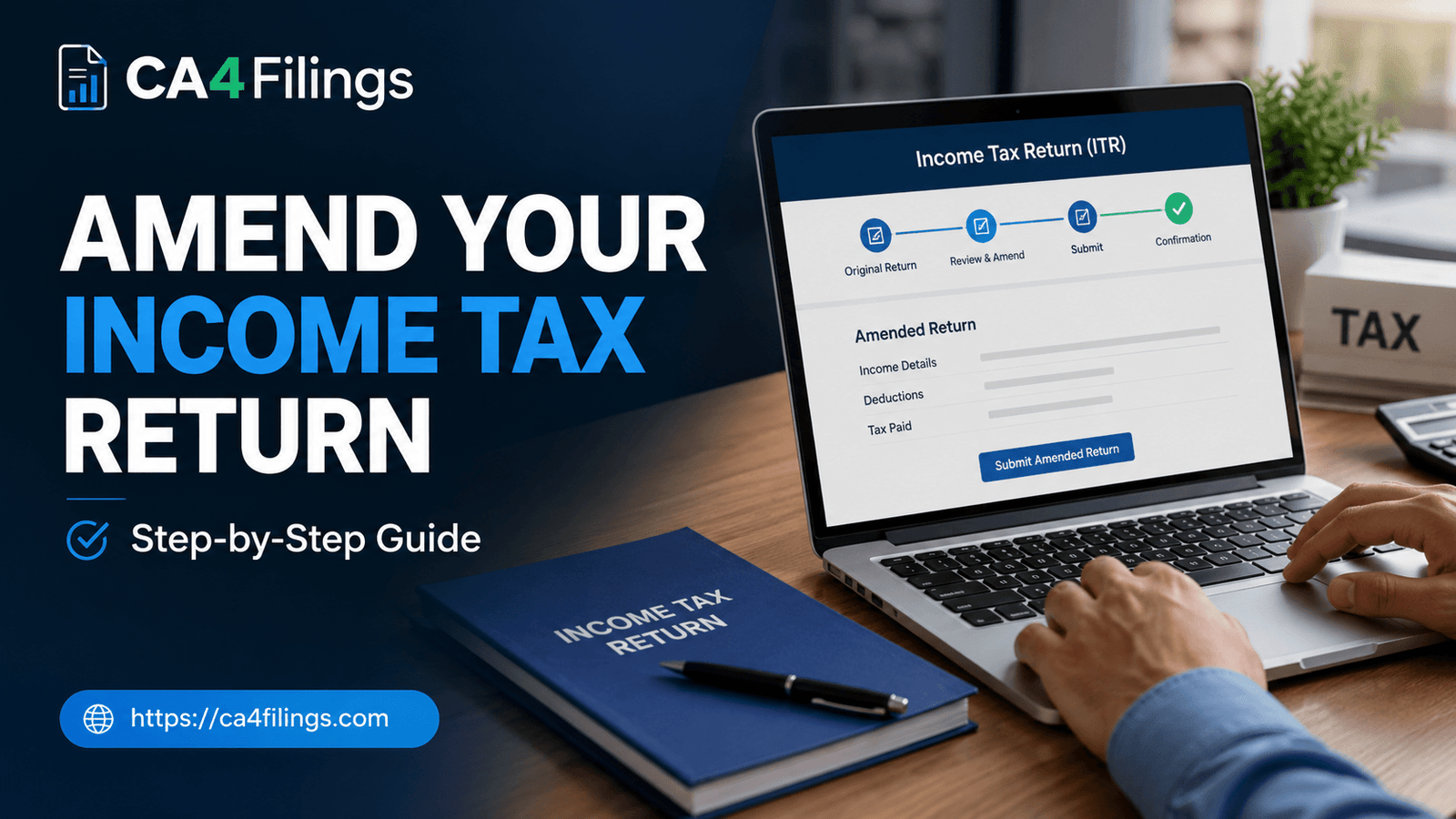
When it comes to income tax compliance, mistakes can happen even after carefully filing your return. A missed deduction, incorrect bank details, wrong income reporting, or forgotten investment declaration can create unnecessary stress. The good news is that the Income Tax Department allows taxpayers to correct such errors through a revised return. In this article, How to Amend Your Income Tax Return: A Step-by-Step Guide, CA4Filings explains everything you need to know in a simple, practical manner.
If you regularly handle taxes as a salaried employee, freelancer, or business owner, understanding amendments can save you from penalties, notices, and future complications. Many taxpayers seek professional support for Income Tax Return Filing to avoid such filing mistakes in the first place.
How to Amend Your Income Tax Return: A Step-by-Step Guide – Understanding the Basics
Before discussing the process, let’s understand what amending an income tax return actually means.
An amended or revised return allows a taxpayer to correct errors in an already-filed Income Tax Return (ITR). Under Indian tax laws, taxpayers can revise returns if they discover omissions, mistakes, or incorrect information after submission.
Common reasons for revising an ITR include:
- Missing income disclosure
- Incorrect deduction claims
- Wrong personal information
- Incorrect bank account details
- Selection of wrong ITR form
- Omitted capital gains or interest income
For example, a salaried employee may realise later that fixed deposit interest income was not included in the original filing. Instead of ignoring the mistake, filing a revised return is the correct approach.
Who Can Amend an Income Tax Return?
In How to Amend Your Income Tax Return: A Step-by-Step Guide, one common question taxpayers ask is whether everyone can revise their return.
The answer is generally yes.
You can amend your return if:
- You have already filed your original ITR.
- You discover a genuine mistake or omission.
- The revision is done within the permitted timeline.
However, timing matters. The Income Tax Department prescribes deadlines for filing revised returns, and missing those deadlines can limit your options.
How to Amend Your Income Tax Return: A Step-by-Step Guide – Step-by-Step Process
Here is the practical process followed by taxpayers in India.
Step 1: Identify the Error Clearly
Before rushing to revise your return, first determine exactly what needs correction.
Ask yourself:
- Is income missing?
- Is a deduction wrongly claimed?
- Is TDS information incorrect?
- Was the wrong assessment year selected?
Avoid revising without understanding the issue because multiple incorrect revisions can create confusion.
Step 2: Gather Supporting Documents
Collect all relevant documents before starting the amendment process.
These may include:
- Form 16
- Form 26AS
- AIS/TIS statements
- Bank statements
- Investment proofs
- Capital gains reports
- Previous ITR acknowledgement
Practical Tip from CA4Filings: Always compare your filed return with AIS and Form 26AS before revising.
Step 3: Log in to the Income Tax Portal
Visit the Income Tax e-filing portal and log in using your credentials.
Navigate to:
e-File → Income Tax Return → File Income Tax Return
Select the applicable assessment year.
Step 4: Choose “Revised Return”
This step is crucial in How to Amend Your Income Tax Return: A Step-by-Step Guide.
When asked about filing type, select:
Section 139(5) – Revised Return
You may need details from your original return, including:
- Original acknowledgement number
- Filing date of original return
Ensure these details are entered accurately.
Step 5: Correct the Information
Now update the incorrect information carefully.
Examples:
- Add omitted income.
- Correct deduction amounts.
- Update bank account details.
- Modify capital gains calculations.
- Rectify personal details.
Do not blindly copy the previous return. Review every section carefully.
Step 6: Validate and Submit
After corrections:
- Preview the return.
- Validate computations.
- Confirm tax liability or refund changes.
If additional tax becomes payable, make payment before submission.
Finally, submit the revised return.
Step 7: Complete Verification
Your revised return is not complete until verification.
Verification methods include:
- Aadhaar OTP
- Net banking
- Digital signature
- EVC through bank account
Without verification, your revised return may remain invalid.
Important Timelines for Revising Your Return
Understanding deadlines is essential in How to Amend Your Income Tax Return: A Step-by-Step Guide.
Tax laws permit revised returns within the prescribed period for the relevant assessment year.
Missing the deadline can create complications such as:
- Loss of correction opportunity
- Tax notices
- Interest liabilities
- Penalty exposure
Because tax rules can change, taxpayers should always check the latest compliance timelines or consult professionals.
Common Mistakes Taxpayers Make While Amending Returns
At CA4Filings, we frequently see taxpayers repeating avoidable errors.
Revising Without Reviewing AIS
Many taxpayers correct one issue but ignore mismatches appearing in AIS or Form 26AS.
Using the Wrong ITR Form Again
If the original form was incorrect, simply revising without changing the form will not solve the problem.
Ignoring Additional Tax Liability
Sometimes revisions increase taxable income. Taxpayers forget to pay additional tax before filing.
Filing Multiple Unnecessary Revisions
Repeated revisions can complicate records and increase scrutiny risk.
Professional review helps minimise these problems.
Practical Example: How an Amended Return Helps
Let’s consider a real-world scenario.
Mr. Sharma filed his ITR as a salaried employee. Two weeks later, he realised he forgot to include ₹85,000 interest income from fixed deposits.
If he ignores the omission:
- Income mismatch may arise.
- Tax notices may be issued.
- Interest and penalties could apply.
Instead, he files a revised return, includes the omitted income, pays additional tax, and stays compliant.
That is exactly why How to Amend Your Income Tax Return: A Step-by-Step Guide matters for responsible taxpayers.
FAQs – How to Amend Your Income Tax Return: A Step-by-Step Guide
Can I revise my return after receiving a refund?
Yes. Receiving a refund does not automatically prevent revision if permitted timelines are still open.
Is there a limit on the number of revised returns?
Tax rules may permit multiple revisions within the allowed timeframe, but unnecessary revisions should be avoided.
Will revising my return trigger scrutiny?
Not necessarily. Genuine corrections made properly are part of normal compliance.
What if I missed reporting income?
You should revise the return promptly and disclose the omitted income correctly.
Do business owners also need revised returns?
Absolutely. Business taxpayers often revise returns for expense corrections, turnover updates, or reporting adjustments.
How to Amend Your Income Tax Return: A Step-by-Step Guide
Mistakes in tax filing are common, but ignoring them is risky. How to Amend Your Income Tax Return: A Step-by-Step Guide shows that correcting an ITR is manageable when approached systematically.
The key is to:
- Identify errors quickly
- Review supporting documents
- Use the correct revision process
- Verify the updated return properly
At CA4Filings, we help salaried individuals, professionals, freelancers, and businesses handle tax corrections confidently and accurately. If you need expert assistance with revised returns, tax notices, or annual filing compliance, connect with CA4Filings today and let experienced professionals simplify your income tax journey.
Latest Updates
ca4filings.com Services



























-registration.png)