Startup Registration 101: Everything Founders Need to Know Before Launching
Confused about startup registration? Get expert insights from CA4Filings on incorporation, founder equity, and legal prep for your new business venture.
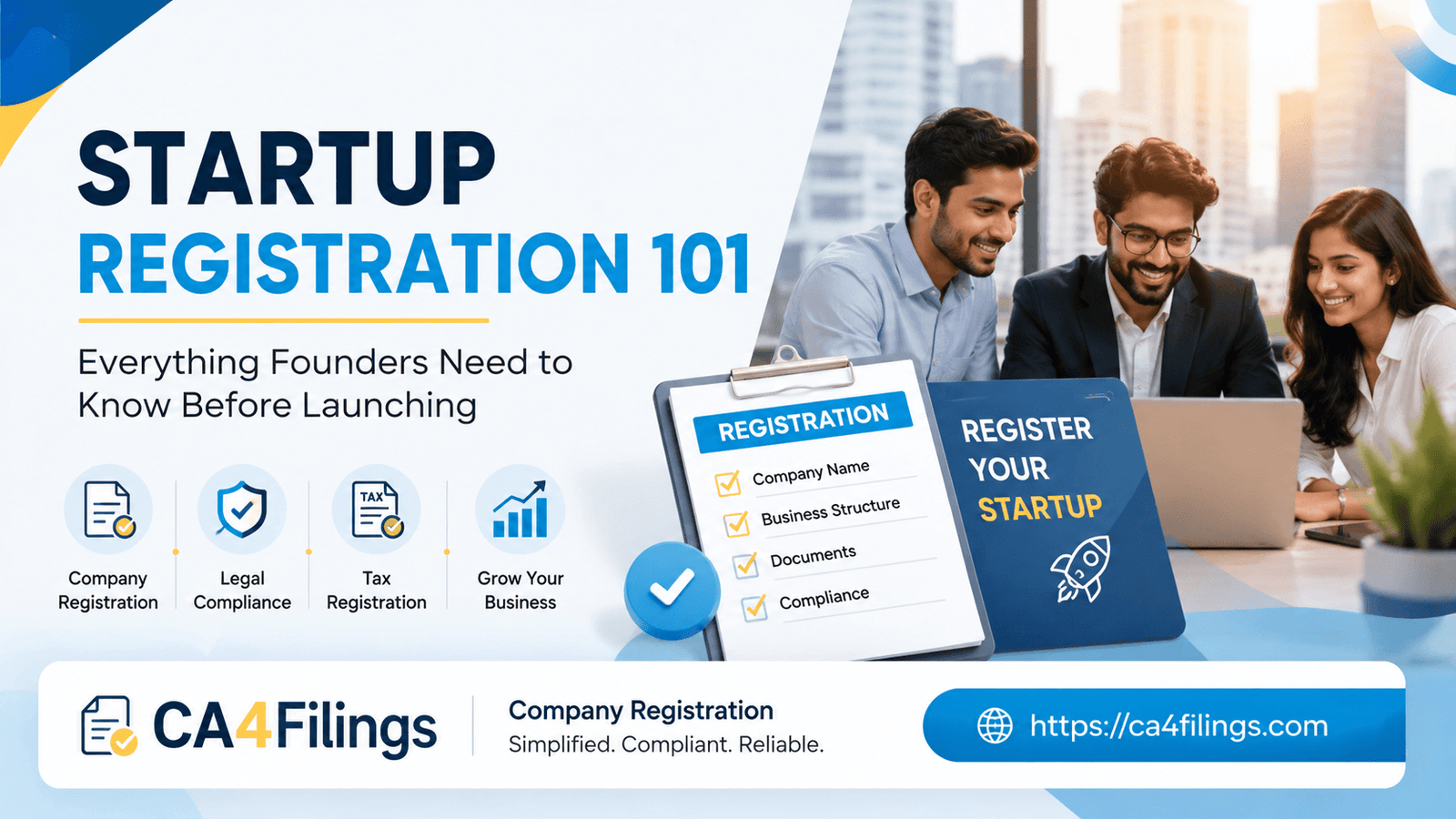
So, you’ve got a brilliant idea, a prototype in the works, and the fire to disrupt the market. Welcome to the rollercoaster of entrepreneurship! As a Chartered Accountant, I see hundreds of founders every year who are ready to take the plunge. However, the most critical step that often gets overlooked is proper startup registration. Getting your legal foundation right from day one isn't just about paperwork; it’s about setting the stage for growth, investment, and long-term peace of mind. If you are ready to give your vision a legal identity, our team at CA4Filings provides streamlined Company Registration services to help you kickstart your journey without the usual bureaucratic headaches.
Why Startup Registration Matters More Than You Think
Many founders ask me, "Can’t I just start selling and register later" Technically, yes, you could start as a sole proprietorship, but if you have big dreams of scaling business operations, that’s rarely the best path.
Proper startup registration transforms your venture into a separate legal entity. This provides a "corporate veil," protecting your personal assets from business liabilities. Beyond protection, it is the single most important factor when you begin talking to investors. When you seek seed funding legal support, the first thing a venture capital firm will examine is the cleanliness of your incorporation documents. If your house isn't in order, the deal can fall through.
Choosing the Right Legal Structure
Before you file for startup registration, you need to pick a structure that fits your goals. In India, the most popular options for new ventures are:
Private Limited Company (Pvt Ltd): The gold standard for tech startup formation and businesses eyeing venture capital. It allows for easy equity distribution and is highly scalable.
Limited Liability Partnership (LLP): Great for service-based businesses that want a mix of partner flexibility and limited liability.
One Person Company (OPC): Ideal for solo founders who want to retain full control while enjoying the benefits of a corporate structure.
Each structure has different compliance requirements. A Pvt Ltd company, for instance, requires annual audits and board meetings, which might seem daunting but are essential for venture capital prep.
The Fundamentals of Founder Equity and Structuring
A major part of the startup registration process that many founders ignore is the Shareholders' Agreement (SHA). You might be best friends with your co-founders today, but how will you handle founder equity if someone decides to leave after two years?
We always advise our clients to document:
Vesting Schedules: Ensure that equity is earned over time, not given away entirely on Day 1.
Roles and Responsibilities: Clear definitions help avoid boardroom squabbles later.
Exit Clauses: What happens if one founder wants to sell their stake?
Taking care of these details during your bootstrap legal phase prevents costly litigation and founder disputes down the road.
Step-by-Step: The Startup Registration Journey
Navigating the Registrar of Companies (ROC) portal can be intimidating. Here is the typical flow we manage for our clients:
Name Reservation: Getting your company name approved is the first hurdle. Ensure it is unique and follows the Ministry of Corporate Affairs (MCA) guidelines.
Digital Signatures (DSC) and DIN: Every director needs a Digital Signature Certificate and a Director Identification Number.
Drafting Incorporation Documents: This includes the Memorandum of Association (MoA) and Articles of Association (AoA). These documents define the "rulebook" for your company.
Final Filing: Submitting the e-forms to the ROC. Once verified, you receive your Certificate of Incorporation (COI).
Frequently Asked Questions
Is startup registration mandatory for all businesses?
It is not mandatory for a sole proprietorship, but it is highly recommended if you plan to hire employees, raise money, or scale business operations significantly.
How long does the process usually take?
With the current MCA processes, startup registration generally takes between 7 to 15 working days, provided your documentation is accurate and there are no queries from the Registrar.
Does CA4Filings help with post-registration compliance?
Yes. Registration is just the beginning. We provide ongoing support for annual filings, tax returns, and GST compliance to ensure your startup remains in good standing.
What is the difference between a startup and a small business?
While often used interchangeably, in the Indian regulatory context, a "startup" often refers to an entity recognized by the DPIIT (Department for Promotion of Industry and Internal Trade) which allows for specific tax exemptions and easier procurement.
Ready to Launch? Let’s Get Started
Building a company is hard enough; you shouldn't have to struggle with the legal fine print. Whether you are prepping for your first round of funding or building a lean, profitable business, getting your startup registration done by experts is the safest bet.
At CA4Filings, we don’t just file forms; we act as your strategic partners in the initial days of your journey. We understand the nuances of tech startup formation and the rigors of venture capital prep. Let us handle the legalities so you can focus on what you do best: building the future.
Latest Updates
ca4filings.com Services



























-registration.png)