How to Claim a Refund ITR for Excess TDS Deducted by Your Bank
Did your bank deduct too much TDS? Learn how to claim your refund ITR easily. Follow our expert guide at CA4Filings to secure your hard-earned money today.
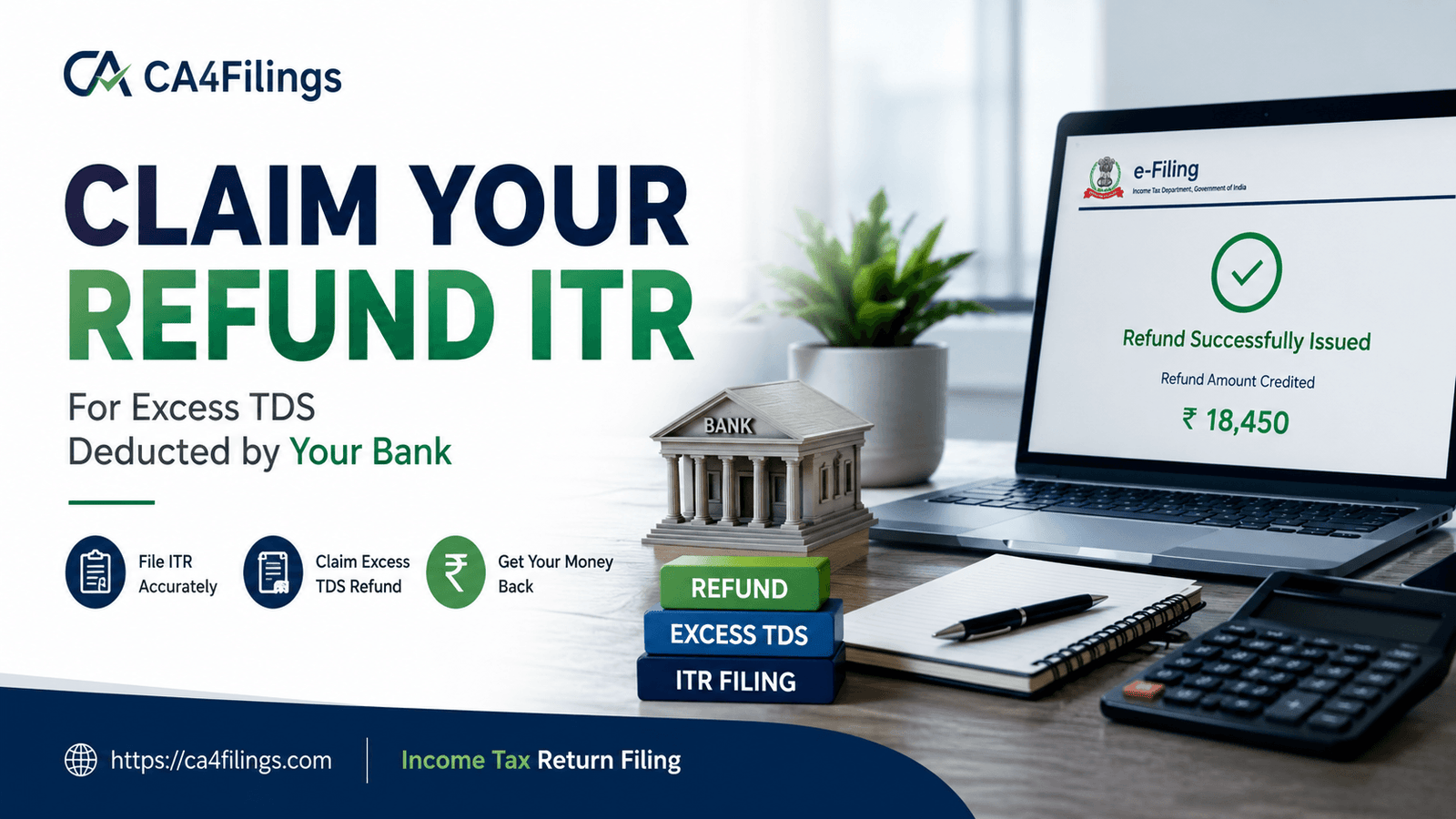
It is a common scenario: you check your bank balance or receive an interest certificate, only to realize the bank has deducted more TDS than necessary on your fixed deposit interest. Many taxpayers feel anxious when they see their income reduced by tax deductions, but the good news is that if you have paid more than your actual tax liability, you are entitled to a refund itr. Navigating the complexities of tax compliance can be overwhelming, which is why we at CA4Filings offer streamlined Income Tax Return Filing services to help you manage your finances with ease. Understanding the rules is the first step toward reclaiming what is rightfully yours.
When you earn interest on a fixed deposit, the bank is legally obligated to deduct TDS if the interest exceeds the specified threshold (currently ₹40,000 for regular individuals, or ₹50,000 for senior citizens). However, if your total annual income is below the taxable limit, or if you are eligible for deductions that lower your tax liability, the TDS deducted by the bank becomes an excess payment. This is where filing a refund itr becomes your primary tool for financial recovery.
How to Prevent Excess TDS Deduction
Before we discuss the refund claim process, it is worth noting that prevention is often better than a cure. You can avoid unnecessary TDS deductions by submitting the correct forms at the beginning of the financial year.
Form 15G and 15H: These are self-declaration forms. If your estimated total income for the year is below the basic exemption limit, you can submit Form 15G (for individuals under 60) or Form 15H (for senior citizens) to your bank. This instructs them not to deduct TDS on your fixed deposit tds interest.
Lower Deduction Certificate: If your income is taxable but you expect your final tax liability to be lower than the TDS rate, you can apply to the Income Tax Department for a lower deduction certificate under Section 197.
Step-by-Step Guide: The Refund Claim Process
If the bank has already deducted the tax, you must proceed with the formal refund claim process by filing your annual return. Here is the road map to ensure your refund itr is processed smoothly.
1. Verification of Tax Credit
Before you start filing, download your Form 26AS from the TRACES portal. This statement reflects all the taxes deducted against your PAN. It is vital to perform form 26AS matching with your bank interest certificates. If there is a mismatch, the Income Tax Department may reject your refund claim. Ensure that the interest income and the corresponding TDS amounts are accurately captured.
2. Collating Necessary Documents
Gather your interest certificates provided by your bank. Cross-verify these against your bank statements. Having these documents handy makes the filing process error-free and speeds up the verification by the IT department.
3. Filing Your Return
When you file your ITR, ensure that you select the correct ITR form applicable to your income sources. In the "Taxes Paid and Verification" section, the TDS details will automatically populate from your Form 26AS. If you have any additional income, report it accurately. By disclosing your total income and verifying the TDS already paid, the system will automatically calculate whether you are owed a refund itr.
4. E-Verification
After submitting your return, the most crucial step is e-verification. Many taxpayers forget this, leading to the rejection of their refund. You can verify your return using Aadhaar OTP or net banking. Without verification, your refund itr will not be processed.
Common Reasons for Refund Delays
Sometimes, even after filing, the refund gets delayed. As experts at CA4Filings, we often see these common pitfalls:
Bank Account Not Pre-validated: You must pre-validate your bank account on the Income Tax e-filing portal and ensure it is linked with your PAN.
Incorrect Personal Details: Discrepancies in your name, address, or bank IFSC code can lead to technical failures.
Outstanding Demands: If you have an unpaid tax demand from previous years, the department may adjust your refund against that liability.
Frequently Asked Questions (FAQs)
Q: Is it mandatory to file a return to get my TDS back?
A: Yes, the only way to claim a refund itr for excess TDS is to file your Income Tax Return. The bank cannot refund TDS once it has been deposited with the government.
Q: How long does it take to get the refund?
A: Once your ITR is processed and the refund is determined, it is usually credited to your bank account within a few weeks, provided your details are accurate.
Q: What if I forget to submit Form 15G/15H?
A: If you forget to submit these forms and the bank deducts TDS, don't worry. You can still claim the entire amount back as a refund when you file your ITR.
Q: Does CA4Filings help with ITR filing?
A: Absolutely! We specialize in ensuring your tax returns are filed accurately, maximizing your chances of a quick refund without any hassles.
Claiming your refund itr should not be a source of stress. By keeping a close eye on your fixed deposit tds and ensuring timely form 26AS matching, you can easily navigate the tax season. Remember, the Income Tax Department is committed to returning excess taxes, provided you follow the documentation and verification procedures correctly.
If you find the process confusing or simply want to ensure that your taxes are filed correctly by experts, CA4Filings is here to assist. Let our team of experienced professionals handle your filing so you can focus on what matters most to you. Contact us today for a stress-free tax filing experience!
Latest Updates
ca4filings.com Services

























-registration.png)