Understanding the Role of the Registrar in DIR-3 KYC
Understanding the Role of the Registrar in DIR-3 KYC: Learn responsibilities, compliance steps, penalties, and expert filing guidance.
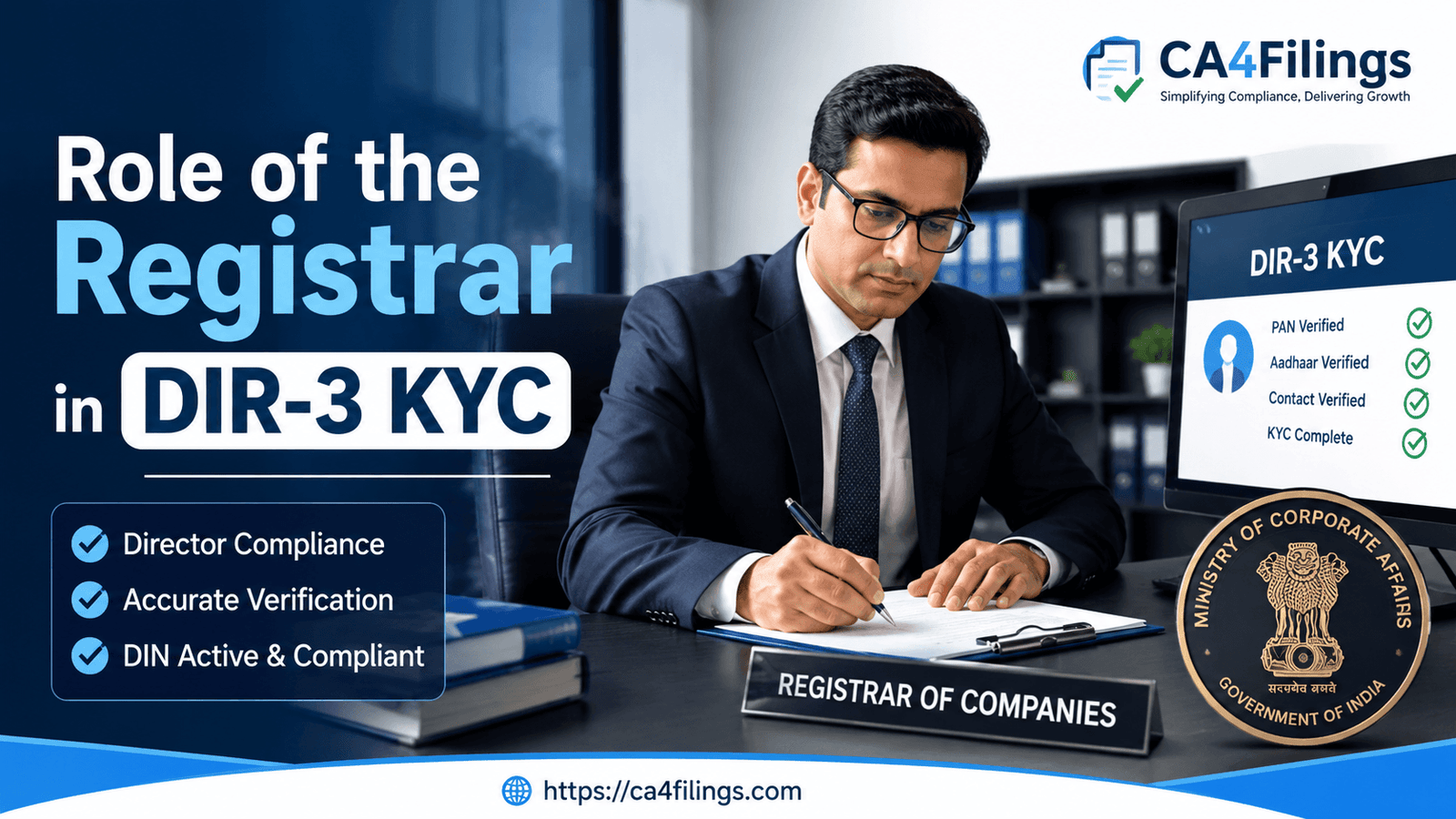
For every company director in India, maintaining compliance with the Ministry of Corporate Affairs (MCA) is not just a legal responsibility but also a critical part of corporate governance. One of the most important annual compliance requirements is DIR-3 KYC. While many directors focus only on filing the form, very few truly understand the authority and responsibilities of the Registrar in this process. That is why Understanding the Role of the Registrar in DIR-3 KYC becomes essential for directors, designated partners, and companies alike.
At CA4Filings, we regularly assist directors who face issues such as DIN deactivation, delayed filings, or incorrect KYC details due to a lack of clarity about the Registrar’s role. If you are planning to complete your DIR-3 KYC filing, understanding how the Registrar functions can help you avoid unnecessary penalties and compliance complications.
In this article, we will explain Understanding the Role of the Registrar in DIR-3 KYC in simple terms, along with practical insights and compliance tips that every director should know.
What is DIR-3 KYC?
DIR-3 KYC is an annual compliance form introduced by the MCA for directors holding a Director Identification Number (DIN). The purpose of this filing is to verify and update the director’s personal information in MCA records.
The form includes details such as:
- Director’s name
- PAN number
- Aadhaar number
- Mobile number
- Email ID
- Residential address
The filing ensures that the MCA database remains accurate and updated.
Understanding the Role of the Registrar in DIR-3 KYC
Understanding the Role of the Registrar in DIR-3 KYC is important because the Registrar acts as the key authority responsible for monitoring compliance and maintaining the authenticity of director records.
The Registrar of Companies (ROC), functioning under the MCA, oversees the DIR-3 KYC process and ensures that directors comply with the legal requirements under the Companies Act, 2013.
Why Does the Registrar Monitor DIR-3 KYC?
The Registrar plays a crucial role in:
- Preventing fraudulent activities
- Maintaining accurate director information
- Ensuring corporate transparency
- Identifying inactive or fake DIN holders
- Strengthening regulatory compliance
For example, if a director changes their mobile number or address and fails to update the KYC records, the Registrar may consider the information outdated or inaccurate, which can lead to DIN deactivation.
Key Responsibilities of the Registrar in DIR-3 KYC
Understanding the Role of the Registrar in DIR-3 KYC becomes clearer when we examine the specific responsibilities handled by the ROC.
Verification of Director Information
One of the primary duties of the Registrar is to verify the details submitted in the DIR-3 KYC form.
The ROC checks:
- PAN authentication
- Aadhaar verification
- Email and mobile OTP validation
- Consistency of personal details
This verification process helps eliminate duplicate or fake identities from the MCA database.
Monitoring Annual Compliance
The Registrar ensures that every eligible DIN holder files DIR-3 KYC within the prescribed due date.
If a director fails to comply:
- The DIN may be marked as “Deactivated due to non-filing of DIR-3 KYC.”
- Additional government fees may apply.
- The director may face difficulties in company-related filings.
This is one of the most practical examples of Understanding the Role of the Registrar in DIR-3 KYC because the ROC directly controls DIN status and compliance enforcement.
Maintaining MCA Records
Another important responsibility of the Registrar is maintaining updated records of company directors.
The ROC database is used by:
- Banks
- Investors
- Government authorities
- Financial institutions
- Regulatory bodies
Accurate records improve corporate transparency and help establish trust in business operations.
Issuing Notices and Compliance Alerts
When directors fail to complete their DIR-3 KYC filing, the Registrar may issue compliance notices or alerts.
These notices serve as reminders and may include:
- Filing deadlines
- Penalty information
- DIN deactivation warnings
- Instructions for reactivation
Ignoring these notices can create long-term compliance issues for directors and companies.
Consequences of Non-Compliance
Understanding the Role of the Registrar in DIR-3 KYC also means understanding the consequences of failing to comply.
DIN Deactivation
If DIR-3 KYC is not filed within the due date, the Registrar can deactivate the DIN.
A deactivated DIN can create serious problems because the director may not be able to:
- Sign MCA forms
- Act as an active director
- Participate in company filings
- Incorporate new companies
Additional Fees and Penalties
Late filing attracts additional government fees. Directors often end up paying unnecessary penalties simply because they overlooked the compliance timeline.
Impact on Company Operations
If multiple directors in a company fail to complete DIR-3 KYC, it can delay:
- Annual filings
- Board resolutions
- Company incorporation processes
- Financial approvals
This is why Understanding the Role of the Registrar in DIR-3 KYC is not just important for directors but also for businesses as a whole.
Step-by-Step Process Followed by the Registrar
To better understand Understanding the Role of the Registrar in DIR-3 KYC, let us look at how the process works.
Step 1: Submission of DIR-3 KYC Form
The director submits the form through the MCA portal with the required documents and DSC.
Step 2: Validation of Information
The Registrar verifies the details submitted in the form.
Step 3: Approval or Rejection
If the information is accurate, the filing is approved.
If discrepancies are found, the form may be rejected or marked for resubmission.
Step 4: Updating MCA Records
Once approved, the updated information is reflected in MCA records.
Practical Tips for Directors
At CA4Filings, we always advise directors to follow certain best practices to avoid compliance problems.
Keep Contact Details Updated
Ensure that your email ID and mobile number remain active and accessible for OTP verification.
File Before the Due Date
Avoid last-minute filing to prevent technical glitches or portal delays.
Use Accurate Information
Even small mismatches in PAN or Aadhaar details can result in rejection.
Consult Compliance Experts
Professional guidance can save time and reduce the risk of filing errors.
Common Mistakes Directors Make
While Understanding the Role of the Registrar in DIR-3 KYC, it is equally important to understand common filing mistakes.
Using Incorrect DSC
Many directors use expired Digital Signature Certificates, leading to filing failures.
Ignoring MCA Notifications
Directors often miss important compliance notices issued by the Registrar.
Filing with Outdated Information
Submitting old addresses or inactive contact details may result in discrepancies.
How CA4Filings Helps Directors with DIR-3 KYC
At CA4Filings, we understand that compliance procedures can sometimes feel confusing and time-consuming.
Our experts assist directors with:
- Accurate DIR-3 KYC filing
- DIN status verification
- Document preparation
- DSC support
- Compliance reminders
- MCA issue resolution
With professional support, directors can avoid penalties and ensure smooth compliance with ROC requirements.
FAQs
What is the role of the Registrar in DIR-3 KYC?
The Registrar verifies director information, monitors compliance, updates MCA records, and enforces penalties for non-compliance.
What happens if DIR-3 KYC is not filed?
The DIN may get deactivated, and additional government fees may apply.
Can a deactivated DIN be reactivated?
Yes, the DIN can usually be reactivated after filing DIR-3 KYC with applicable late fees.
Is DIR-3 KYC mandatory every year?
Yes, eligible directors must complete DIR-3 KYC annually to maintain active DIN status.
Why is Understanding the Role of the Registrar in DIR-3 KYC important?
It helps directors understand compliance responsibilities, avoid penalties, and maintain accurate MCA records.
Understanding the Role of the Registrar in DIR-3 KYC is essential for every company director in India. The Registrar is not merely a reviewing authority but a key compliance regulator responsible for maintaining transparency, verifying director identities, and ensuring accurate MCA records.
Ignoring DIR-3 KYC compliance can lead to DIN deactivation, penalties, and operational challenges for companies. By understanding the Registrar’s role and following proper compliance practices, directors can avoid unnecessary legal and financial complications.
At CA4Filings, we help directors complete DIR-3 KYC filings smoothly, accurately, and on time. If you want hassle-free compliance support and expert guidance, connect with CA4Filings today and keep your DIN active without stress.
Latest Updates
ca4filings.com Services

























-registration.png)