Avoiding Costly Mistakes: How to Company Registration the Right Way
Thinking about how to company registration? Avoid common pitfalls and ensure a smooth start for your business with these expert tips from CA4Filings.
Starting a new venture is an exhilarating journey, but for many entrepreneurs in India, the administrative hurdles feel like a daunting marathon. If you are currently researching how to company registration to give your dream a legal identity, you are already on the right path toward professional growth. Navigating the regulatory landscape can be complex, but with the right guidance, you can secure your business foundation efficiently. At CA4Filings, we specialize in seamless Company Registration to ensure you focus on scaling your business rather than drowning in paperwork. Understanding exactly how to company registration is not just about filing forms; it is about protecting your personal assets and setting your venture up for long-term compliance.
Choosing the Right Legal Entity
One of the most frequent incorporation errors we see at CA4Filings is business owners choosing the wrong structure. Whether you opt for a Private Limited Company, Limited Liability Partnership (LLP), or a One Person Company (OPC), your choice impacts your tax liability, compliance burden, and future fundraising potential.
Before you proceed with learning how to company registration, consider these factors:
Liability: Do you want to protect personal assets?
Scalability: Do you plan on bringing in investors later?
Compliance: Can your business handle the annual filing requirements of a company versus an LLP?
Selecting the correct legal entity is the bedrock of a successful business. If you misjudge this, you might end up paying higher taxes or facing unnecessary regulatory burdens down the line.
Avoiding Common Incorporation Errors
When learning how to company registration, it is easy to get lost in the jargon of the Ministry of Corporate Affairs (MCA) portal. Many founders try to DIY the process to save on professional fees, only to face rejections due to minor technicalities.
Common mistakes include:
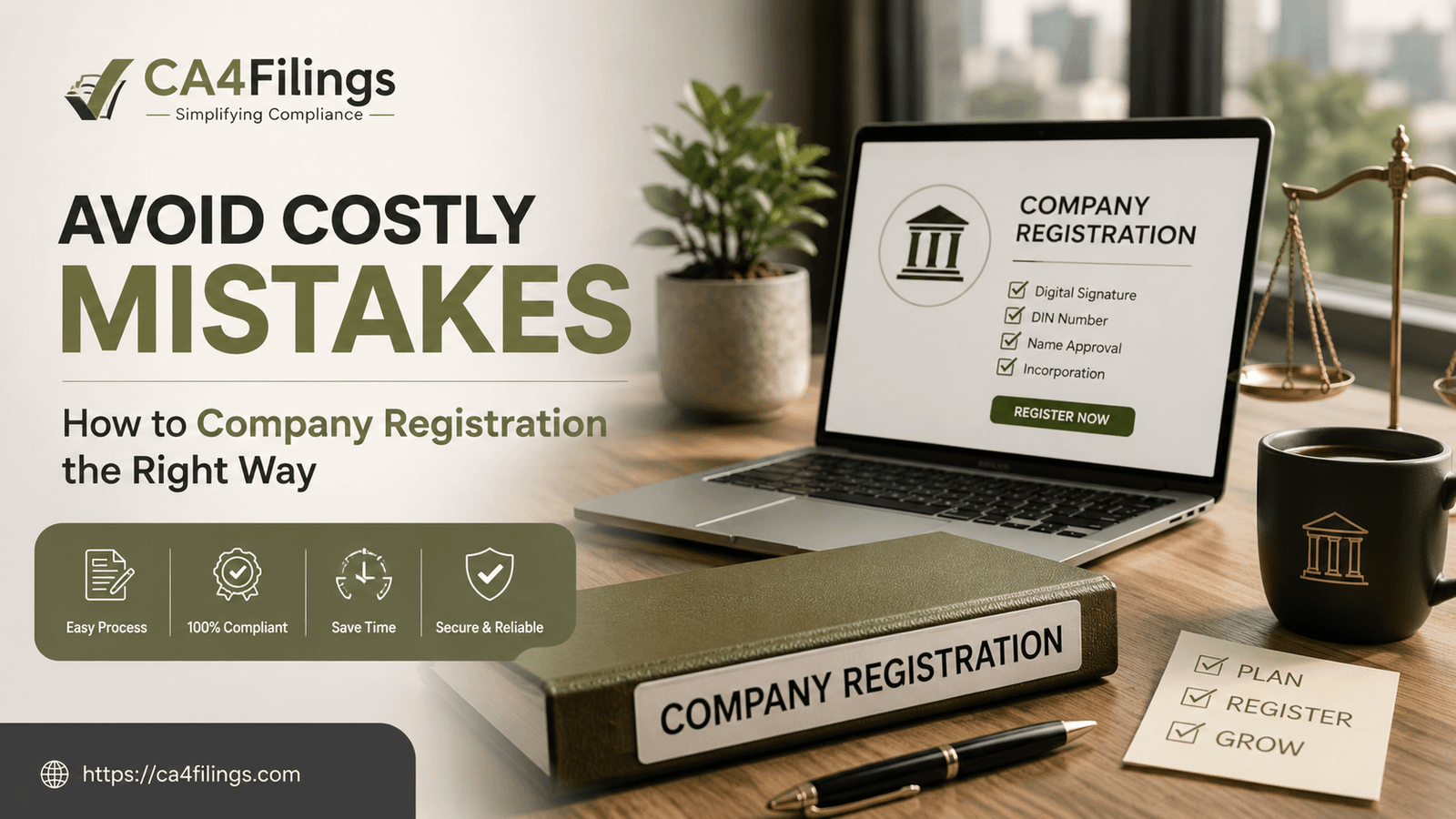
Inaccurate Name Approval: Choosing a name that is too similar to an existing entity.
Incorrect Registered Office Address: Failing to provide valid proof, which leads to immediate rejection.
Discrepancies in Digital Signatures (DSC): Ensuring the DSCs are valid and properly mapped is crucial for the digital filing process.
The Financial Side: Filing Fees and Hidden Costs
Budgeting for how to company registration goes beyond just the government filing fees. While the MCA has a standard fee structure, you must account for stamp duty, professional consultancy charges, and the cost of obtaining digital signatures.
Always maintain transparency in your books from day one. Hidden costs, if not accounted for, can disrupt your initial working capital. We always advise our clients to keep a contingency fund specifically for the incorporation phase to cover unexpected document attestation or translation costs.
Beyond the Basics: Documents and Compliance
Once you have mastered how to company registration, the journey has only just begun. Many entrepreneurs forget that a registered entity requires internal governance documents to function smoothly.
The Role of Corporate Bylaws and Operating Agreements
For a Private Limited Company, your corporate bylaws (Articles of Association) act as the rulebook for how your company is governed. If you are forming an LLP, an operating agreement is essential to define the rights and duties of partners. Skipping these or using generic templates can lead to severe partner disputes in the future.
Protecting Your Business
While your focus is on the paperwork, do not neglect the practical side of risk management. Securing business insurance is a vital step immediately following your successful incorporation. Whether it is professional indemnity or property insurance, having a safety net is just as important as the registration certificate itself.
The Importance of a Registered Agent
In India, the concept of a "registered agent" is integrated into the role of the company secretary or the authorized signatory who manages your MCA filings. This person is responsible for receiving official notices. Ensure your authorized contact is reliable and stays updated with the latest MCA notifications.
Frequently Asked Questions
Is it mandatory to have a commercial office space for registration?
Not necessarily. You can register your company at your residential address provided you have a No Objection Certificate (NOC) from the owner and a valid utility bill.
How long does the process take?
Generally, if your documentation is perfect, the process takes about 7 to 14 working days, depending on the speed of name approval and MCA processing times.
Can I change my business structure later?
Yes, you can convert your business from a Sole Proprietorship or an LLP to a Private Limited Company later, but it involves additional legal procedures and costs. It is always cheaper and more efficient to get it right the first time.
Why do I need professional help for this?
"How to company registration" involves a series of interconnected digital steps. A single error can delay your approval by weeks. Experts ensure that every declaration and attachment is legally sound from the start.
Securing Your Business Future
Understanding how to company registration is the first significant milestone for any entrepreneur. It transforms an idea into a recognized legal entity, opening doors to bank accounts, funding opportunities, and market trust. However, the complexity of the process means that even small mistakes can cause major setbacks.
Don't leave the future of your company to guesswork. At CA4Filings, we handle the complexities of government portals, compliance checks, and legal documentation so you don't have to. Let our team of experienced professionals guide you through the process, ensuring your business launch is as smooth as possible.
Latest Updates
ca4filings.com Services


























-registration.png)