The Ultimate Survival Manual for Small-Scale OPC Registration Compliance
Learn how small businesses can manage OPC registration compliance, annual filings, accounts, exemptions, and practical compliance tips with CA4Filings.
Why Compliance Matters After OPC Registration
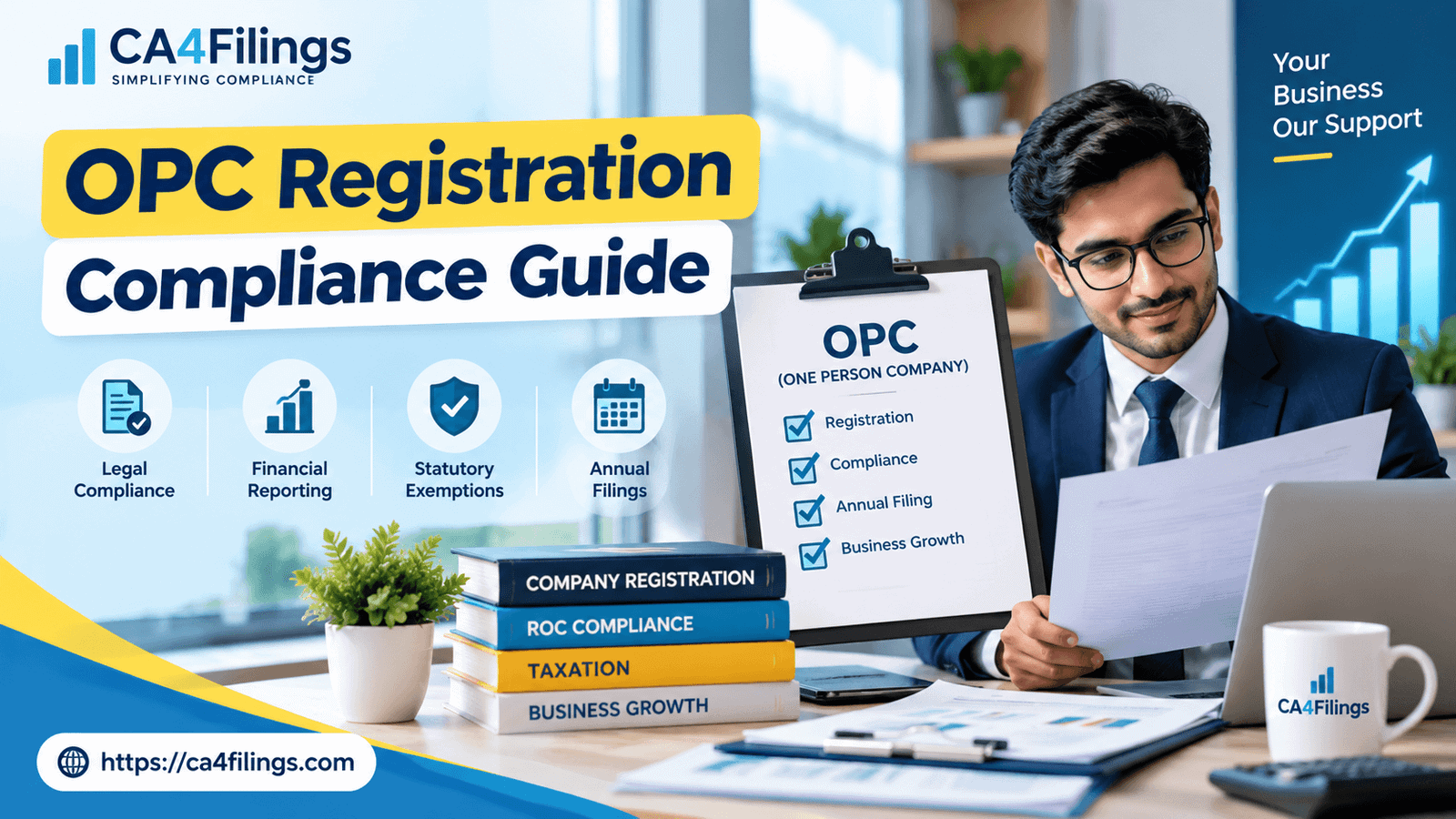
Starting a business as a One Person Company (OPC) is exciting, but opc registration is only the beginning. Once your company is incorporated, regular compliance becomes an important part of keeping the business legally healthy. Many small business owners focus heavily on getting the Certificate of Incorporation and then overlook annual filings, accounting records, taxation, and other statutory responsibilities.
If you are still deciding which structure suits your business, understanding Company Registration can help you compare the available options before committing to an OPC.
At CA4Filings, we often see entrepreneurs treating compliance as a year-end activity. That approach can create unnecessary stress. A better strategy is to maintain your records throughout the year, understand your filing dates, and use simple systems to stay organised.
Understanding OPC Registration Compliance
An OPC gives a single individual the ability to operate through a separate legal entity. However, having one member does not mean having zero compliance.
After opc registration, the company generally needs to maintain statutory records, prepare financial statements, file applicable returns, and meet requirements under the Companies Act and other relevant laws.
The exact compliance burden depends on factors such as:
- Turnover and nature of business
- Whether the OPC has employees
- GST registration and applicability
- Income-tax requirements
- Transactions during the financial year
- Whether statutory audit requirements apply
- Applicable exemptions available to OPCs
The important point is simple: small does not mean compliance-free.
OPC Registration: Build a Compliance Calendar
One of the easiest ways to manage opc registration compliance is to create a compliance calendar immediately after incorporation.
Instead of remembering every deadline at the last minute, divide responsibilities into monthly, quarterly, and annual activities.
Monthly Compliance Routine
Your monthly routine should focus on maintaining accurate financial records.
Keep track of:
- Sales invoices
- Purchase bills
- Bank transactions
- Business expenses
- GST-related transactions, where applicable
- Employee payments and deductions
- Loans and business investments
Using automated bookkeeping systems can make this process considerably easier. Even a small business can benefit from accounting software that categorises transactions and keeps digital records.
Quarterly Reporting Tracks
A quarterly review gives the owner a useful snapshot of the company's financial position.
Your quarterly reporting tracks can include:
- Revenue generated during the quarter
- Operating expenses
- Outstanding receivables
- Vendor payments
- GST or tax-related obligations
- Bank reconciliation
- Cash flow position
This approach is much better than discovering accounting discrepancies when annual filing is already due.
Annual Compliance After OPC Registration
Annual compliance is where many OPC owners need professional guidance.
An OPC generally needs to prepare its financial statements and complete the applicable filing requirements with the Ministry of Corporate Affairs (MCA). Depending on the company's circumstances, income-tax and GST compliance may also need to be completed.
Financial Statements
The company should maintain proper books of account and prepare its financial statements for the relevant financial year.
For an OPC, the financial statements may include:
- Balance sheet
- Statement of profit and loss
- Notes to accounts
- Other applicable financial information
The concept of single director balance sheets does not mean financial reporting can be ignored. The company's accounts should still accurately reflect its assets, liabilities, income, and expenditure.
MCA Filings
OPCs have specific annual filing provisions under company law. Certain requirements and filing forms can differ from those applicable to larger private companies.
This is where professional review becomes useful. Missing a filing because of a misunderstood deadline can result in additional fees and unnecessary compliance complications.
Know the Standard Legal Exemptions
One advantage of an OPC is that company law provides certain relaxations in comparison with other types of companies.
These standard legal exemptions can reduce the compliance burden in specific areas. However, exemptions should never be assumed blindly.
A practical rule is:
Check the current legal requirement first, then determine whether your OPC qualifies for a particular exemption.
For example, an exemption may apply only when prescribed conditions are satisfied. As business activities, turnover, or ownership circumstances change, the compliance position may change as well.
Practical Compliance Checklist for OPC Owners
If you have completed opc registration, use this simple checklist throughout the year:
Step 1: Maintain Proper Books
Record every business transaction rather than relying on memory or personal bank statements.
Step 2: Separate Personal and Business Finances
Use a dedicated company bank account and avoid mixing personal expenses with company expenses.
Step 3: Reconcile Bank Transactions
Compare your accounting records with bank statements regularly. Small errors are much easier to correct when identified early.
Step 4: Monitor Tax Requirements
Check GST, income-tax, TDS, and other applicable requirements based on your business activities.
Step 5: Track MCA Deadlines
Maintain a calendar for annual returns, financial statements, and other applicable ROC filings.
Step 6: Review Before Filing
Don't simply upload forms. Check the figures, directors' details, registered office information, financial statements, and supporting documents before submission.
Step 7: Preserve Records
Keep invoices, bank statements, agreements, tax documents, accounting records, and statutory documents safely for the required period.
Common Mistakes Small OPCs Should Avoid
Treating Incorporation as the Finish Line
OPC registration creates the company; it does not complete the company's legal obligations.
Mixing Personal and Company Expenses
This makes bookkeeping confusing and can create difficulties when preparing financial statements.
Waiting Until the Last Week
Last-minute filing increases the chances of mistakes, missed deadlines, and additional fees.
Ignoring Small Transactions
A ₹500 or ₹1,000 transaction may look insignificant, but incomplete books can create larger reconciliation problems later.
Assuming Every Exemption Applies
Legal exemptions depend on eligibility. Never rely on an assumption simply because the company is an OPC.
How CA4Filings Can Help With OPC Registration Compliance
For a business owner, compliance can quickly become a distraction from sales, customers, and business development. CA4Filings can help entrepreneurs organise their accounting and statutory compliance requirements in a structured manner.
A professional compliance approach can help you:
- Maintain timely records
- Identify applicable filings
- Review financial statements
- Track important deadlines
- Reduce avoidable filing errors
- Understand applicable exemptions
- Keep corporate documentation organised
The objective is not simply to file forms. It is to create a compliance system that remains manageable as your business grows.
FAQs About OPC Registration
1. Is compliance required every year after OPC registration?
Yes. Incorporation is only the starting point. An OPC must meet applicable annual, tax, accounting, and other statutory requirements.
2. Does an OPC need to maintain books of account?
Yes. An OPC is required to maintain appropriate books and financial records in accordance with applicable legal requirements.
3. Can an OPC receive compliance exemptions?
Certain exemptions and relaxations may be available to OPCs under applicable company law, subject to prescribed conditions. Eligibility should be checked for the relevant financial year.
4. Can I manage OPC compliance myself?
Technically, some business owners manage routine records themselves. However, professional assistance can be useful for statutory filings, tax matters, financial statements, and interpreting changing compliance requirements.
5. What happens if OPC compliance is delayed?
Late filings can attract additional fees and may create other regulatory complications. The exact consequence depends on the specific filing and circumstances.
Make OPC Registration Compliance a Routine
Successful opc registration is not just about receiving incorporation documents. The real objective is to operate the company in an organised, transparent, and legally compliant manner year after year.
Maintain your books regularly, follow quarterly reporting tracks, understand standard legal exemptions, prepare accurate single director balance sheets, and use automated bookkeeping systems wherever practical. Most importantly, don't wait until a deadline is around the corner.
CA4Filings can help you build a practical compliance process so you can spend less time worrying about paperwork and more time growing your business. Get professional assistance for your OPC compliance requirements and keep your company on the right track from incorporation onward.
Latest Updates
ca4filings.com Services

























-registration.png)