How Do You Register a Company in California? Navigating High Compliance Standards
How do you register a company in California? Learn the key registration steps, taxes, filings, and compliance requirements with CA4Filings guidance.
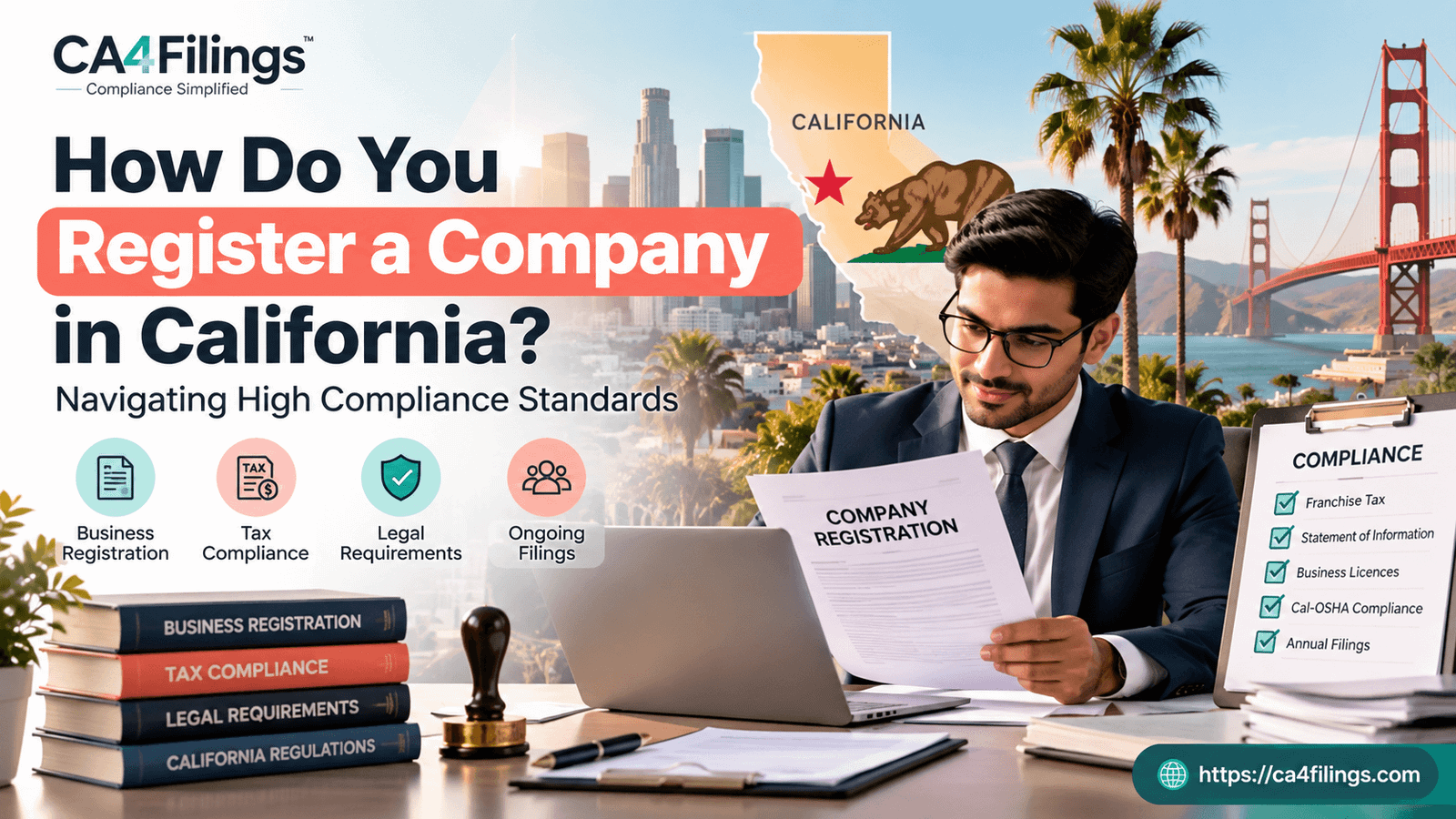
Starting a business in California can be exciting, but understanding how do you register a company is only the beginning. California has a detailed business compliance framework covering entity formation, taxes, employment, workplace safety, and periodic filings. Whether you are an entrepreneur, an overseas business owner, or an existing company planning to enter the California market, getting the structure and registrations right from day one can prevent costly compliance issues later.
If you are exploring the process from India or another country, professional assistance can make the process easier. CA4Filings helps business owners understand Company Registration requirements and plan their registrations with the necessary tax and regulatory considerations in mind.
How Do You Register a Company in California?
The first step is to decide what type of legal entity suits your business. In California, common choices include a California LLC and a corporation. Your decision should depend on factors such as ownership structure, liability protection, taxation, investment plans, and the nature of your business.
For many small and closely held businesses, an LLC can provide operational flexibility. Businesses planning to raise significant outside investment may consider a corporation.
The California Secretary of State provides separate formation procedures for LLCs and corporations. For example, a domestic LLC is formed by filing Articles of Organization, while a corporation generally begins with Articles of Incorporation.
How Do You Register a Company: Step-by-Step Process
1. Select the Appropriate Business Structure
Before filing anything, determine whether your business should operate as:
- Limited Liability Company (LLC)
- Corporation
- Partnership
- Other permitted business structures
Do not select an entity simply because another business owner uses it. The right structure depends on your ownership, tax position, funding requirements, and long-term plans.
2. Choose and Check Your Business Name
Your proposed company name should comply with California naming requirements and should not conflict with an existing registered entity.
It is sensible to search the California Secretary of State's business records before finalising the name. This simple check can help avoid delays and unnecessary rework.
For an overseas entrepreneur, we also recommend checking whether the proposed brand name creates trademark or intellectual-property concerns separately from state entity registration.
3. Appoint an Agent for Service of Process
A California business needs an appropriate agent for service of process. This person or organisation receives important legal and government correspondence on behalf of the company.
Keeping the agent's information accurate is important because official notices can have strict response deadlines.
4. File the Formation Documents
This is the formal registration stage.
For an LLC, the Articles of Organization are filed with the California Secretary of State. The current listed filing fee for a California LLC is $70. For a general stock corporation, the listed Articles of Incorporation filing fee is $100.
California's Secretary of State allows many business filings to be submitted online through its business filing system.
Once the formation document is accepted, the company receives its state identification details. However, registration does not mean that every compliance requirement has been completed.
How Do You Register a Company and Handle the Statement of Information?
One of the important post-registration requirements is the Statement of Information.
For a California LLC, the initial Statement of Information is due within 90 days of registration and generally every two years thereafter. California stock corporations generally have a 90-day initial deadline followed by annual filing requirements.
The filing typically keeps important business information updated, such as:
- Business address
- Management information
- Officers or members, depending on the entity
- Agent for service of process
- Other required entity details
Missing this filing should not be treated as a minor administrative issue. The Secretary of State notes that failure to file can lead to penalties and may contribute to suspension or forfeiture.
As a practical tip, maintain a compliance calendar immediately after incorporation rather than waiting for government reminders.
Understand the California Franchise Tax Board Requirements
A major difference between simply registering a company and properly maintaining one is understanding the tax obligations.
The California Franchise Tax Board administers California's franchise and income tax requirements. For corporations subject to the franchise tax, the minimum franchise tax is generally $800. It can apply even where a corporation is inactive or operating at a loss, subject to applicable rules and exceptions.
For an LLC doing business in California or organised in California, the Franchise Tax Board currently states that an $800 annual tax applies. Additional LLC fees can apply when California income crosses specified thresholds.
This is why entrepreneurs should understand the minimum annual tax before forming an entity. The cost of maintaining a company can be different from the initial registration fee.
A Simple Example
Suppose an entrepreneur establishes a California LLC for a consulting business. The owner may initially focus on the formation fee and business bank account. However, the ongoing compliance plan should also consider:
- Annual California tax obligations
- Statement of Information deadlines
- Federal tax filings
- State tax filings
- Local business licences, where applicable
- Employment requirements if workers are hired
This broader approach helps prevent the common mistake of treating company formation as a one-time event.
How Do You Register a Company With Employees?
Hiring employees introduces another layer of compliance.
California employers have workplace obligations under Cal-OSHA compliance rules, including workplace safety requirements, employee information, training, recordkeeping, and injury and illness prevention measures. California's Department of Industrial Relations states that employers must establish, implement, and maintain an effective Injury and Illness Prevention Program.
Employers should therefore review requirements relating to:
- Workplace safety
- Injury and illness prevention
- Employee training
- Required workplace notices
- Recordkeeping
- Hazard identification and correction
- Reporting of serious workplace incidents
For example, an office-based technology company may have very different safety considerations from a manufacturing business. Compliance should be designed around the actual workplace and activities rather than copied from another company.
How Do You Register a Company From Outside the United States?
Foreign entrepreneurs often ask whether they can establish a California business while living outside the United States. The answer depends on the proposed structure, business activity, tax position, and immigration or operational considerations.
The registration process itself is only one part of the planning. You may also need to consider:
- Federal tax identification requirements
- California tax registration
- Banking arrangements
- Ownership documentation
- Registered-agent requirements
- Local licences and permits
- Cross-border tax implications
- U.S. reporting obligations
If an existing foreign company wants to operate in California rather than create a completely new entity, the registration route can also be different.
This is one area where professional advice can save substantial time because a structure that looks simple at the registration stage may create additional tax obligations later.
Common Mistakes to Avoid
When considering how do you register a company, business owners often concentrate only on incorporation. Some common mistakes include:
- Choosing an entity without considering taxation
- Assuming registration automatically provides every required licence
- Forgetting the Statement of Information
- Ignoring the California minimum annual tax
- Mixing personal and business finances
- Failing to maintain corporate or LLC records
- Hiring employees without reviewing workplace requirements
- Assuming that a foreign company has no California filing obligations
- Missing local city or county licence requirements
The California Secretary of State itself clarifies that entity registration and business licensing are separate matters; specific licensing requirements may depend on the relevant city, county, or state agency.
How Do You Register a Company Without Creating Compliance Problems Later?
A better approach is to think about registration and compliance as one continuous process.
Before filing, prepare:
- Proposed entity structure
- Business name
- Ownership details
- Registered-agent information
- Formation documents
- Tax registration plan
- Statement of Information calendar
- Business licence checklist
- Employee compliance checklist, if applicable
- Annual tax and filing calendar
This gives the business owner a clear roadmap instead of dealing with government notices one at a time.
Frequently Asked Questions
Is an LLC or corporation better for a California business?
Neither structure is automatically suitable for every business. An LLC and corporation have different legal, tax, ownership, and administrative characteristics. The appropriate choice depends on your business objectives and circumstances.
What is the minimum annual tax in California?
For many corporations subject to California's franchise tax, the minimum franchise tax is $800. California LLCs generally also have an $800 annual tax when the applicable California requirements apply. Specific exceptions and additional fees can affect the final amount.
When is the Statement of Information due?
For a California LLC, the initial Statement of Information is generally due within 90 days of registration and every two years thereafter. California stock corporations generally file within 90 days initially and annually thereafter.
Does registering a company automatically give me a business licence?
No. Entity formation and business licensing are separate requirements. Depending on the business activity and location, additional state, county, or city licences and permits may be necessary.
Is Cal-OSHA compliance necessary for every employer?
California employers have workplace safety obligations under Cal/OSHA, although the specific requirements can vary depending on the workplace, industry, hazards, and workforce. Employers should review the requirements applicable to their operations.
How Do You Register a Company the Right Way?
Understanding how do you register a company in California means looking beyond the initial filing. The real challenge is maintaining the entity properly through tax payments, the Statement of Information, licensing, employment rules, and continuing state compliance.
For entrepreneurs, particularly those entering the U.S. market from India, professional planning can make the process considerably more manageable. At CA4Filings, we help business owners approach company registration with a practical focus on documentation, taxation, and ongoing compliance.
If you are planning to establish a California business and want to understand the registration and compliance requirements before taking the next step, connect with CA4Filings for professional guidance and a structured approach to your company setup.
Latest Updates
ca4filings.com Services
























-registration.png)