How OPC Registration Safeguards Creative Intellectual Properties and Projects
Learn how opc registration safeguards creative IP, software, patents and projects through ownership, contracts, compliance and asset protection.
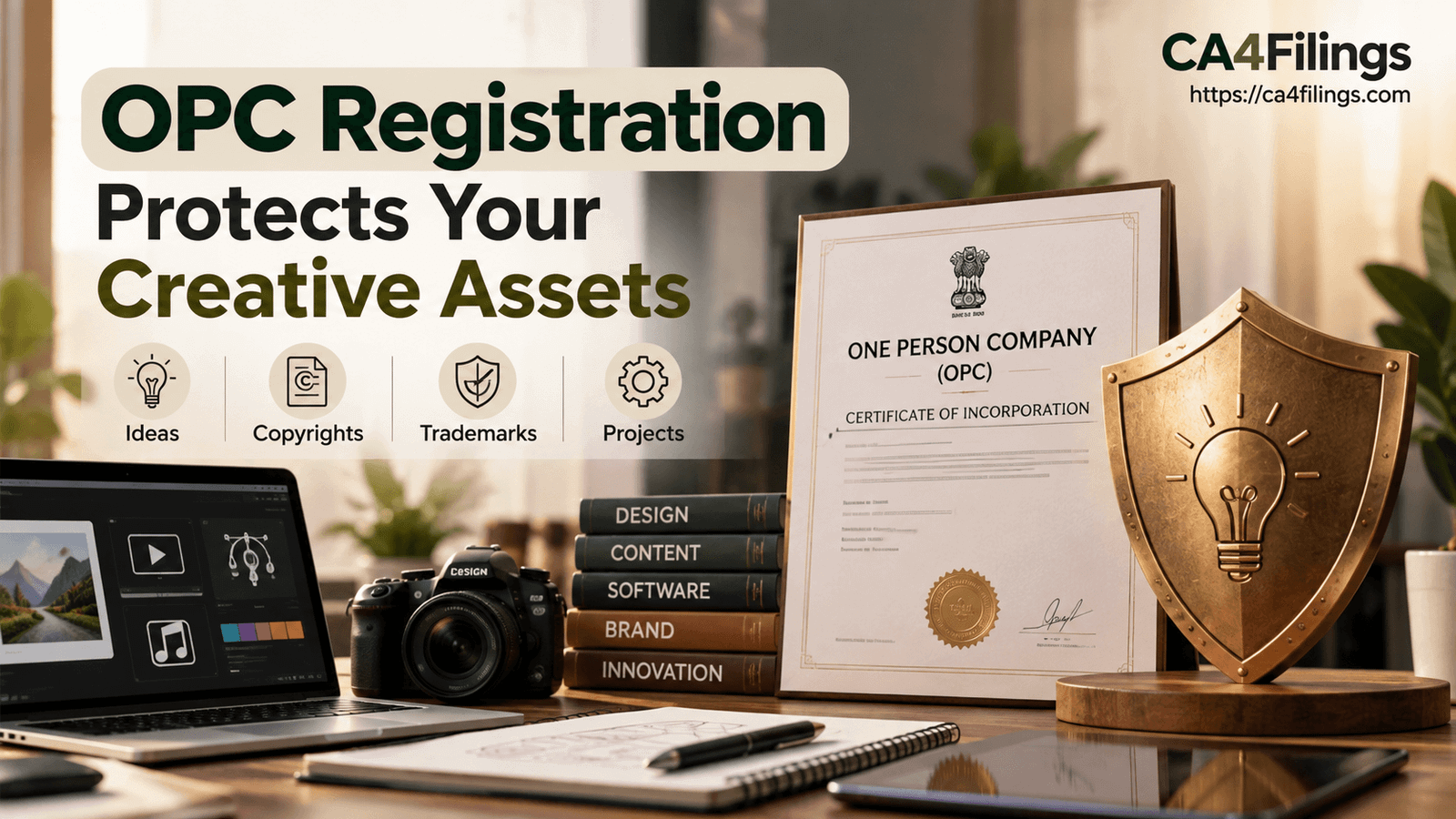
For independent creators, software developers, designers, consultants, inventors and digital entrepreneurs, an idea can be their most valuable business asset. But an idea becomes commercially meaningful only when its ownership is clearly established and properly protected. This is where opc registration can make a significant difference. By creating a separate legal entity, a founder can bring intellectual property, contracts, revenue and business projects under a structured corporate framework. If you are exploring the broader process of Company Registration, an OPC can be particularly relevant when you want to operate independently while maintaining a formal business structure.
From the perspective of CA4Filings, opc registration is not merely a compliance exercise. For a solo entrepreneur, it can become an important part of building a clear ownership trail around software, creative works, brands, inventions and other intellectual assets. It also creates a more organised foundation for future licensing, investment, collaboration and expansion.
Why OPC Registration Matters for Creative Intellectual Property
A One Person Company (OPC) allows a single individual to operate through a company structure. This distinction is important because the business and its owner are treated as separate legal persons.
Suppose a developer creates a SaaS platform, owns its source code, registers a trademark and signs contracts with customers personally. Later, a dispute arises over ownership of the software or a commercial agreement. The absence of proper documentation can make the situation complicated.
With opc registration, the founder can structure the business so that the company becomes the operating vehicle for commercial activities and, where appropriately documented, can own or receive rights in business assets.
This can cover assets such as:
- Software and source code
- Website content and graphics
- Brand names and logos
- Product designs
- Copyrightable creative works
- Patents and inventions
- Business databases and documentation
- Digital products and online courses
The key point is that registration alone does not automatically transfer every intellectual property right to the company. Proper assignment agreements, licences, contracts and supporting records are equally important.
OPC Registration and Software Code Protection
For technology entrepreneurs, software code protection is often a major concern. A developer may spend months or years building an application, mobile platform or proprietary technology.
Consider a freelance developer who builds an accounting application. Initially, the developer owns the project personally. After opc registration, the commercial arrangement can be structured so that the company develops, markets, licenses and maintains the software.
A sensible structure may include:
- Identifying who originally created the source code.
- Recording ownership of pre-existing intellectual property.
- Executing appropriate IP assignment or licensing documents.
- Maintaining development records and version histories.
- Using confidentiality agreements with employees, contractors and vendors.
- Signing customer contracts through the company.
- Maintaining proper records of licences and third-party software.
This approach creates a clearer documentary trail and reduces uncertainty when the product becomes commercially valuable.
OPC Registration for Patenting Through Corporations
Inventors often begin their journey as individuals. However, when an invention develops into a commercial product, patenting through corporations can be considered as part of the overall business strategy.
For example, imagine an engineer who develops an energy-saving device. Instead of keeping all commercial activities informal, the founder may establish an OPC and structure the business around product development, licensing and sales.
Depending on the facts, the company may become the owner or licensee of relevant intellectual property. However, patent ownership and applications must be handled according to applicable intellectual property laws and documentation requirements.
Professional advice is especially useful because the following questions should be addressed:
- Who is the inventor?
- Who owns the patent rights?
- Was the invention created before or after incorporation?
- Is an assignment required?
- Are there multiple contributors?
- Are confidential disclosures properly controlled?
Opc registration provides the corporate framework, while appropriate IP documentation establishes the actual rights.
Creative Studio Structures and Ownership
Artists, photographers, content creators, architects, graphic designers and branding professionals often build valuable portfolios over time. A creator may own hundreds of designs, photographs, videos, illustrations or other original works.
For such professionals, creative studio structures can provide a more organised way to manage commercial projects.
For instance, a designer operating alone could use an OPC to:
- Enter client contracts
- Invoice customers
- Manage project revenue
- License creative works
- Employ or engage professionals
- Maintain business expenses
- Build a recognisable studio brand
The founder can continue to remain the sole member while the company provides a formal business identity.
The important consideration is to clearly define whether a particular creative work belongs to the founder personally or to the company. Every major asset should have appropriate documentation rather than relying solely on assumptions.
Structural Asset Ring-Fencing for Independent Founders
One of the practical advantages of a company structure is the potential for structural asset ring-fencing.
In simple terms, this means organising business assets and obligations within a separate legal structure rather than mixing everything with the founder's personal activities.
Imagine a founder owns a software platform, website, brand and customer contracts personally. Managing everything together can become difficult as the business grows.
After opc registration, the founder can create a more organised framework where the company's commercial operations, contracts and business assets are maintained separately, subject to proper legal documentation.
This does not mean that an OPC provides absolute protection from every liability. Personal guarantees, fraud, statutory obligations and other circumstances can still create personal exposure. Therefore, founders should understand both the benefits and limitations of corporate protection.
How OPC Registration Can Protect Creative Projects
A creative or technology project usually passes through several stages before generating revenue. During this period, ownership can become unclear, especially when multiple freelancers, consultants or contractors are involved.
A practical protection strategy includes:
1. Identify the Intellectual Property
Prepare a list of all important assets, including code, designs, trademarks, documents, inventions, domain names and content.
2. Establish Ownership
Determine whether each asset belongs to the founder, the OPC or another party.
3. Execute Written Agreements
Use suitable assignment, licensing, employment, consultancy and confidentiality agreements wherever necessary.
4. Control Access
Limit access to confidential information, source code, customer data and proprietary business material.
5. Maintain Documentation
Keep invoices, contracts, development records, registration certificates and IP-related documents safely organised.
6. Review the Structure as the Business Grows
An arrangement suitable for a solo founder may need modification when employees, investors, co-founders or strategic partners become involved.
This systematic approach makes opc registration part of a broader asset-protection strategy rather than treating incorporation as an isolated formality.
Real-World Example
Consider Priya, a freelance UI/UX designer who develops a unique design system and sells digital templates.
Initially, she works under her personal name. As sales increase, she starts hiring freelancers and licensing her designs to businesses.
Through opc registration, she can establish a company to conduct the commercial operations. She can then structure client agreements, freelancer contracts, invoices and licensing arrangements through the company.
If the company owns or receives properly documented rights to relevant assets, the ownership trail becomes easier to demonstrate.
The important lesson is that incorporation by itself does not create IP protection. Opc registration works best when supported by proper contracts, IP registrations, accounting records and compliance.
Important Compliance Considerations After OPC Registration
Founders should not overlook ongoing compliance after incorporation.
Key areas include:
- Maintaining statutory registers and company records
- Filing applicable annual returns and financial statements
- Keeping proper books of accounts
- Separating personal and business transactions
- Maintaining valid contracts
- Renewing relevant IP registrations
- Recording licences and assignments
- Meeting applicable tax and regulatory requirements
Good compliance strengthens the credibility of the corporate structure and creates a reliable documentary history.
FAQs About OPC Registration and Intellectual Property
Is OPC registration enough to protect my intellectual property?
No. Opc registration creates a corporate structure, but intellectual property protection may require copyright, trademark or patent registration, contractual assignments, licences and other legal measures depending on the asset.
Can an OPC own software?
Yes, subject to proper ownership and documentation. If software is created by the founder or third parties, the relevant rights should be appropriately assigned or licensed to the company.
Can I transfer my existing intellectual property to an OPC?
Potentially, yes. The appropriate method depends on the nature of the asset and applicable law. A formal assignment or licensing arrangement may be required.
Is an OPC suitable for a solo software developer?
It can be suitable where the developer wants a formal corporate structure for contracts, billing, intellectual property management and business operations. The suitability depends on the individual's commercial plans and compliance requirements.
Does OPC registration guarantee limited liability in every situation?
No. Limited liability has legal boundaries. Personal guarantees, statutory breaches, fraud and certain other circumstances can create personal exposure.
OPC Registration as a Foundation for IP-Focused Businesses
For independent entrepreneurs, creative professionals and technology founders, intellectual property can represent years of work and a significant portion of business value. Opc registration can provide a formal corporate framework for managing that value, especially when combined with proper contracts, IP registrations, accounting records and compliance.
Whether your project involves software code, a creative portfolio, an invention, a digital product or a growing creative studio, the right structure should be planned before the asset becomes commercially significant.
At CA4Filings, we help entrepreneurs understand the practical aspects of incorporation, documentation and ongoing compliance. If you are considering opc registration for your intellectual-property-driven business, take professional advice early and build your corporate structure with long-term growth and asset ownership in mind.
Latest Updates
ca4filings.com Services




























-registration.png)