Opening a Corporate Bank Account Seamlessly Post Company Registration
current acLearn how to open a business bank account after company registration in India, prepare KYC documents, complete verification, and activate your count.
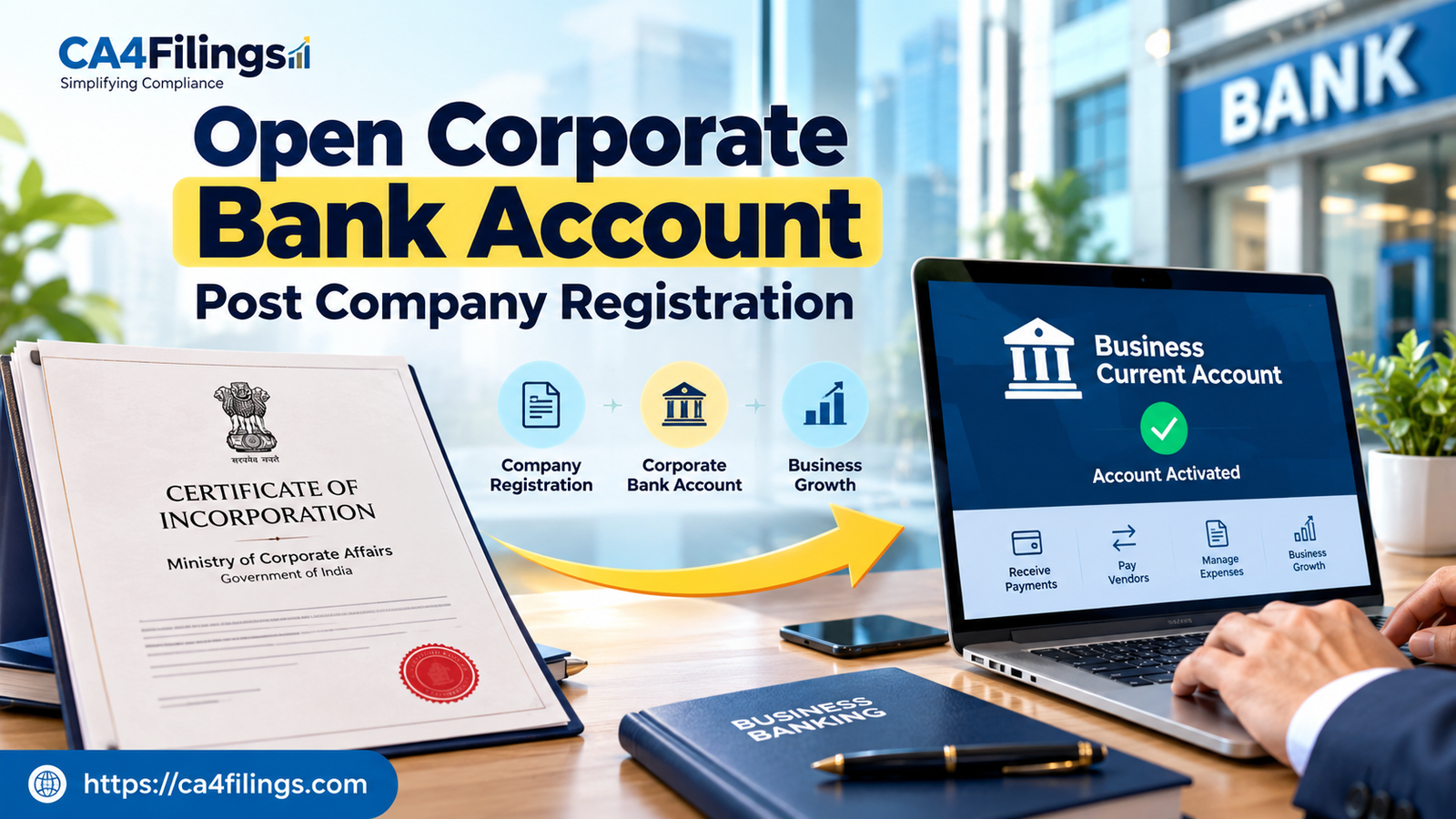
Completing your company registration is an important milestone in your entrepreneurial journey. However, registration is only the beginning. To receive customer payments, pay vendors, manage business expenses, and build financial credibility, your company needs a dedicated corporate bank account. Opening the account promptly helps you establish a professional financial system from the outset.
For many entrepreneurs, the process may seem complicated because banks require specific documents, director verification, and compliance checks. The good news is that with proper preparation, opening a corporate bank account can be straightforward. At CA4Filings, we guide business owners through these practical steps so they can move from incorporation to business operations with greater confidence. If you are planning to Company Registration, understanding the banking requirements early can help you avoid unnecessary delays after incorporation.
Why Is a Corporate Bank Account Important After Company Registration?
Once your company is incorporated, maintaining a separate bank account for business transactions is a sensible financial practice. For a private limited company, it also supports the company's separate legal identity and helps maintain clear accounting records.
A dedicated current account offers several advantages:
Clear financial records: Separate personal and business transactions to simplify bookkeeping and financial reporting.
Professional credibility: Customers, suppliers, and business partners can make payments to an account in the company's legal name.
Convenient transactions: Manage vendor payments, employee salaries, business expenses, and customer receipts.
Better financial management: Monitor cash flow and prepare accurate financial statements.
Future funding opportunities: Maintain organised banking records when approaching lenders or investors.
For example, suppose two founders establish a private limited company and receive customer payments in a personal savings account. Identifying business income, reimbursing expenses, and preparing financial statements may become unnecessarily difficult. Opening a corporate current account from the beginning helps prevent these complications.
Documents Required to Open a Corporate Bank Account
Preparing the necessary documents before approaching a bank can significantly reduce processing time. Requirements vary by bank, account type, company structure, and risk assessment.
1. Company Incorporation Documents
Banks generally request the following documents to establish the company's legal identity:
Certificate of Incorporation issued by the Ministry of Corporate Affairs (MCA).
Corporate Identification Number (CIN), where applicable.
Memorandum of Association (MOA).
Articles of Association (AOA).
PAN card of the company.
GST registration certificate, if applicable or requested.
If you have recently completed company registration, keep digital and physical copies of these documents readily available.
2. Director and Authorised Signatory KYC Documents
Banks must verify the identities and addresses of relevant individuals. Commonly requested KYC documents include:
PAN cards of directors and authorised signatories.
Aadhaar or another acceptable identity and address document.
Recent photographs, where required.
Mobile numbers and email addresses for verification.
Additional beneficial ownership information, where applicable.
Banks may request further documents depending on their internal policies and regulatory obligations.
3. Board Resolution and Banking Authorisation
A board resolution authorises the opening of a bank account and identifies the individuals permitted to operate it.
A suitable board resolution draft generally covers:
The name of the selected bank and branch.
Approval to open a current account in the company's name.
Names and designations of authorised signatories.
Permitted modes of operation, such as single or joint authorisation.
Approval for internet banking and other banking facilities, where required.
CA4Filings recommends checking the bank's prescribed format before passing the resolution. Some banks provide their own forms or require specific wording, so using an unverified generic draft may lead to additional documentation requests.
Step-by-Step Process to Open a Corporate Bank Account
Following a structured process makes it easier to complete the banking formalities after company registration.
Step 1: Compare Banks and Select the Right Account
Start by comparing banks that offer current accounts for your business type. Consider the following factors:
Minimum average balance requirements.
Account opening charges and transaction fees.
Internet banking and mobile banking facilities.
Cash deposit and withdrawal limits.
Payment gateway and UPI integration, where available.
International transaction facilities, if required.
A startup with limited transactions may prefer a basic current account, while a business handling frequent payments may need higher transaction limits and additional banking services.
Step 2: Prepare the Application and KYC Documents
Complete the bank's account opening form and organise the incorporation documents, company PAN, director KYC documents, and authorised signatory details.
Ensure that the company name, registered office address, PAN details, and director information match the official records. Even minor discrepancies can result in additional verification.
Step 3: Submit the Board Resolution
Provide the approved board resolution or the bank's prescribed authorisation document. It should clearly identify who can operate the account and approve transactions.
For companies with multiple directors, clarify whether transactions require one signatory or joint approval. This decision can affect daily operations, so it should be made carefully.
Step 4: Complete Bank Verification
The bank reviews the submitted documents and verifies the company's details and authorised individuals. Depending on its procedures, it may conduct video KYC, digital verification, physical verification, or a visit to the registered office.
Respond promptly if the bank requests clarification or additional documents. Delayed responses are a common reason why account opening takes longer than expected.
Step 5: Arrange Initial Funding
Some banks require an opening deposit or minimum balance, depending on the account variant. Plan your initial funding in advance and confirm the amount and payment method with the bank.
For a private limited company, the funds should be properly documented. Where the money represents share capital, ensure that it is contributed by the relevant shareholders in accordance with the company's incorporation documents and applicable legal requirements.
Step 6: Complete Current Account Activation
Once the bank approves the application, it activates the account and provides the relevant banking credentials and account details.
Before using the account extensively, confirm that:
The account is fully operational.
Internet and mobile banking are enabled, if requested.
Authorised signatories can access the account.
Payment and transaction limits are correctly configured.
Cheque books, debit cards, or other facilities are available if required.
Successful account opening and full activation may occur at different times, so confirm the status directly with the bank.
Important Compliance Steps After Opening the Account
Opening the account is not the end of the process. Businesses must also maintain appropriate financial and statutory records.
Understand the Initial Share Capital Requirements
If your company has received share subscription money, retain the relevant bank statements, payment records, and supporting documents. The applicable requirements concerning commencement of business and filing Form INC-20A should be reviewed with a professional, particularly for companies required to file this declaration.
Do not assume that opening a bank account automatically fulfils every post-incorporation obligation.
Maintain Proper Accounting Records
Record all business receipts and payments accurately. Reconcile the bank statement with the company's books regularly and retain invoices, receipts, and supporting documents.
Avoid mixing personal expenses with company funds. If a director pays a legitimate business expense personally, document the transaction and reimburse it through the appropriate accounting process.
Review Applicable Tax and Regulatory Requirements
Depending on the company's activities, turnover, transaction types, and business model, additional requirements may apply, including GST compliance, TDS obligations, and other statutory filings.
A CA can help identify which obligations apply to your business and establish a practical compliance calendar.
Common Mistakes to Avoid
Even after successful company registration, certain mistakes can delay account opening or create financial complications.
Submitting incomplete documents: Check the bank's current document checklist before applying.
Using inconsistent company details: Ensure the legal name and PAN information match official records.
Ignoring the board resolution: Obtain the necessary authorisation before submitting the application.
Choosing an unsuitable account: Review charges, balance requirements, and transaction limits.
Delaying initial funding: Confirm the opening deposit and funding arrangements beforehand.
Mixing personal and business finances: Maintain separate accounts and accurate supporting records.
Addressing these points early can save time and help your business establish sound financial practices.
Latest Updates
ca4filings.com Services