Navigating the Legal Aspects of Company Registration
Navigating the Legal Aspects of Company Registration made simple with expert guidance on compliance, documentation, and legal procedures.
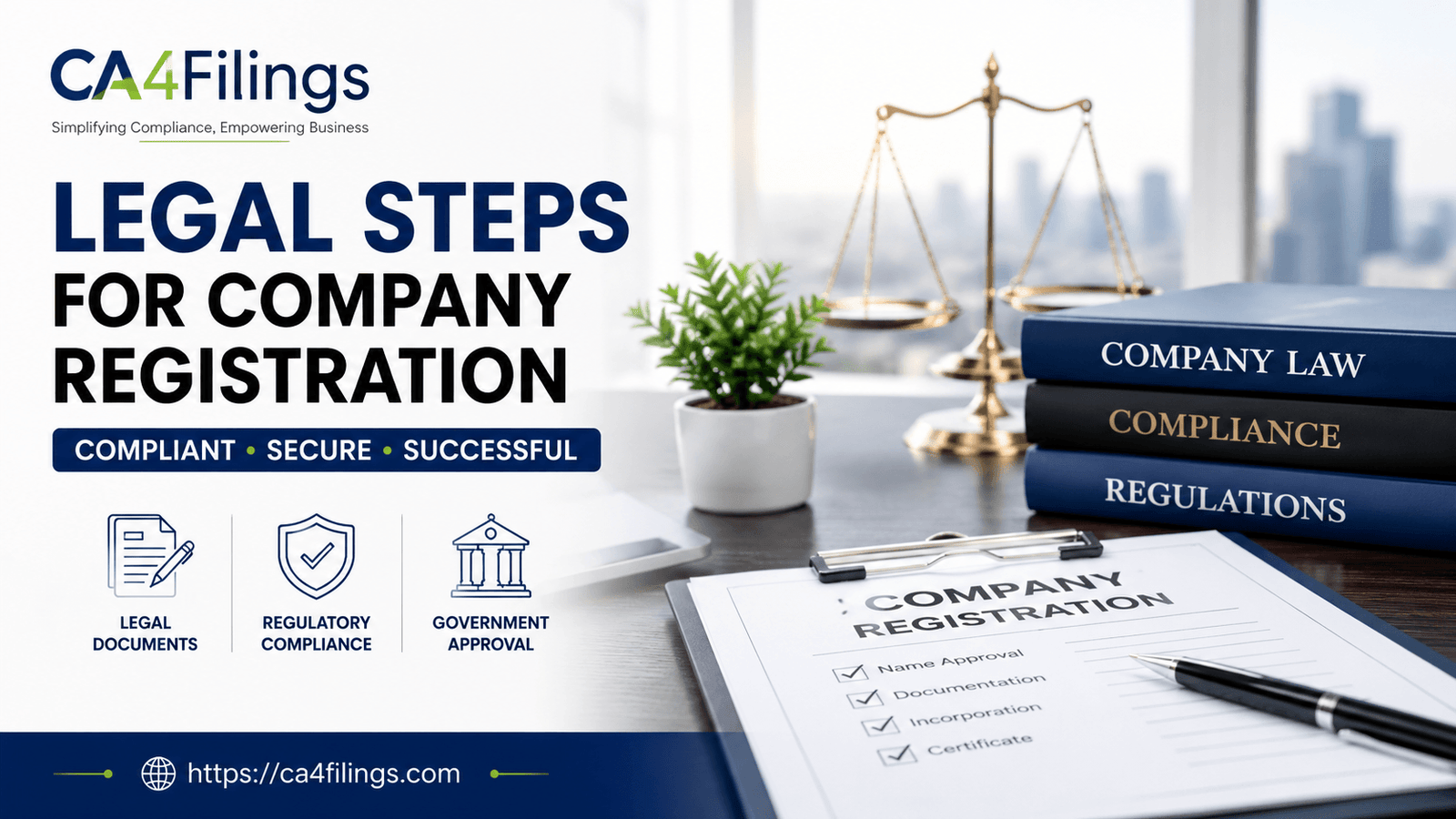
Starting a business is an exciting milestone, but many entrepreneurs underestimate the legal side of setting up a company. From selecting the right business structure to complying with government regulations, Navigating the Legal Aspects of Company Registration is one of the most important steps for building a legally secure and successful business in India.
At CA4Filings, we often meet business owners who have great ideas but are confused about legal formalities, documentation, and compliance requirements. Proper planning during registration can save businesses from penalties, operational delays, and legal disputes in the future. Whether you are launching a startup, expanding a family business, or entering the corporate world for the first time, understanding the legal framework is essential.
If you are planning to begin your entrepreneurial journey, professional assistance for Company Registration can make the entire process faster, smoother, and fully compliant with Indian laws.
Understanding the Importance of Navigating the Legal Aspects of Company Registration
Many people think company registration is simply about obtaining a certificate from the Ministry of Corporate Affairs (MCA). In reality, Navigating the Legal Aspects of Company Registration involves multiple legal, financial, and regulatory considerations.
A properly registered company offers:
- Legal recognition
- Limited liability protection
- Better credibility with clients and investors
- Easier access to funding
- Tax and compliance benefits
- Long-term business continuity
Failure to comply with legal requirements can lead to penalties, business restrictions, or even disqualification of directors in certain cases.
Choosing the Right Business Structure
One of the first steps in Navigating the Legal Aspects of Company Registration is selecting the right business entity. The structure you choose directly impacts taxation, compliance, ownership, and liability.
Private Limited Company
This is one of the most popular choices for startups and growing businesses.
Benefits:
- Limited liability protection
- Separate legal identity
- Easy investment opportunities
- Better credibility
Suitable For:
- Startups
- Technology businesses
- Scalable ventures
Limited Liability Partnership (LLP)
LLPs combine the flexibility of partnerships with limited liability benefits.
Benefits:
- Lower compliance burden
- Flexible management
- Cost-effective structure
Suitable For:
- Professional services
- Small businesses
- Consulting firms
One Person Company (OPC)
Ideal for solo entrepreneurs who want corporate status without multiple shareholders.
Partnership Firm
A traditional structure suitable for small family-run businesses, though it offers limited legal protection.
Choosing the wrong structure may create taxation and compliance issues later. This is why expert guidance becomes valuable while Navigating the Legal Aspects of Company Registration.
Key Legal Requirements for Company Registration
Director Identification Number (DIN)
Every proposed director must obtain a DIN issued by the MCA. This unique identification is mandatory for directors of Indian companies.
Digital Signature Certificate (DSC)
Since company registration is completed online, directors require a Digital Signature Certificate for filing forms electronically.
Name Approval
Selecting a company name is not just a branding exercise. The proposed name must comply with MCA naming guidelines and should not infringe trademarks or resemble existing companies.
Memorandum and Articles of Association
These are foundational legal documents of the company.
Memorandum of Association (MOA)
Defines:
- Business objectives
- Company scope
- Capital structure
Articles of Association (AOA)
Defines:
- Internal management rules
- Director responsibilities
- Shareholder rights
Proper drafting of these documents is critical while Navigating the Legal Aspects of Company Registration.
Regulatory Authorities Involved
Several authorities play a role during the registration process.
Ministry of Corporate Affairs (MCA)
The MCA is the primary governing body for company incorporation and compliance in India.
Registrar of Companies (ROC)
ROC handles approval, registration, and regulatory filings for companies.
Income Tax Department
After incorporation, businesses must obtain:
- PAN
- TAN
GST Department
Businesses crossing prescribed turnover limits or dealing in taxable goods/services must register under GST.
Understanding the role of these authorities helps in effectively Navigating the Legal Aspects of Company Registration.
Common Legal Mistakes Entrepreneurs Should Avoid
Over the years, we at CA4Filings have noticed several common mistakes made by new business owners.
Choosing an Incorrect Business Activity
Many entrepreneurs mention broad or incorrect business objectives in incorporation documents. This may create licensing and taxation complications later.
Ignoring Shareholder Agreements
Even among friends or family members, a written shareholder agreement is essential to avoid future disputes.
Delaying Compliance Filings
After incorporation, companies must regularly file:
- Annual returns
- Financial statements
- Income tax returns
- GST returns
Ignoring compliance can attract heavy penalties.
Using Residential Addresses Without Proper Documentation
Proof of registered office is mandatory. Improper documentation often leads to registration rejection.
Avoiding these mistakes is a major part of Navigating the Legal Aspects of Company Registration successfully.
Legal Compliance After Registration
Company incorporation is only the beginning. Businesses must continue meeting legal obligations throughout their operations.
Annual Compliance Requirements
Private Limited Companies generally need:
- Board meetings
- Annual ROC filing
- Financial audits
- Income tax filing
Maintaining Statutory Registers
Companies are legally required to maintain records related to:
- Shareholders
- Directors
- Charges
- Meetings
GST and Tax Compliance
Incorrect GST filing or delayed tax payments can trigger notices and penalties from authorities.
At CA4Filings, we always advise clients to establish a compliance calendar immediately after incorporation.
Importance of Professional Guidance
Navigating the Legal Aspects of Company Registration may seem manageable online, but legal errors can become expensive later.
Professional assistance helps in:
- Selecting the right structure
- Drafting proper legal documents
- Ensuring compliance accuracy
- Avoiding rejection or penalties
- Saving time and operational costs
For example, we recently assisted a startup founder who initially attempted self-registration. Due to incorrect MOA drafting and name rejection, the process was delayed by over a month. With expert intervention, the company was incorporated smoothly within days.
This demonstrates why professional expertise matters while Navigating the Legal Aspects of Company Registration.
Step-by-Step Company Registration Process
Here is a simplified overview of the incorporation process in India:
Step 1: Obtain DSC and DIN
Directors apply for digital signatures and identification numbers.
Step 2: Name Reservation
Submit the proposed company name for MCA approval.
Step 3: Draft Incorporation Documents
Prepare MOA, AOA, and supporting documents.
Step 4: File SPICe+ Forms
Submit incorporation application through MCA portal.
Step 5: Receive Certificate of Incorporation
Upon approval, the ROC issues the incorporation certificate along with PAN and TAN.
Step 6: Open Business Bank Account
The company can begin financial operations legally.
Following these steps carefully simplifies Navigating the Legal Aspects of Company Registration.
FAQs
How long does company registration take in India?
Generally, company registration takes around 7–15 working days, depending on document accuracy and approvals.
Is GST registration mandatory after company incorporation?
GST registration depends on business turnover, nature of services, and state-wise regulations.
Can a single person register a company?
Yes, a One Person Company (OPC) allows a single entrepreneur to register a company in India.
What happens if annual compliance is not completed?
Non-compliance may result in penalties, director disqualification, and legal notices from regulatory authorities.
Which business structure is best for startups?
A Private Limited Company is usually preferred for startups due to limited liability and investor-friendly features.
Navigating the Legal Aspects of Company Registration is not just about completing paperwork—it is about building a legally strong foundation for your business. From choosing the right entity structure to ensuring post-registration compliance, every step plays a crucial role in your company’s future success.
Entrepreneurs who invest time in understanding legal requirements can avoid costly mistakes and focus confidently on business growth. With professional support, the registration process becomes easier, faster, and fully compliant with Indian regulations.
At CA4Filings, we help entrepreneurs across India simplify company incorporation with expert guidance, transparent processes, and end-to-end compliance support. If you are planning to start your business journey, connect with CA4Filings today and take the first step toward building your company with confidence.
Latest Updates
ca4filings.com Services



























-registration.png)