The Consequences of Non-Filing or Late Filing of TDS Returns
Understand the consequences of non-filing or late filing of TDS returns. Learn about late filing penalties, interest charges, and expert tips.
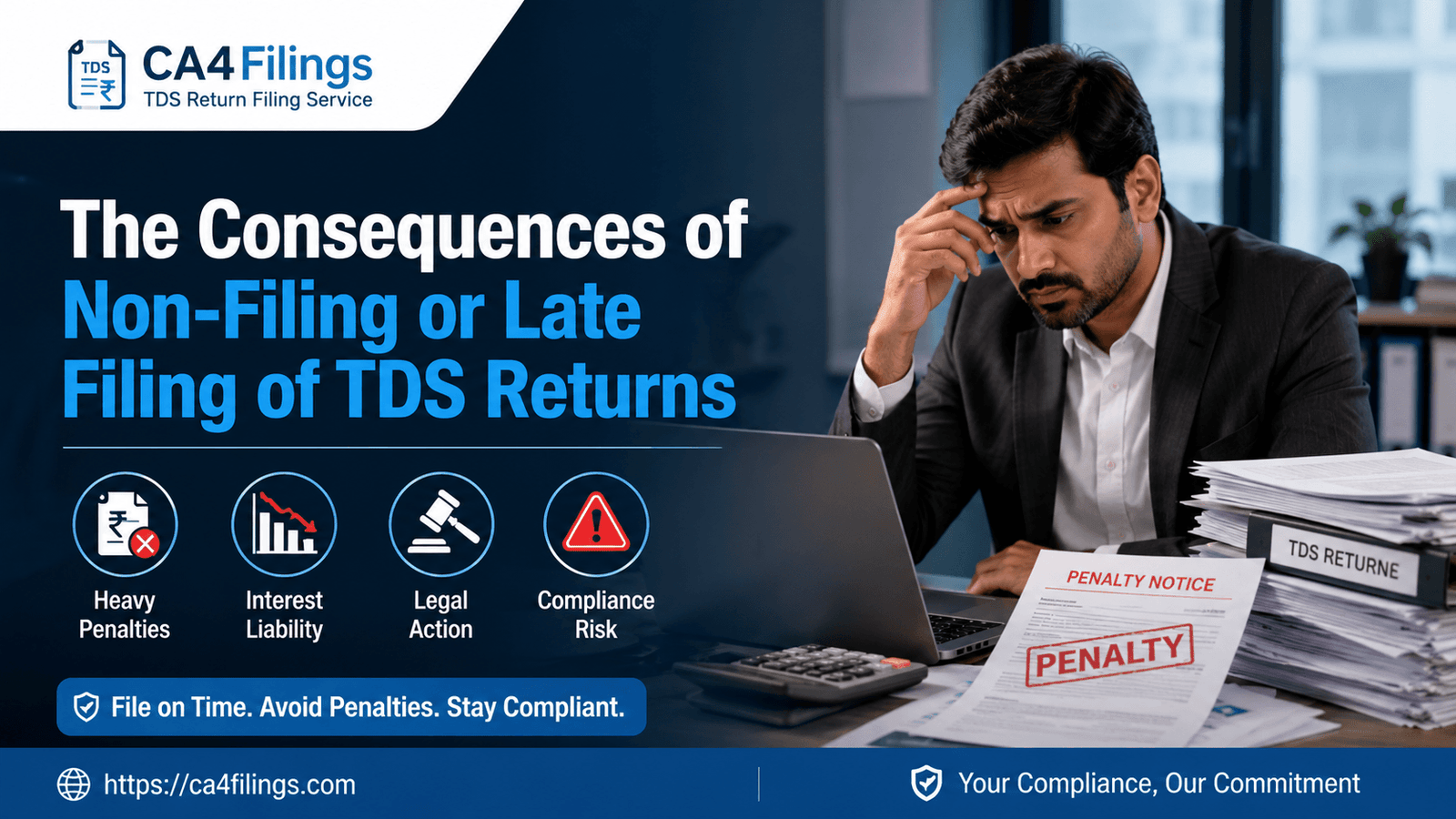
Running a business in India is an exciting journey, but it comes with a bundle of statutory responsibilities. Among these, tax compliance sits right at the top. As an experienced Chartered Accountant, I often see passionate business owners pouring their hearts into scaling their ventures, only to get blocked by an oversight in their financial obligations. One of the most common traps they fall into relates to Tax Deducted at Source (TDS).
Failing to submit your statements on time is not just a clerical miss; the financial and legal ramifications can severely damage your cash flow and corporate reputation. Understanding the consequences of non-filing or late filing of TDS returns is absolutely essential for every deductor, whether you operate a small startup or manage a large-scale enterprise.
To make sure your business remains fully compliant and safe from unnecessary legal notices, it is always a smart move to rely on professional expertise. At CA4Filings, we help businesses streamline this process end-to-end through our dedicated TDS Return Filing Service, ensuring your submissions are perfectly accurate and dispatched well before the clock runs out. In this guide, we will break down the complex mechanics of TDS regulations and look closely at what happens when timelines are breached.
The Golden Timeline: Knowing Your Filing Deadlines
Before exploring the penal actions, let us look at the timeline. The Income Tax Department requires quarterly TDS returns (like Form 24Q for salaries or Form 26Q for non-salaries).
The statutory filing deadlines for submitting these statements are consistent across quarters:
| Quarter | Period Covered | Statutory Filing Due Date |
|---|---|---|
| Quarter 1 | April 1 to June 30 | July 31 |
| Quarter 2 | July 1 to September 30 | October 31 |
| Quarter 3 | October 1 to December 31 | January 31 |
| Quarter 4 | January 1 to March 31 | May 31 |
An Important Distinction: Depositing the deducted tax amount to the government account is a monthly activity (usually due by the 7th of the following month). Filing the TDS return, however, is a quarterly informational breakdown. Missing either path triggers independent penalties.
The Real Breakdown: The Consequences of Non-Filing or Late Filing of TDS Returns
When a business overlooks its tax filing repercussions, the Income Tax Act activates a multi-layered penalty mechanism. These tax non-compliance penalties accumulate rapidly.
1. Daily Fee Accumulation under Section 234E
The moment you cross the designated due date, Section 234E levies automatic late filing penalties of ₹200 per day for as long as the default continues.
The Cap Rule: The total accumulated late fee cannot exceed the total amount of TDS collected for that specific quarter.
The Problem: This is a mandatory fee. It cannot be waived or reduced by an Assessing Officer, and you cannot successfully upload a delayed return without paying this accumulated fee via Challan ITNS 281 first.
2. Massive Fines under Section 271H
If the non-compliance stretches for a longer duration, the situation turns far more serious. If you fail to file your quarterly statement within one year from the original due date, or if you furnish incorrect data (such as wrong PAN details or faulty deduction amounts), an additional penalty is imposed under Section 271H.
The minimum statutory penalty under this section is ₹10,000.
The maximum penalty can skyrocket to ₹1,00,000 at the discretion of the tax authority.
3. Disallowance of Expenses (The Hidden Threat)
This is often the most painful financial hit for a business. According to Section 40(a)(ia) of the tax laws, if you pay a resident vendor for commercial expenses (like rent, professional charges, or contractual payments) and fail to deduct TDS, or deduct it but do not deposit it before the Income Tax Return (ITR) filing deadline, 30% of that total expenditure is disallowed from your business expenses.
This means your net taxable income artificially expands, forcing you to pay higher corporate taxes on money you have already spent!
Beyond Money: Business and Relationship Damage
While the direct TDS penalties hurt your bank account, the operational ripple effects can strain critical corporate relationships.
Vendor and Employee Friction
When you file a delayed return, the corresponding tax credit does not show up in the Form 26AS or Annual Information Statement (AIS) of your employees or vendors. Consequently:
Your employees cannot claim their legitimate tax refunds while filing their personal income tax returns.
Your commercial vendors face double taxation hurdles or processing delays with their own financial books.
This creates an unnecessary trust deficit and damages your market goodwill.
Strict Criminal Prosecution
Many business owners incorrectly assume that tax defaults only invite financial penalties. Under Section 276B, if a deductor deducts tax from a payee but deliberately fails to remit it to the credit of the Central Government within the prescribed periods, they can face rigorous imprisonment ranging from 3 months up to 7 years, alongside a heavy criminal fine.
Expert Advice: How CA4Filings Keeps You Safe
Maintaining flawless tax compliance does not have to be an operational nightmare. By setting up structured internal workflows, you can build a highly resilient framework:
Automate Calendars: Treat the 7th of every month (TDS deposit) and the final day of the post-quarter month (TDS filing) as unalterable corporate milestones.
Validate PANs Pre-payment: Always collect and verify valid PAN cards from your vendors before initiating processing cycles. Missing or wrong PANs lead to mandatory 20% higher deduction rates and return rejection errors.
Reconcile Early: Do not wait for the end of the quarter to match your bank deduction challans with your accounting vouchers. Perform a brief monthly reconciliation.
Frequently Asked Questions
Q1. Can the late filing fee under Section 234E be waived if I have a valid reason?
No. The daily fee of ₹200 under Section 234E is mandatory and completely automated within the filing portal. It cannot be waived or appealed, regardless of the circumstances that caused the delay.
Q2. What is the difference between late deposit interest and late filing fees?
They are completely separate. If you deposit the tax late, you pay interest (1.5% per month from the deduction date). If you deposit on time but file the quarterly document late, you pay the late filing fee of ₹200 per day under Section 234E.
Q3. How does late filing affect my employees' tax returns?
Until your corporate TDS return is successfully processed, the tax deducted from your employees' salaries will not reflect in their Form 26AS. This prevents them from claiming credit for the tax already deducted, resulting in higher tax demands or blocked refunds when they file their ITR.
Q4. Can I correct an entry after a TDS return is filed?
Yes, you can file a "Correction Statement" to rectify errors like incorrect PAN numbers, mismatched challan amounts, or minor typos. However, it is always best to avoid errors initially to prevent immediate mismatch notices.
Steering clear of the consequences of non-filing or late filing of TDS returns requires consistent monitoring, accurate data entry, and strict adherence to timelines. Allowing these dues to pile up not only drains your financial resources through aggressive penalties but also impacts your business relationships and invites unwanted scrutiny from tax authorities.
Let our team of seasoned professionals lift the administrative burden off your shoulders. Reach out to CA4Filings today, and let us ensure your financial compliance is flawless, robust, and completely stress-free!
Latest Updates
ca4filings.com Services



























-registration.png)