Navigating TDS Returns for Professional Fees: A Detailed Guide
Navigating TDS Returns for Professional Fees: A Detailed Guide – understand TDS filing, compliance, due dates, and professional tax rules.
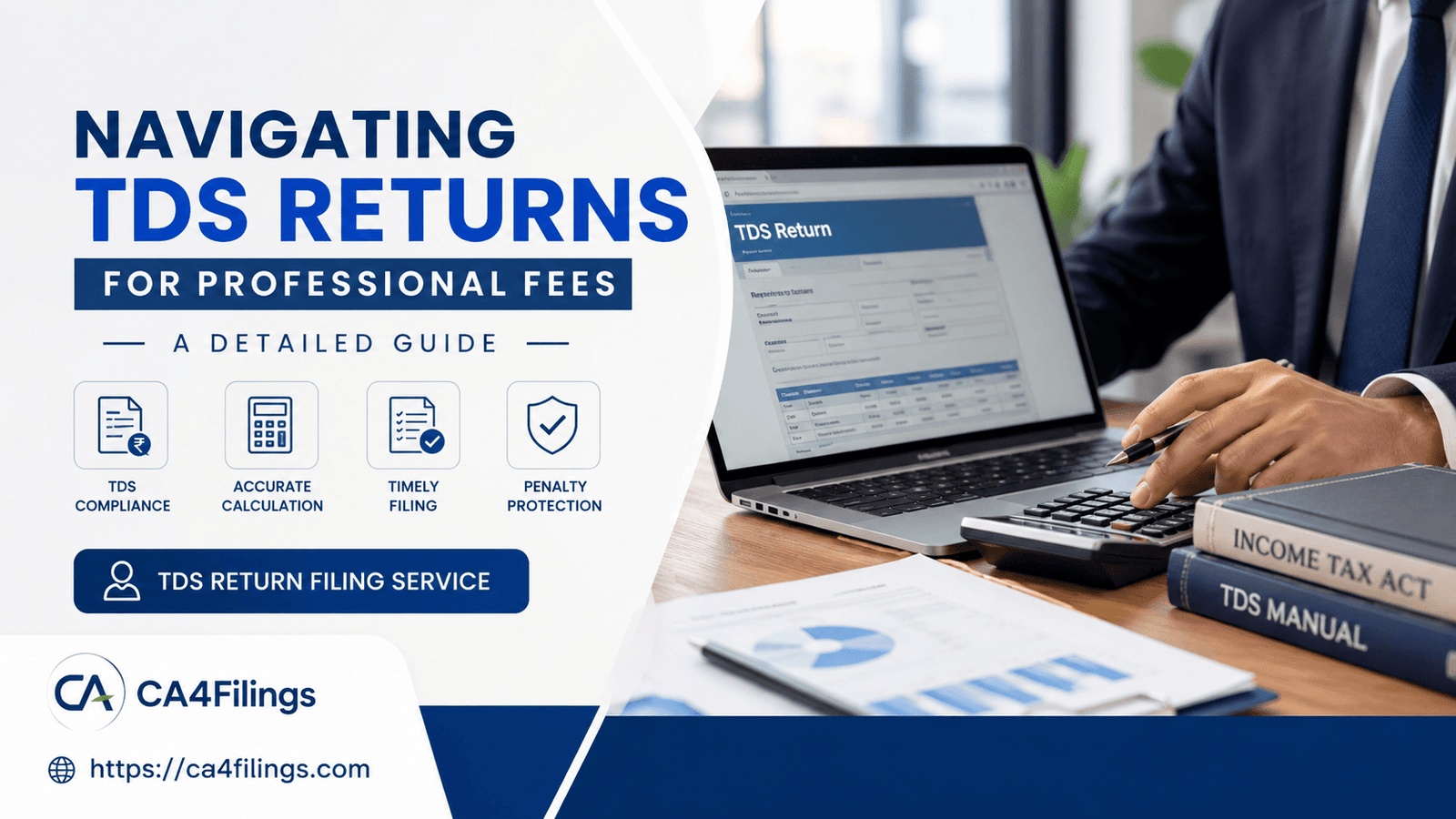
Navigating TDS Returns for Professional Fees: A Detailed Guide is essential for businesses, startups, consultants, and professionals dealing with payments for specialized services. Whether you are paying a lawyer, chartered accountant, doctor, architect, freelancer, or consultant, understanding the TDS process is crucial to avoid penalties and maintain smooth tax compliance.
At CA4Filings, we often see taxpayers struggling with TDS returns, deduction rates, filing deadlines, and reporting errors. If you want a hassle-free way to manage compliance, our TDS Return Filing Service helps businesses stay compliant without unnecessary stress.
This detailed TDS guide explains everything you need to know in simple terms.
Navigating TDS Returns for Professional Fees: A Detailed Guide – Understanding the Basics
Before moving into filing requirements, let us understand what TDS for professionals actually means.
Tax Deducted at Source (TDS) is a mechanism where tax is deducted by the payer before making payment to the recipient.
When businesses pay Professional Fees or professional charges to service providers, TDS provisions under Section 194J of the Income Tax Act generally apply.
Common examples include:
- Chartered Accountant fees
- Legal consultancy fees
- Medical consultancy fees
- Technical consultancy services
- Freelance professional services
- Architectural services
If your business makes such payments beyond the prescribed threshold, TDS compliance becomes mandatory.
Who Needs to Deduct TDS on Professional Fees?
Navigating TDS Returns for Professional Fees: A Detailed Guide becomes especially important for:
- Companies
- LLPs
- Partnership firms
- Proprietorship businesses covered under tax audit
- Startups
- E-commerce businesses
- Agencies hiring consultants
Threshold Limit for Professional Charges
Under current provisions, TDS under Section 194J applies when professional charges paid to a resident exceed the specified threshold in a financial year.
For example:
A company pays ₹45,000 to a legal consultant in April and ₹20,000 in July.
Total payment = ₹65,000.
Since the threshold is crossed, TDS deduction rules apply.
Applicable TDS Rate on Professional Fees
One of the most common questions in Navigating TDS Returns for Professional Fees: A Detailed Guide relates to deduction rates.
Typically, professional services attract TDS at the applicable rate prescribed under the Income Tax Act.
However, practical situations may vary due to:
- PAN availability
- Nature of professional service
- Resident vs non-resident status
- Updated tax provisions
Example of TDS Calculation
Suppose a consultant raises an invoice of ₹1,00,000.
Applicable TDS rate: 10%
Calculation:
- Invoice Amount: ₹1,00,000
- TDS Deducted: ₹10,000
- Net Payment Released: ₹90,000
The deducted amount must be deposited with the government within the prescribed timeline.
Simple errors in calculation often create issues during TDS filing and income tax returns reconciliation.
Step-by-Step TDS Process for Professional Fees
Understanding the TDS process can significantly reduce compliance risks.
Step 1: Identify TDS Applicability
Check:
- Nature of service
- Annual payment amount
- Applicable section
- Threshold limit
Step 2: Deduct TDS Correctly
Deduct Tax Deducted at Source at the applicable rate before making payment or crediting the amount.
Step 3: Deposit TDS with Government
The deducted tax must be deposited within the statutory due date.
Delayed payment may attract:
- Interest liability
- Late fees
- Penalties
Step 4: File TDS Returns
After deposit, quarterly TDS returns must be filed accurately.
Information generally includes:
- Deductor details
- Deductee details
- PAN information
- Challan details
- Deduction amounts
Step 5: Issue TDS Certificates
Eligible deductees should receive applicable TDS certificates for claiming credit while filing their income tax returns.
Common Mistakes in TDS Filing for Professional Fees
From our practical experience at CA4Filings, businesses frequently make avoidable errors.
Incorrect Section Selection
Many taxpayers wrongly classify payments.
For example:
- Contractor payment treated as professional fees
- Professional consultancy reported under incorrect TDS section
Wrong classification creates compliance notices.
PAN Errors
Incorrect PAN entry causes:
- TDS credit mismatch
- Deductee complaints
- Rectification filings
Missing Due Dates
Late TDS returns can attract substantial penalties.
Quarterly deadlines should be tracked carefully.
Incorrect Challan Mapping
Wrong challan tagging often leads to reconciliation issues during TDS compliance reviews.
Navigating TDS Returns for Professional Fees: A Detailed Guide – Compliance Best Practices
Good compliance habits can save businesses from unnecessary tax disputes.
Maintain Proper Documentation
Always preserve:
- Agreements
- Invoices
- Payment proofs
- Deduction records
- Challan receipts
Conduct Monthly Reviews
Do not wait until quarter-end.
Review:
- Vendor payments
- Professional charges
- Applicable deductions
- Pending deposits
Use Professional Support
Tax filing for professionals involves technical reporting requirements.
Professional guidance helps reduce:
- Compliance risks
- Filing mistakes
- Interest exposure
Impact of TDS on Professionals Receiving Payments
This part of Navigating TDS Returns for Professional Fees: A Detailed Guide is equally important for consultants and freelancers.
If TDS is deducted from your professional income:
- Verify deduction details in Form 26AS.
- Reconcile invoices with payments received.
- Report income correctly in income tax returns.
- Claim eligible TDS credit.
Real-Life Example
A freelance graphic designer earns ₹8 lakh annually.
Clients deduct TDS from invoices throughout the year.
While filing income tax returns, the designer must:
- Report total professional income.
- Match TDS deductions.
- Claim tax credit appropriately.
Ignoring reconciliation may result in tax demands or refund delays.
Frequently Asked Questions (FAQs)
1. Is TDS mandatory on all professional fees?
No. TDS applies when specified conditions and threshold limits are met under applicable provisions.
2. What happens if TDS returns are filed late?
Late TDS filing may attract:
- Late filing fees
- Interest charges
- Penalties
- Compliance notices
3. Can freelancers claim TDS deducted by clients?
Yes. Freelancers and professionals can claim TDS credit while filing income tax returns, provided records are correctly reported.
4. What documents are required for TDS compliance?
Commonly required documents include:
- PAN details
- Invoices
- Payment records
- Challans
- Deduction reports
5. Why is professional help useful for TDS filing?
TDS filing involves technical compliance, deadlines, reconciliation, and reporting accuracy. Expert support minimizes mistakes and saves time.
Navigating TDS Returns for Professional Fees: A Detailed Guide is not just about filing forms—it is about maintaining proper compliance, avoiding penalties, and ensuring smooth financial operations.
Whether you are a business deducting tax on professional charges or a consultant managing TDS for professionals, understanding the TDS process is essential for accurate tax filing for professionals and timely compliance.
At CA4Filings, we help businesses and individuals simplify TDS returns, manage deductions correctly, and stay compliant with evolving tax rules. If you need reliable support for TDS filing, compliance reviews, or professional tax guidance, connect with CA4Filings today and let experienced experts handle your compliance with confidence.
Latest Updates
ca4filings.com Services


























-registration.png)