FSSAI Regulations for Online Food Delivery Services
Understand FSSAI Regulations for Online Food Delivery Services, compliance rules, licensing, penalties, and legal requirements for food businesses.
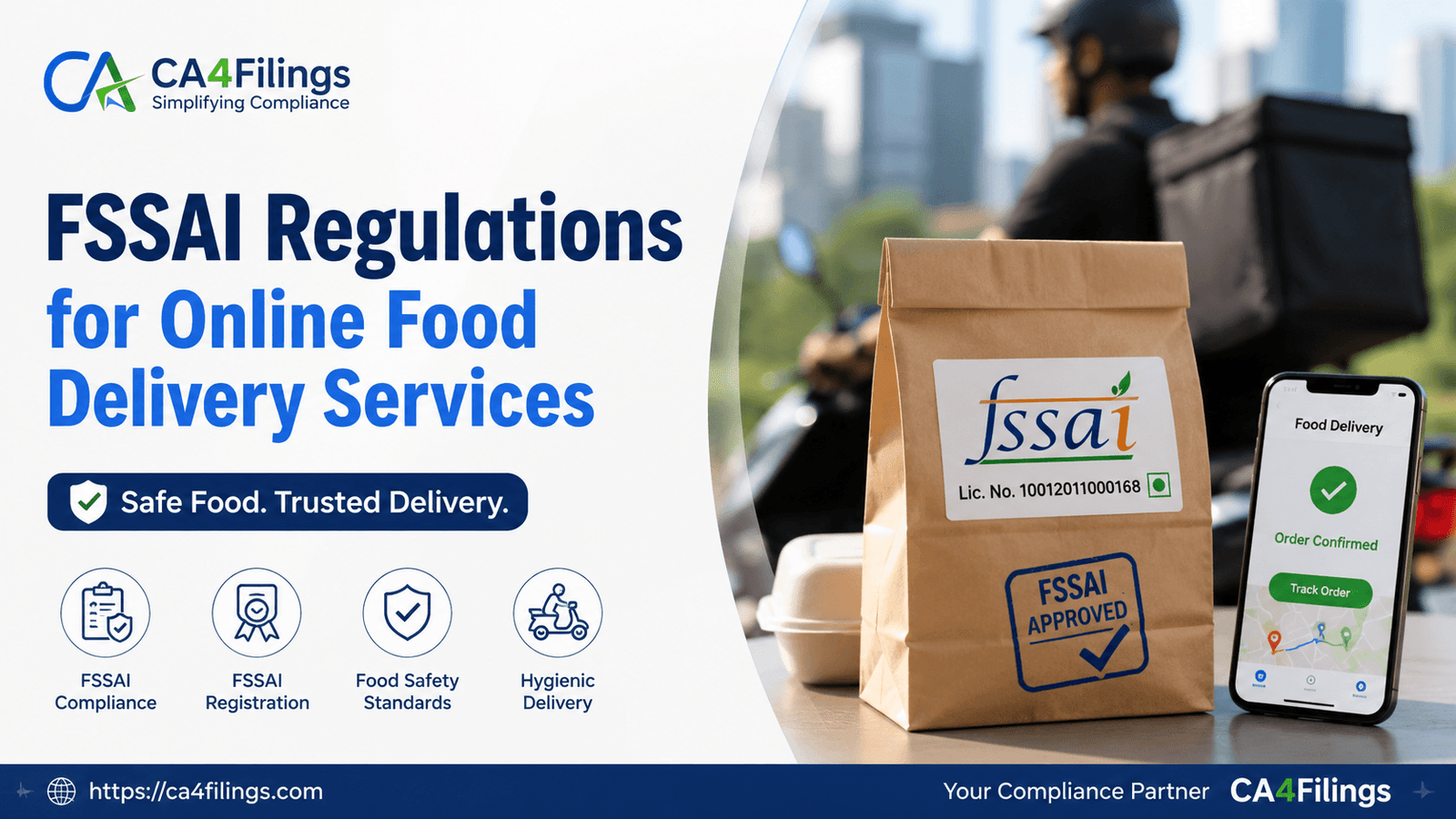
The online food delivery industry in India has witnessed tremendous growth over the last few years. With platforms like Zomato and Swiggy becoming a part of everyday life, food businesses are rapidly shifting towards digital operations. However, along with convenience comes legal responsibility. This is where FSSAI Regulations for Online Food Delivery Services become extremely important.
Whether you are running a cloud kitchen, restaurant, bakery, café, or food aggregation platform, compliance with food safety laws is mandatory under Indian regulations. At CA4Filings, we regularly assist businesses in understanding food licensing requirements and maintaining proper compliance. Businesses planning to operate legally should first complete their FSAAI Registration to avoid penalties and operational issues later.
In this article, we will explain the important FSSAI Regulations for Online Food Delivery Services, licensing requirements, compliance obligations, penalties, and practical tips for food business operators in India.
What Are FSSAI Regulations for Online Food Delivery Services?
The Food Safety and Standards Authority of India (FSSAI) is the regulatory body responsible for monitoring food safety standards in India. The FSSAI Regulations for Online Food Delivery Services are designed to ensure that food sold through online platforms is safe, hygienic, properly labeled, and compliant with Indian food laws.
These regulations apply to:
- Restaurants listed on food delivery apps
- Cloud kitchens
- Home-based food businesses
- Food aggregators
- Grocery delivery platforms selling packaged food
- Meal subscription services
The objective of FSSAI Regulations for Online Food Delivery Services is to protect consumers from unsafe food practices and establish accountability in the online food ecosystem.
Why FSSAI Compliance Is Important for Online Food Businesses
Many business owners believe that online food delivery platforms handle legal compliance. However, the responsibility primarily lies with the food business operator.
Failure to comply with FSSAI Regulations for Online Food Delivery Services can lead to:
- Heavy penalties
- Suspension of business operations
- Removal from food delivery platforms
- Legal action by authorities
- Loss of customer trust
For example, several cloud kitchens in major Indian cities have faced temporary closures due to hygiene violations and lack of valid FSSAI licenses.
Proper compliance not only protects your business legally but also improves brand credibility among customers.
Types of FSSAI Licenses Required
Basic FSSAI Registration
This is suitable for small food businesses with annual turnover up to ₹12 lakh.
Applicable for:
- Small home kitchens
- Local snack sellers
- Small online food startups
State FSSAI License
Businesses with turnover between ₹12 lakh and ₹20 crore generally require a State License.
Applicable for:
- Mid-sized restaurants
- Cloud kitchens
- Regional food chains
Central FSSAI License
Large food businesses with turnover exceeding ₹20 crore or operating in multiple states require a Central License.
Applicable for:
- National restaurant chains
- Large food aggregators
- Multi-state cloud kitchen brands
Understanding the right category under FSSAI Regulations for Online Food Delivery Services is crucial to avoid future compliance issues.
Key FSSAI Regulations for Online Food Delivery Services
Mandatory FSSAI License Display
Every food business listed on delivery platforms must display:
- FSSAI License Number
- Business name
- Registered address
The license number should also be visible on invoices and packaging wherever applicable.
Food Safety and Hygiene Standards
Under FSSAI Regulations for Online Food Delivery Services, food businesses must maintain:
- Clean kitchen premises
- Proper storage conditions
- Safe water supply
- Staff hygiene practices
- Pest control measures
Food handlers should wear gloves, hairnets, and clean uniforms while preparing food.
Packaging and Labeling Compliance
Food packaging must:
- Be food-grade quality
- Prevent contamination
- Mention expiry details where required
- Display allergen information for packaged products
Improper packaging is one of the most common compliance failures noticed during inspections.
Online Food Aggregator Responsibilities
Food delivery platforms are also governed by FSSAI Regulations for Online Food Delivery Services. Aggregators must:
- Verify FSSAI licenses of listed restaurants
- Delist non-compliant vendors
- Ensure food traceability
- Maintain seller records
This means platforms cannot allow unlicensed food sellers to operate through their apps.
Timely License Renewal
FSSAI licenses must be renewed before expiry. Delayed renewal may attract penalties and business interruption.
Many businesses ignore renewals until platforms suspend their listings. Maintaining proper compliance calendars is extremely important.
Compliance Checklist for Online Food Businesses
Here is a practical checklist to comply with FSSAI Regulations for Online Food Delivery Services:
Documentation Requirements
Keep the following documents ready:
- PAN card
- Aadhaar card
- Address proof
- Kitchen layout plan
- Food category details
- Business registration certificate
Operational Compliance
Ensure:
- Daily cleaning records are maintained
- Refrigeration temperatures are monitored
- Raw materials are sourced from reliable suppliers
- Expired products are discarded immediately
Staff Training
Train employees on:
- Food handling practices
- Personal hygiene
- Cross-contamination prevention
- Waste disposal methods
Common Mistakes Made by Food Businesses
Many startups unknowingly violate FSSAI Regulations for Online Food Delivery Services due to lack of awareness.
Some common mistakes include:
- Operating without valid FSSAI license
- Using residential kitchens without approvals
- Incorrect food labeling
- Poor packaging standards
- Delayed license renewal
- Ignoring hygiene inspections
Even small violations can impact your brand reputation significantly in today’s digital environment where customer reviews spread quickly.
Penalties for Non-Compliance
The Food Safety and Standards Act imposes strict penalties for violations.
Monetary Penalties
Depending on the violation, penalties may range from:
- ₹25,000
- ₹1 lakh
- Up to ₹10 lakh in severe cases
License Suspension or Cancellation
Repeated non-compliance under FSSAI Regulations for Online Food Delivery Services can result in:
- Suspension of FSSAI license
- Permanent cancellation
- Delisting from online food platforms
Legal Consequences
In serious food contamination cases, legal prosecution and imprisonment may also apply.
Therefore, preventive compliance is always better than corrective legal action.
Practical Tips for Online Food Delivery Startups
At CA4Filings, we advise food startups to focus on compliance from day one instead of treating it as a later formality.
Start With Proper Registration
Never begin operations without obtaining the correct FSSAI approval.
Maintain Digital Compliance Records
Keep:
- Invoices
- Purchase records
- Staff training records
- Cleaning logs
These documents become extremely useful during inspections.
Conduct Internal Hygiene Audits
Regular self-audits help identify problems before authorities do.
Use Quality Packaging
Good packaging not only ensures compliance but also improves customer experience and repeat orders.
Future of FSSAI Regulations for Online Food Delivery Services
The Indian online food industry is growing rapidly, and regulatory scrutiny is also increasing. Authorities are now focusing more on:
- Cloud kitchens
- Home-based food businesses
- Food traceability systems
- Digital compliance tracking
Businesses that proactively follow FSSAI Regulations for Online Food Delivery Services will have a competitive advantage in the long run.
Consumers today are highly conscious about food quality, hygiene, and safety standards. Compliance is no longer just a legal requirement — it is a business necessity.
FAQs
Is FSSAI license mandatory for online food delivery businesses?
Yes, every food business operating online must comply with FSSAI Regulations for Online Food Delivery Services and obtain the appropriate license or registration.
Can home kitchens sell food online without FSSAI registration?
No, even home kitchens selling through delivery apps require FSSAI registration.
Who is responsible for food safety — restaurant or delivery platform?
Both parties have responsibilities. Restaurants must maintain food safety standards, while aggregators must verify valid licenses.
What happens if an online food business operates without FSSAI license?
The business may face penalties, suspension, legal action, and removal from food delivery platforms.
How long does FSSAI registration take?
Generally, FSSAI registration may take around 7–30 working days depending on the license category and documentation.
Complying with FSSAI Regulations for Online Food Delivery Services is essential for every food business operating in India. Whether you run a cloud kitchen, café, restaurant, or home-based food startup, proper licensing and compliance help you operate smoothly, build customer trust, and avoid unnecessary legal risks.
At CA4Filings, we help businesses navigate the complexities of food licensing, documentation, and regulatory compliance with practical guidance and professional support. If you are planning to start or expand your food business, our team can assist you with hassle-free FSSAI registration and end-to-end compliance support.
Latest Updates
ca4filings.com Services























-registration.png)