How Do I Register a Company in North Carolina? Research Triangle Growth Guide
Learn how do i register a company in North Carolina, from choosing a business structure to state filings, tax compliance and annual reports.
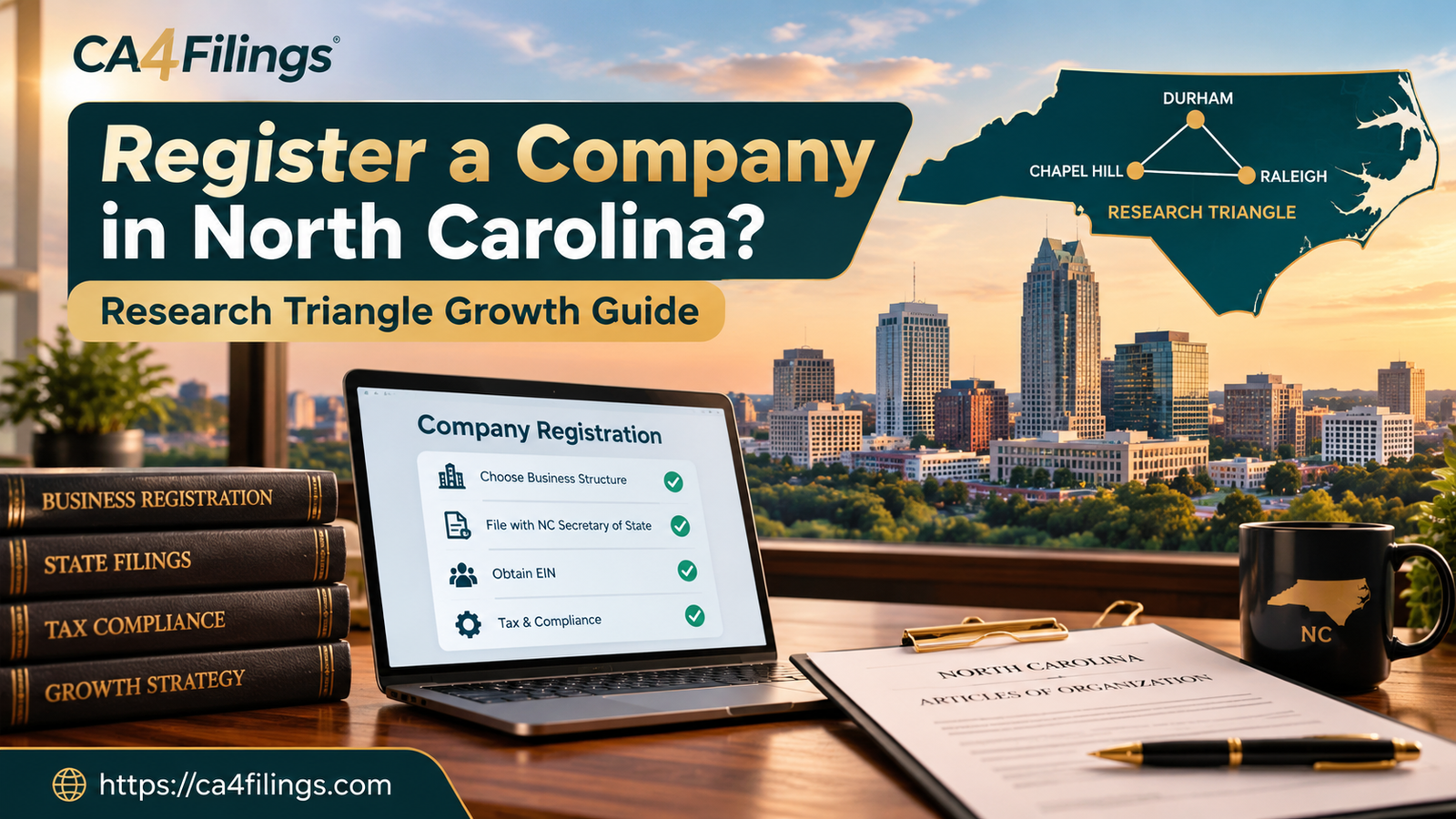
If you are planning to expand your business into the United States, North Carolina is a destination worth considering. With a growing technology sector, skilled workforce and business-friendly environment, the state attracts startups, consultants, technology companies and international entrepreneurs. For founders exploring the Research Triangle, understanding how do i register a company is an important first step towards building a compliant business.
At CA4Filings, we believe company formation becomes much easier when you understand the legal requirements before investing your money. Whether you are launching a technology startup in Raleigh or establishing a consulting firm near Durham, our Company Registration guidance can help you understand the registration process and plan your next steps with confidence.
Why Choose North Carolina for Your Business?
North Carolina offers a strong combination of economic opportunity, infrastructure and access to skilled professionals. The Research Triangle, which includes Raleigh, Durham and Chapel Hill, is particularly attractive to businesses in technology, healthcare, biotechnology, research and professional services.
The region benefits from the presence of major universities, research institutions and established employers. This creates opportunities for startups to connect with talent, suppliers, investors and potential customers.
The wider RTP business ecosystem is also appealing to international founders looking to serve US customers. However, registering a company does not automatically provide immigration status, work authorisation or permission to operate in every regulated industry. These matters require separate consideration.
How Do I Register a Company in North Carolina? Step-by-Step Guide
If you are wondering how do i register a company, the process generally involves choosing a business structure, preparing the required documents, filing with the state and completing applicable tax and licensing formalities.
Step 1: Choose the Right Business Structure
Your first decision is whether to establish a Limited Liability Company (LLC), corporation or another permitted business structure.
LLC: Often suitable for small businesses, independent consultants and startups seeking liability protection with flexible management.
Corporation: May be appropriate for businesses planning to raise institutional investment, issue shares or establish a more formal corporate structure.
Sole proprietorship: Can suit a small individual business, but it does not provide the same separate legal entity protection as an LLC or corporation.
For example, an entrepreneur launching a software consultancy in Raleigh may consider an LLC, while a startup planning multiple funding rounds may evaluate a corporation.
Your ownership structure, financing plans and tax position should guide this decision. US federal tax treatment can differ from the legal structure, so obtain professional advice before filing.
Step 2: Select a Compliant Business Name
Choose a name that complies with North Carolina's naming rules and is distinguishable from existing business names on the state's records.
You can check name availability through the NC Secretary of State website before submitting your application.
Keep these points in mind:
Follow the naming requirements for your chosen entity type.
Avoid names that imply an unauthorised professional or regulated activity.
Check relevant trademarks and domain availability separately.
Consider reserving a name if you need additional time before filing.
An available state business name does not automatically give you trademark rights.
Step 3: Complete the State Registration Filing
The next step is submitting the appropriate formation document to the North Carolina Secretary of State.
For an LLC, this generally means filing Articles of Organization. For a corporation, the relevant document is typically Articles of Incorporation.
A standard North Carolina LLC filing usually requires information such as:
The proposed company name.
The registered office and registered agent details.
The name and address of the organiser.
Any additional information required by the filing form.
A registered agent must meet North Carolina's eligibility requirements and maintain the required in-state registered office. This agent receives official notices and legal documents on behalf of the business.
Review every detail before submission. Errors in company names, addresses or agent information can create delays and additional administrative work.
Step 4: Obtain an EIN and Arrange Business Banking
After formation, determine whether your company needs an Employer Identification Number (EIN) from the Internal Revenue Service (IRS). An EIN is commonly required for businesses with employees and for various banking and tax purposes.
The EIN application process depends on the applicant's circumstances. International founders without a US Social Security Number or Individual Taxpayer Identification Number may need to follow the IRS procedure applicable to foreign applicants.
Once you have the necessary documents, approach a suitable bank to understand its business-account opening requirements. Banks may request formation documents, identification, ownership information and evidence of the business address.
Remember that state registration and an EIN are separate processes. Neither guarantees approval for a bank account.
Step 5: Register for Applicable Taxes and Licences
Understanding how do i register a company also means identifying the tax obligations that arise after formation.
Depending on your business activities, you may need to register with the North Carolina Department of Revenue, obtain sales and use tax registration, arrange employer withholding or fulfil other state and local requirements.
Check whether your industry requires additional permits. Food businesses, construction contractors, healthcare providers and other regulated operators may face specific licensing rules.
If you employ staff, review employment tax, payroll and workplace compliance requirements before hiring.
What Are the Costs of North Carolina Company Registration?
The cost depends on the entity type and the services you need.
For a domestic LLC, the standard state filing fee has generally been $125. A corporation's formation fee and other charges may differ. Because fees can change, verify the current amount directly with the North Carolina Secretary of State before filing.
Your total budget may include:
State formation fees.
Registered agent services, if required.
Legal or accounting advice.
Local licences and permits.
Business banking and administrative expenses.
Federal and state tax compliance support.
Do not budget for the initial filing alone. Ongoing compliance and professional services can be equally important.
Annual Reports NC and Ongoing Compliance
Registration is only the beginning. Businesses must maintain accurate records and complete their applicable annual filings.
Most North Carolina LLCs and corporations are required to file annual reports with the Secretary of State, subject to the rules and exceptions applicable to their entity type.
For LLCs, the annual report is generally due on 15 April each year after the year of creation. Corporations have their own filing deadlines and requirements, so confirm the rules for your entity.
Practical compliance steps include:
Keeping registered agent and office details current.
Filing annual reports NC requirements on time.
Maintaining ownership and financial records.
Filing applicable federal and state tax returns.
Reviewing local licences and employment obligations.
Updating state records when required after significant changes.
Late filings or missed obligations can result in fees, administrative complications or loss of good standing.
Understanding Business Privilege Tax
Entrepreneurs should also understand which taxes apply to their particular business. Business privilege tax is not a universal North Carolina tax imposed on every newly registered company simply because it exists.
North Carolina businesses may instead have obligations involving income or franchise tax, sales and use tax, withholding tax and other taxes depending on their structure and activities. Certain regulated businesses may also face industry-specific taxes or fees.
Do not confuse North Carolina's tax system with the business privilege taxes imposed in some other US states. Check the applicable rules with the North Carolina Department of Revenue and a qualified tax professional.
Common Mistakes to Avoid When Registering a Company
Founders can save time and money by addressing these issues early:
Choosing an entity without considering ownership and tax consequences.
Assuming an LLC eliminates every form of personal liability.
Using an unsuitable registered agent or failing to update the agent's details.
Missing annual report deadlines.
Starting regulated activities before obtaining the necessary permits.
Assuming that incorporation automatically creates tax residency, immigration rights or a US work permit.
Ignoring cross-border tax obligations when owners or operations are based outside the United States.
International entrepreneurs should be especially careful about how US business income interacts with their home country's tax rules.
Latest Updates
ca4filings.com Services

































