Understanding 80G Registration: Tax Benefits for Charitable Organizations
Understanding 80G Registration: Tax Benefits for Charitable Organizations and how NGOs can claim tax exemptions and donor benefits.
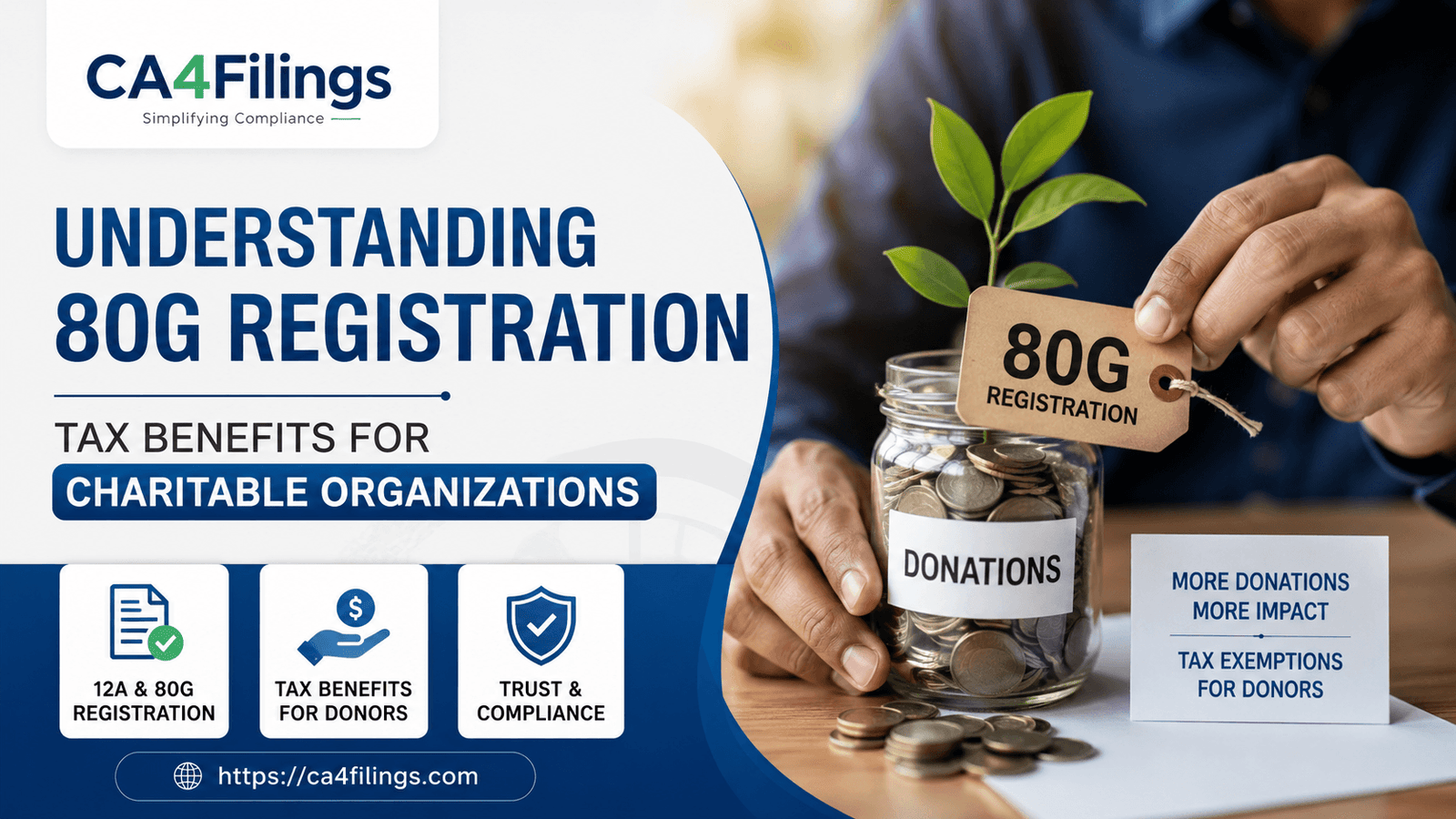
In India, charitable institutions and non-profit organizations play a major role in supporting education, healthcare, poverty relief, environmental protection, and many other social causes. However, running charitable activities consistently requires proper financial support and donor confidence. This is where Understanding 80G Registration: Tax Benefits for Charitable Organizations becomes extremely important.
Under the Income Tax Act, 1961, 80G registration allows donors to claim tax deductions on eligible donations made to approved charitable organizations. This government certification not only increases credibility but also helps NGOs and trusts attract more donations and fundraising opportunities.
At CA4Filings, we regularly assist trusts, societies, and Section 8 companies with compliance and registrations. If you are planning to apply for 12A and 80G Registration, understanding the benefits and process can help you make informed decisions for your organization.
Understanding 80G Registration: Tax Benefits for Charitable Organizations
When discussing Understanding 80G Registration: Tax Benefits for Charitable Organizations, it is essential to know that Section 80G of the Income Tax Act provides tax exemptions to donors contributing to eligible charitable institutions.
In simple words, when an organization obtains 80G registration, individuals and businesses donating to it can claim deductions while filing their income tax returns. This encourages philanthropy and motivates more people to contribute towards charitable activities.
For charitable organizations, this registration acts as a trust-building mechanism and improves fundraising potential significantly.
What is 80G Registration?
80G registration is a government approval issued by the Income Tax Department to eligible non-profit organizations. Once approved, donors can avail charitable deductions on donations made to the organization.
The deduction percentage may vary depending on the category of institution and donation type. In most cases, donors can claim either:
- 50% deduction of the donation amount, or
- 100% deduction for specific notified funds and institutions.
This registration is highly beneficial for:
- Public charitable trusts
- Societies
- Section 8 companies
- Religious and charitable institutions
- Non-profit organizations involved in social welfare
Why is 80G Registration Important for Charitable Organizations?
Many NGOs struggle with consistent financial support. Donors today prefer contributing to organizations that are legally compliant and offer tax benefits.
Builds Donor Confidence
An organization with 80G registration appears more credible and transparent. Donors feel secure knowing their contributions are going to a recognized charitable institution.
Encourages More Donations
People are more likely to donate when they receive tax exemptions under the Income Tax Act. This directly helps organizations increase fundraising efforts.
Improves Organizational Reputation
Government certification improves public image and enhances trust among corporates, CSR departments, and individual donors.
Supports Long-Term Growth
Steady donations help charitable organizations expand their charitable activities and improve social impact.
Eligibility Criteria for 80G Registration
While understanding Understanding 80G Registration: Tax Benefits for Charitable Organizations, organizations must also know whether they qualify for registration.
The following eligibility criteria generally apply:
The Organization Must Be Legally Registered
The NGO should be registered as:
- A Trust
- A Society
- A Section 8 Company
Charitable Objective is Mandatory
The institution must work towards genuine charitable activities such as:
- Education
- Medical relief
- Poverty alleviation
- Environmental protection
- Women empowerment
- Rural development
Proper Books of Accounts
Organizations must maintain transparent financial records and proper accounting systems.
No Religious Bias for Private Benefit
The institution should not operate solely for the benefit of a specific religious community or private group.
Compliance with Income Tax Rules
The organization should comply with all applicable income tax provisions and filing requirements.
Documents Required for 80G Registration
To complete the registration process smoothly, organizations generally need the following documents:
- PAN card of the NGO
- Registration certificate
- Trust deed or MOA/AOA
- Address proof
- Financial statements
- Details of trustees or directors
- Activity reports
- Bank account details
- NOC from property owner (if applicable)
Having proper documentation helps avoid delays and objections from the Income Tax Department.
Step-by-Step Process for 80G Registration
Understanding the process is an important part of Understanding 80G Registration: Tax Benefits for Charitable Organizations.
Step 1: Prepare Documentation
Collect all organizational and financial documents before starting the application.
Step 2: File Form 10A or 10AB
The application is submitted online through the Income Tax portal using the prescribed form.
Step 3: Verification by Income Tax Department
The department may request:
- Additional documents
- Clarifications
- Activity details
- Financial information
Step 4: Approval Certificate Issued
After successful verification, the Income Tax Department grants the 80G registration certificate.
Tax Benefits Available Under 80G Registration
One of the major reasons organizations seek 80G registration is the tax advantage it offers donors.
Benefits for Donors
Registered organizations allow donors to claim charitable deductions while filing income tax returns.
For example:
If a taxpayer donates ₹50,000 to an eligible NGO with 50% deduction eligibility, they can claim ₹25,000 as deduction from taxable income.
Benefits for Organizations
Organizations benefit indirectly through:
- Increased donations
- Better fundraising opportunities
- Enhanced credibility
- Corporate CSR partnerships
- Stronger financial support
Common Mistakes to Avoid During 80G Registration
Many organizations face rejection due to avoidable mistakes. Here are some practical insights from our experience at CA4Filings.
Incomplete Documentation
Missing paperwork often delays approval.
Improper Financial Records
Poor bookkeeping creates compliance concerns during scrutiny.
Non-Charitable Activities
If the department feels the organization operates commercially rather than charitably, registration may be denied.
Delayed Compliance Filing
Regular filing of returns and compliance reports is extremely important.
Difference Between 12A and 80G Registration
Many people confuse 12A and 80G registration, but both serve different purposes.
| Registration | Purpose |
|---|---|
| 12A Registration | Provides income tax exemption to the NGO itself |
| 80G Registration | Provides tax benefits to donors contributing to the NGO |
Ideally, charitable organizations should obtain both registrations for maximum benefits.
Real-World Example
Suppose an NGO working in rural education receives donations from corporate sponsors. Without 80G registration, many companies may hesitate to contribute because donors cannot claim tax exemptions.
However, once the NGO obtains 80G registration:
- Corporates gain tax benefits
- Donor confidence increases
- Fundraising becomes easier
- Long-term projects receive stable funding
This demonstrates why understanding Understanding 80G Registration: Tax Benefits for Charitable Organizations is essential for sustainable growth.
FAQs on Understanding 80G Registration: Tax Benefits for Charitable Organizations
Is 80G registration mandatory for NGOs?
No, it is not mandatory. However, it is highly recommended because it helps attract donations through tax benefits.
Can religious institutions apply for 80G registration?
Certain religious institutions may qualify, but organizations working exclusively for a particular religious community may face restrictions.
How long is 80G registration valid?
As per current provisions, registrations may require periodic renewal based on Income Tax Department guidelines.
Can individuals claim deductions for all donations?
No. Only donations made to eligible registered charitable organizations qualify for charitable deductions.
Is online application compulsory for 80G registration?
Yes, applications are generally filed online through the Income Tax portal.
Understanding Understanding 80G Registration: Tax Benefits for Charitable Organizations is crucial for NGOs, trusts, and non-profit organizations looking to strengthen their financial stability and donor network. 80G registration not only provides tax exemptions to donors but also improves organizational credibility, fundraising capability, and long-term sustainability.
With increasing compliance requirements under income tax laws, professional guidance can make the process smoother and more efficient. At CA4Filings, we help charitable organizations complete registrations, maintain compliance, and build a strong legal foundation for their charitable activities.
If your organization is planning to apply for 80G registration or needs expert assistance with NGO compliance, connect with CA4Filings today and take the next step toward sustainable growth and impactful philanthropy.
Latest Updates
ca4filings.com Services

























-registration.png)