How to Expand Your OPC into Multiple States
Planning to scale? Learn how to expand your OPC into multiple states legally. Get expert tips from CA4Filings on GST, licensing, and compliance for growth.
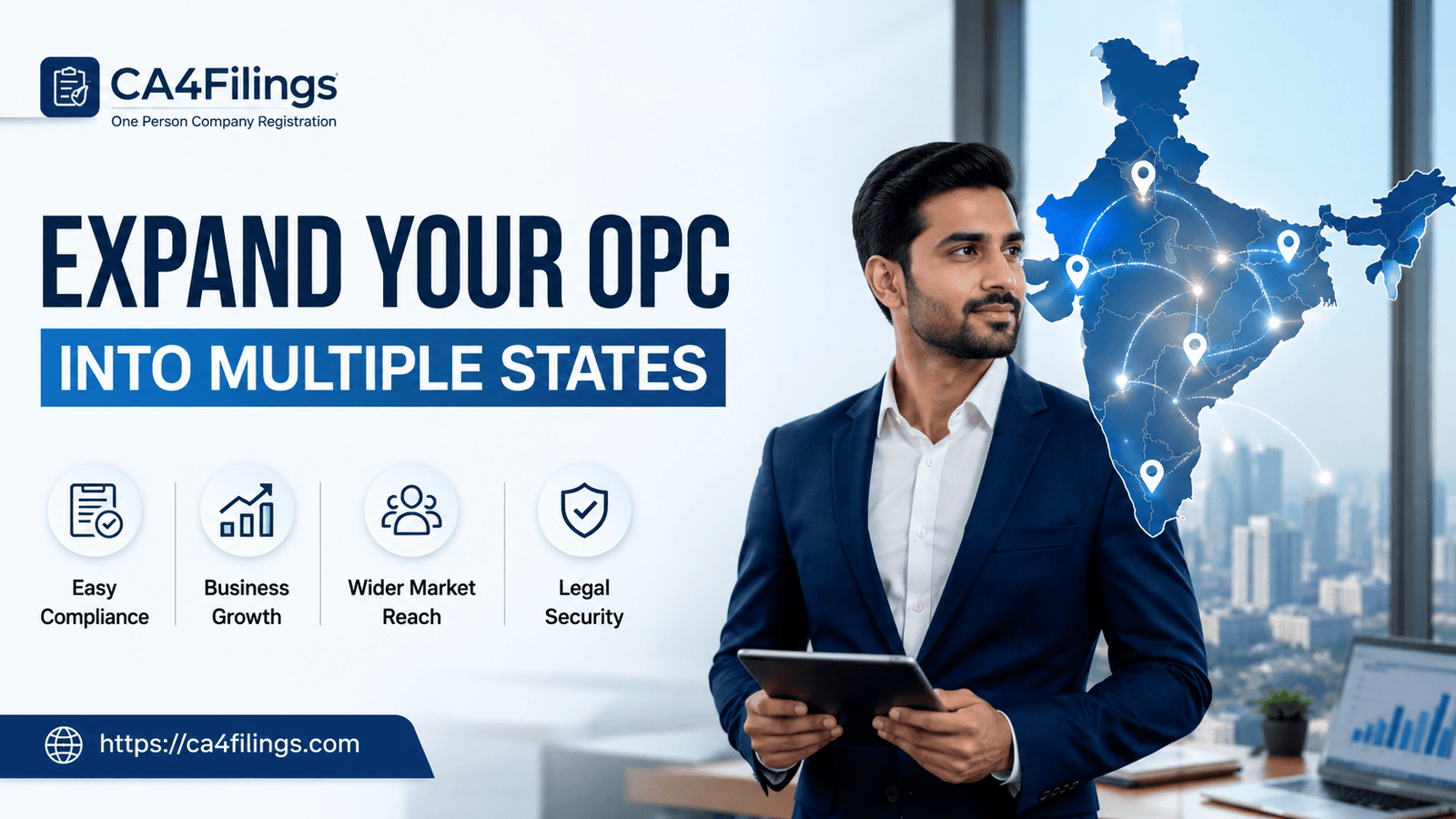
Managing a business in India is an exciting journey, and for many, it starts with the streamlined structure of a One Person Company (OPC). Many entrepreneurs initially opt for One Person Company Registration because of the ease of management and limited liability. However, as your venture gains traction, you might find yourself ready to scale beyond your home state. Understanding How to Expand Your OPC into Multiple States is the natural next step for ambitious founders looking to capture new markets.
At CA4Filings, we often receive queries from business owners asking if they need a separate registration for every state they enter. The short answer is no, you don't necessarily need a new company for every state, but you do need to understand the nuances of business growth and compliance.
Understanding the Legal Scope of OPC Expansion
Before diving into the operational logistics, it is essential to clarify that a company registered under the Companies Act, 2013, has a pan-India legal identity. Your Corporate Identification Number (CIN) is valid across the entire country. Therefore, How to Expand Your OPC into Multiple States is less about "incorporating" again and more about "registering" your presence for tax and operational purposes.
When you start expanding into new markets, you are essentially setting up a branch office or an additional place of business. This move is a critical part of your overall business expansion strategy.
Key Steps to Expand Your OPC Operations
If you are planning on expanding business into multiple states, you must ensure that your compliance architecture is robust. Here are the practical steps you should follow:
Establish a Physical Presence: Secure a registered office or a branch office address in the new state. This could be a leased office space or even a virtual office, provided you have a valid rent agreement and NOC from the landlord.
GST Registration: This is the most crucial part of interstate expansion. Under the GST regime, you must obtain a separate GST registration for every state where you maintain a place of business. This is mandatory for tax compliance.
State-Specific Licenses: Depending on your industry, you may need to register under the local Shops and Establishment Act of the state. Some sectors also require regional permits or local municipal licenses.
Professional Tax (PT) Registration: Many states have their own Professional Tax requirements for employers. When you hire staff in a new state, ensure you register for PT to avoid penalties.
Why Strategic Planning Matters for Multi-State Expansion
Growing business presence across borders requires more than just filling out forms. When considering how to expand your OPC into multiple states, you must also look at your long-term business expansion success.
An OPC, by definition, has limitations on ownership and funding. As you enter multiple markets, your turnover may grow, and you might eventually reach a stage where you need to convert your OPC into a Private Limited Company to bring in investors or additional directors. This is a common path for those who find that their cross-state business expansion is outgrowing the "single-member" model.
Practical Insights for Interstate Expansion
Keep Documentation Unified: Even if you have multiple GST numbers, ensure your accounting software is centralized. This makes annual filings and audits much smoother.
Local Compliance Checks: Always consult with a local professional or a CA firm like ours to check for specific state-level labor laws or regional tax exemptions that might benefit your state-to-state business growth.
Digital Footprint: Update your company website, letterheads, and business cards to reflect your new branch office addresses. This builds trust with clients in the new region.
FAQs: Frequently Asked Questions
Do I need to incorporate a new company to expand into a new state?
No. An OPC is a single legal entity with pan-India status. You only need to register your presence in the new state through tax registrations like GST and local licenses.
Is GST registration mandatory for every state?
Yes, if you have a place of business or are making taxable supplies from a location in a different state, you generally need to obtain a separate GST registration for that state.
How does OPC expansion affect my annual compliance?
While your core company structure remains the same, your compliance workload will increase. You will need to manage multiple GST returns and ensure you are meeting the local labor and tax law requirements of each state where you operate.
Should I convert my OPC to a Private Limited Company before expanding?
Not necessarily, but it is worth considering. If your multi-state expansion goals include raising venture capital or adding partners, converting to a Private Limited Company might be a more scalable business expansion strategy.
Partner with CA4Filings for Your Growth
How to Expand Your OPC into Multiple States can seem daunting, but with the right guidance, it is a rewarding milestone. At CA4Filings, we specialize in helping businesses navigate the complexities of corporate law, tax registrations, and compliance. Whether you are ready to expand your operations or are thinking about converting your OPC for greater growth, our team of expert Chartered Accountants is here to ensure your journey is seamless and legally sound.
Latest Updates
ca4filings.com Services


























-registration.png)