The Legal Framework Surrounding MSME Registration in India
Understand The Legal Framework Surrounding MSME Registration in India. Learn the criteria, benefits, and process to empower your small business today.
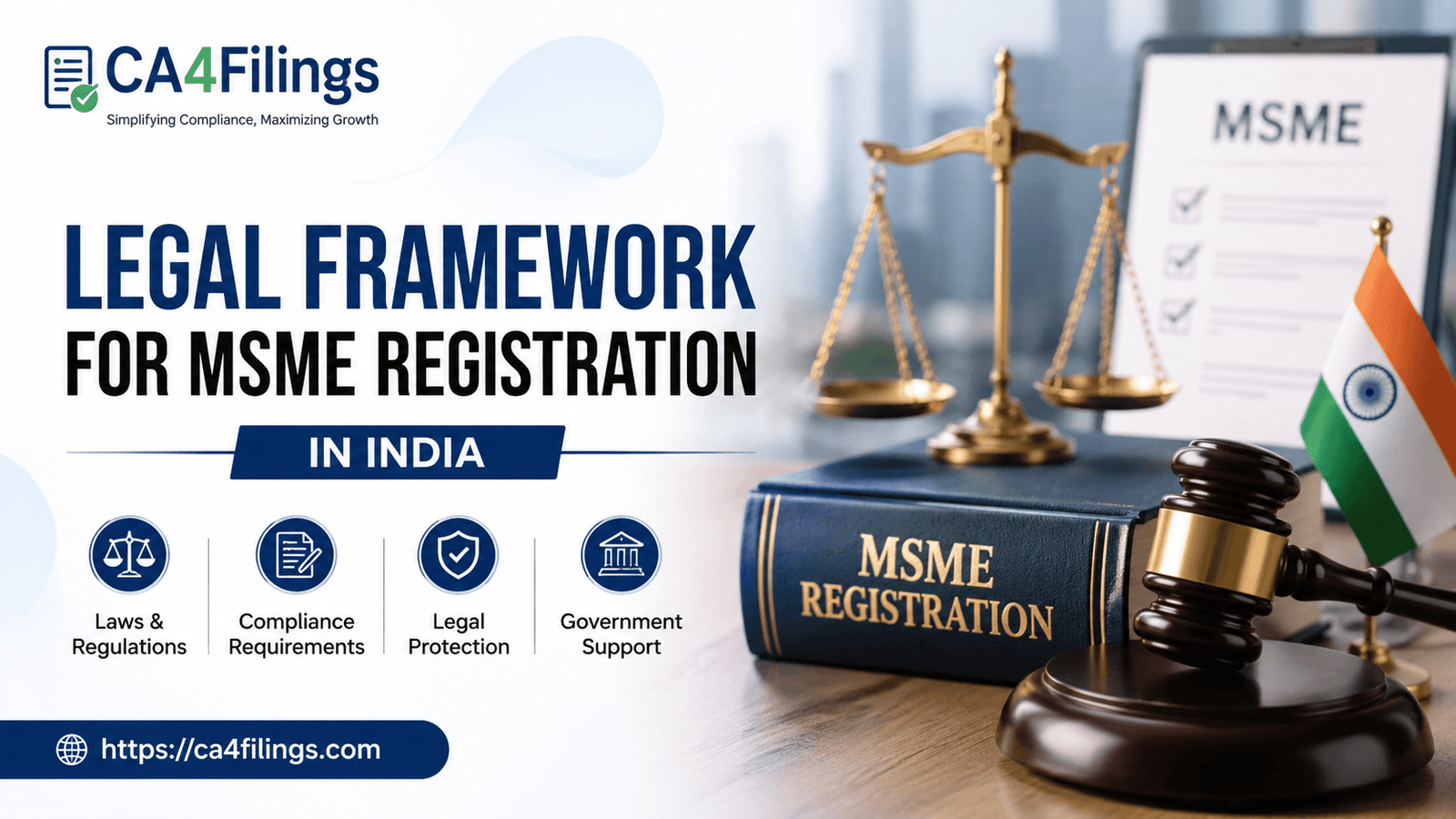
If you are running a business in India, you have likely heard the term MSME buzzing around in professional circles. Whether you are a budding entrepreneur or an established trader, navigating The Legal Framework Surrounding MSME Registration in India is a critical step toward unlocking growth and stability. At CA4Filings, we often see business owners confused about how to get started, so we always recommend looking into our professional MSME Registration service to ensure you get your documentation right the first time.
The backbone of the Indian economy consists of Micro, Small, and Medium Enterprises (MSMEs). To formalize these entities, the government has established a clear, digital-first process. Understanding the legal landscape isn't just about compliance; it is about accessing the competitive edge that these classifications provide.
Understanding the Legal Basis for MSME Classification
The legal authority governing this sector is the Micro, Small and Medium Enterprises Development (MSMED) Act, 2006. This act serves as the foundational legal framework for the promotion, development, and enhancement of competitiveness for these enterprises.
In 2020, the government revised the eligibility criteria to make it more inclusive, shifting the focus from "investment in plant and machinery" to a composite criterion based on both investment and annual turnover. This change was a landmark move, allowing more businesses to qualify for MSME incentives.
Revised Classification Criteria
To fall under the umbrella of MSME India, your enterprise must meet these specific thresholds:
Micro Enterprise: Investment in plant and machinery or equipment does not exceed ₹1 crore and annual turnover does not exceed ₹5 crore.
Small Enterprise: Investment in plant and machinery or equipment does not exceed ₹10 crore and annual turnover does not exceed ₹50 crore.
Medium Enterprise: Investment in plant and machinery or equipment does not exceed ₹50 crore and annual turnover does not exceed ₹250 crore.
Why Should You Focus on MSME Registration?
Many clients ask us, "Why bother with the registration process" The answer lies in the tangible MSME benefits that come with the Udyam registration certificate. When you operate within the official legal framework, you are not just a business; you are a recognized entity eligible for various government schemes.
Some key advantages include:
Priority Sector Lending: Banks are mandated to provide easier access to credit for registered MSMEs.
Protection Against Delayed Payments: The MSMED Act provides a mechanism to protect small businesses from delayed payments by buyers, allowing you to charge interest on overdue bills.
Lower Compliance Costs: Registered entities enjoy reduced rates for trademarks, patent filings, and various government fees.
Tender Advantages: Many government tenders exclusively reserve slots for MSMEs, giving you a competitive advantage in procurement.
Demystifying the MSME Registration Process
The registration process is entirely digital and paperless, hosted on the Udyam Registration portal. Gone are the days of complex paperwork and physical visits to government offices.
Step-by-Step Guide
Preparation: Keep your Aadhaar number, PAN card, and GST details ready.
Portal Access: Visit the official Udyam portal.
Authentication: Enter your Aadhaar number. The portal will verify your details against the linked mobile number.
Business Details: Enter your enterprise details, including investment and turnover figures (as per the latest ITR data).
Final Submission: Once verified, you will receive an E-certificate with a permanent registration number.
As your CA, we emphasize that while the portal is user-friendly, the accuracy of the data you enter regarding your investment and turnover is vital. Misrepresentation can lead to issues later during audits.
The Role of the Legal Framework in Business Stability
The legal framework surrounding MSME registration in India is designed to create a safety net. By registering, you legally certify your business scale. This status is often required by financial institutions to assess your risk profile. When you are a registered MSME, you are viewed as a transparent entity, which significantly lowers the cost of borrowing and opens doors to subsidies under various state and central government schemes.
Frequently Asked Questions
Is MSME registration mandatory?
No, it is voluntary. However, to avail of any government subsidies, credit schemes, or protection under the MSMED Act, registration is highly recommended.
Is there any fee for the registration process?
The government portal does not charge any fee for Udyam registration. However, many businesses choose professional assistance to ensure their documentation is error-free.
Can a proprietorship firm apply for MSME?
Yes, proprietorships, partnerships, LLPs, and private limited companies are all eligible to apply, provided they meet the turnover and investment criteria.
Does the registration expire?
The Udyam registration is a permanent, lifetime registration. However, you must update your turnover and investment data annually on the portal.
Partnering with CA4Filings for Success
Navigating the complexities of business compliance can feel overwhelming, but you don't have to do it alone. Understanding The Legal Framework Surrounding MSME Registration in India is the first step toward building a robust and scalable business. At CA4Filings, we specialize in simplifying these technicalities so you can focus on what you do best: growing your business.
Whether you need help with documentation, choosing the right classification, or filing your annual returns, our team of experienced professionals is ready to assist you. Don't let compliance hurdles stand in the way of your growth. Contact CA4Filings today and let us handle the complexities for you!
Latest Updates
ca4filings.com Services

























-registration.png)