Exploring the Impact of Technology on ROC Compliance
Exploring the Impact of Technology on ROC Compliance and how digital tools help businesses manage filings, deadlines, and compliance efficiently.
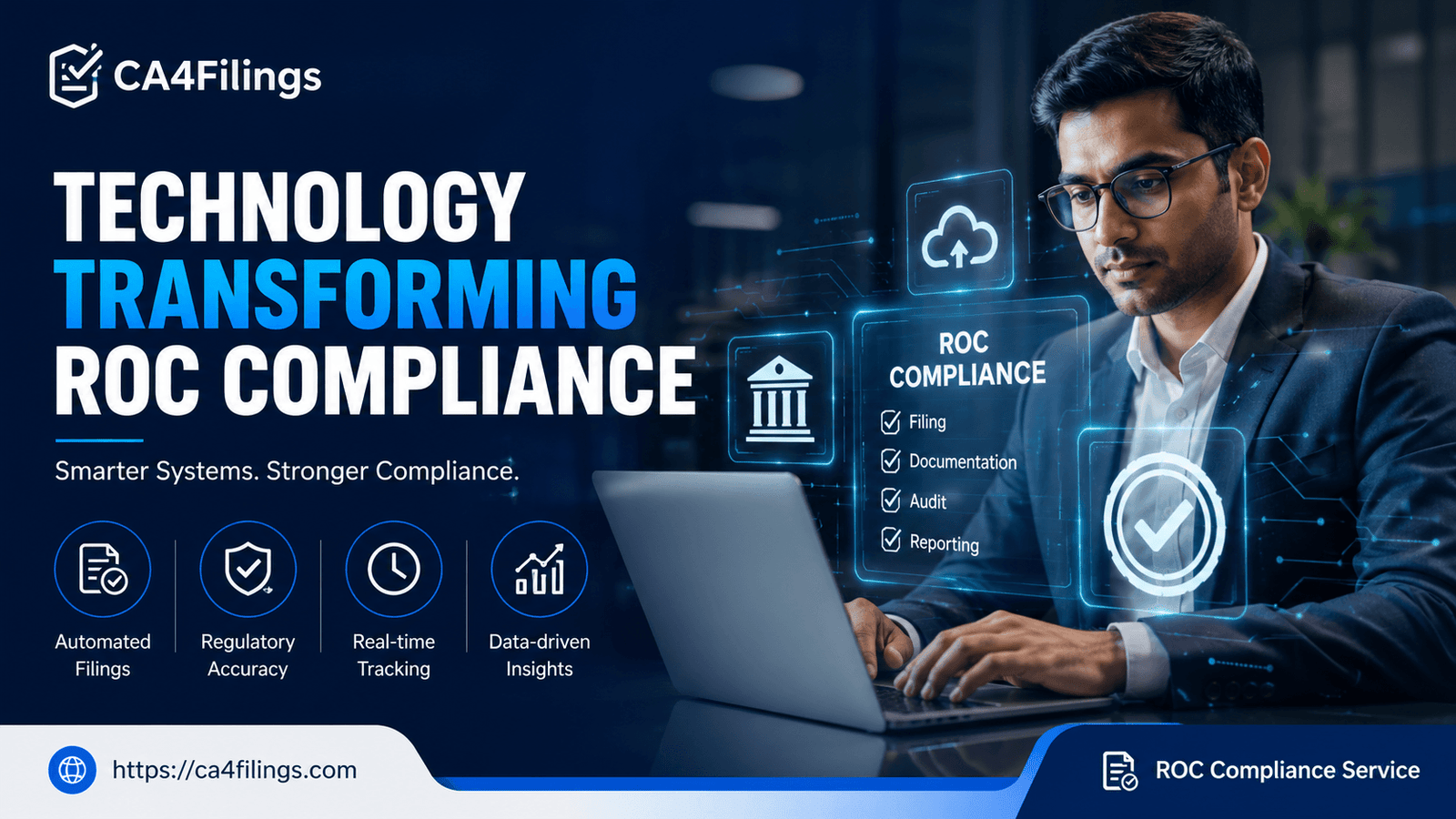
In today’s fast-changing business environment, companies can no longer rely on traditional paperwork and manual compliance methods. Exploring the Impact of Technology on ROC Compliance has become essential for businesses that want to stay legally compliant while improving efficiency and accuracy. With the Ministry of Corporate Affairs (MCA) moving towards complete digitization, technology has transformed how companies handle ROC filings, annual returns, and statutory compliance.
For startups, private limited companies, LLPs, and established businesses, managing ROC compliance manually can be time-consuming and risky. Even a small filing mistake may lead to heavy penalties or legal complications. This is where professional support and digital compliance systems play an important role. Businesses today increasingly rely on expert-led ROC Compliance Service solutions to ensure smooth and timely compliance management.
At CA4Filings, we have seen firsthand how technology is simplifying ROC procedures for Indian businesses. Let us understand how digital transformation is changing the ROC compliance landscape and why businesses should embrace it.
Understanding ROC Compliance in India
ROC (Registrar of Companies) compliance refers to the mandatory filings and legal obligations companies must fulfill under the Companies Act, 2013. These compliances are regulated by the MCA and include:
- Filing annual returns
- Filing financial statements
- Maintaining statutory registers
- Reporting changes in directors or shareholders
- Compliance with board meetings and resolutions
- Event-based filings
Failure to comply may result in:
- Penalties and late fees
- Director disqualification
- Legal notices
- Company strike-off risks
Exploring the Impact of Technology on ROC Compliance helps businesses understand how automation and digital systems reduce these risks significantly.
Exploring the Impact of Technology on ROC Compliance in Modern Businesses
Technology has completely changed the compliance ecosystem in India. Earlier, companies depended heavily on physical paperwork, manual calculations, and frequent visits to professionals. Today, cloud-based platforms and MCA online portals have streamlined the entire process.
Digital Filing Through MCA Portal
One of the biggest technological advancements is the MCA21 portal introduced by the Ministry of Corporate Affairs. Companies can now:
- File forms online
- Upload digital documents
- Track filing status
- Make online payments
- Access company records instantly
This has reduced paperwork, improved transparency, and minimized delays.
Use of Digital Signatures (DSC)
Digital Signature Certificates (DSC) have become mandatory for ROC filings. Technology has enabled secure authentication of documents while reducing the need for physical signatures.
Benefits include:
- Enhanced security
- Faster approvals
- Legally valid online submissions
- Reduced chances of fraud
For directors and professionals, DSC has made ROC filing much more efficient.
Automation in ROC Compliance Management
Exploring the Impact of Technology on ROC Compliance also highlights the growing role of automation.
Modern compliance software can automatically:
- Track filing deadlines
- Send reminders
- Generate reports
- Store compliance documents
- Monitor pending tasks
This automation helps businesses avoid missed deadlines and late penalties.
Example from Real Business Practice
At CA4Filings, many clients previously struggled with annual ROC filing due dates. After implementing digital compliance tracking systems, businesses received automated alerts well before deadlines. As a result, filing delays reduced significantly.
This practical shift shows how technology is helping companies maintain compliance more effectively.
Cloud Technology and Data Management
Cloud storage has become a game-changer in compliance management.
Advantages of Cloud-Based Compliance Systems
Secure Document Storage
Businesses can safely store:
- Financial statements
- Board resolutions
- Incorporation documents
- Shareholder records
Easy Accessibility
Authorized users can access compliance records anytime and from anywhere.
Better Collaboration
CAs, CS professionals, directors, and finance teams can work together on a centralized platform.
Exploring the Impact of Technology on ROC Compliance clearly shows that cloud systems improve operational efficiency while reducing dependency on physical files.
Artificial Intelligence and Smart Compliance Tools
Artificial Intelligence (AI) is gradually entering the compliance sector.
Modern compliance tools can:
- Detect filing errors
- Suggest corrections
- Predict compliance risks
- Generate automated compliance reports
For example, intelligent systems can identify mismatches in financial data before filing forms with ROC.
This reduces human error and enhances filing accuracy.
Reduced Manual Workload
AI-powered tools reduce repetitive tasks such as:
- Data entry
- Form validation
- Compliance tracking
- Record management
As a result, businesses save time and improve productivity.
Benefits of Technology in ROC Compliance
Exploring the Impact of Technology on ROC Compliance becomes more meaningful when businesses understand the practical benefits.
Improved Accuracy
Manual compliance work often leads to calculation or filing errors. Technology minimizes mistakes through validation systems and automated checks.
Faster Compliance Process
Online filing systems reduce turnaround time significantly. Forms can now be submitted within minutes instead of days.
Cost Savings
Digital compliance systems reduce expenses related to:
- Paperwork
- Physical storage
- Manual administration
- Repeated professional corrections
Better Transparency
Technology enables businesses to maintain clear records and track compliance status in real time.
Enhanced Data Security
Advanced encryption and secure cloud platforms protect sensitive company information from unauthorized access.
Challenges Businesses Still Face
While exploring the Impact of Technology on ROC Compliance, it is equally important to understand the challenges.
Lack of Technical Awareness
Many small businesses still struggle to understand digital filing systems and compliance software.
Frequent Regulatory Updates
ROC rules and MCA filing requirements frequently change. Businesses must stay updated to avoid non-compliance.
Cybersecurity Concerns
Digital systems require strong cybersecurity practices to protect confidential company data.
Dependence on Professional Guidance
Technology simplifies processes, but expert guidance remains essential for legal interpretation and strategic compliance management.
At CA4Filings, we help businesses combine technology with professional expertise for complete compliance support.
Best Practices for Effective ROC Compliance
Businesses should follow these best practices to maximize the benefits of technology.
Maintain Proper Digital Records
Always organize:
- Financial documents
- Board resolutions
- Director records
- Compliance certificates
Use Compliance Reminder Systems
Automated reminders help businesses avoid missing important deadlines.
Regularly Update DSC and KYC
Ensure directors’ DSC and KYC records remain active and updated.
Work with Experienced Professionals
Technology is helpful, but professional supervision ensures legal accuracy and proper filing practices.
Future of ROC Compliance in India
Exploring the Impact of Technology on ROC Compliance also gives us a glimpse into the future.
The coming years may see:
- Increased AI-based compliance systems
- Fully automated filings
- Blockchain-based record verification
- Real-time compliance monitoring
- Integrated tax and ROC compliance platforms
The Indian government is continuously promoting digital governance, which means businesses must adapt to technology-driven compliance models.
Companies that embrace digital compliance today will be better prepared for future regulatory changes.
FAQs
What is ROC compliance?
ROC compliance refers to mandatory legal filings and obligations that companies must complete with the Registrar of Companies under the Companies Act, 2013.
How has technology improved ROC compliance?
Technology has simplified ROC compliance through online filing systems, automated reminders, cloud storage, digital signatures, and AI-based compliance tools.
Why is digital filing important for companies?
Digital filing reduces errors, saves time, improves transparency, and helps businesses meet statutory deadlines efficiently.
Can technology completely replace compliance professionals?
No. While technology automates many tasks, professional guidance is still important for legal interpretation, strategic advice, and handling complex compliance matters.
What happens if ROC compliance is delayed?
Delayed ROC compliance may result in penalties, additional fees, director disqualification, and legal complications for the company.
Exploring the Impact of Technology on ROC Compliance clearly shows how digital transformation is making compliance faster, more accurate, and more efficient for Indian businesses. From online MCA filings and cloud-based systems to AI-powered compliance tools, technology has significantly reduced the burden of manual compliance management.
However, businesses must remember that technology works best when combined with professional expertise and proper compliance planning. Staying updated with regulatory changes and using the right compliance systems can protect companies from unnecessary penalties and operational risks.
At CA4Filings, we help businesses simplify ROC compliance through expert guidance, timely filings, and technology-driven solutions. Whether you are a startup, LLP, or private limited company, our experienced professionals ensure your compliance remains smooth, accurate, and stress-free.
Latest Updates
ca4filings.com Services



























-registration.png)