How to Register a Company for an E-Commerce Store or Dropshipping Business
Learn how to register company for an e-commerce or dropshipping business in India, including company structure, GST, marketplaces, and legal compliance.
How to Register Company for an E-Commerce Store or Dropshipping Business
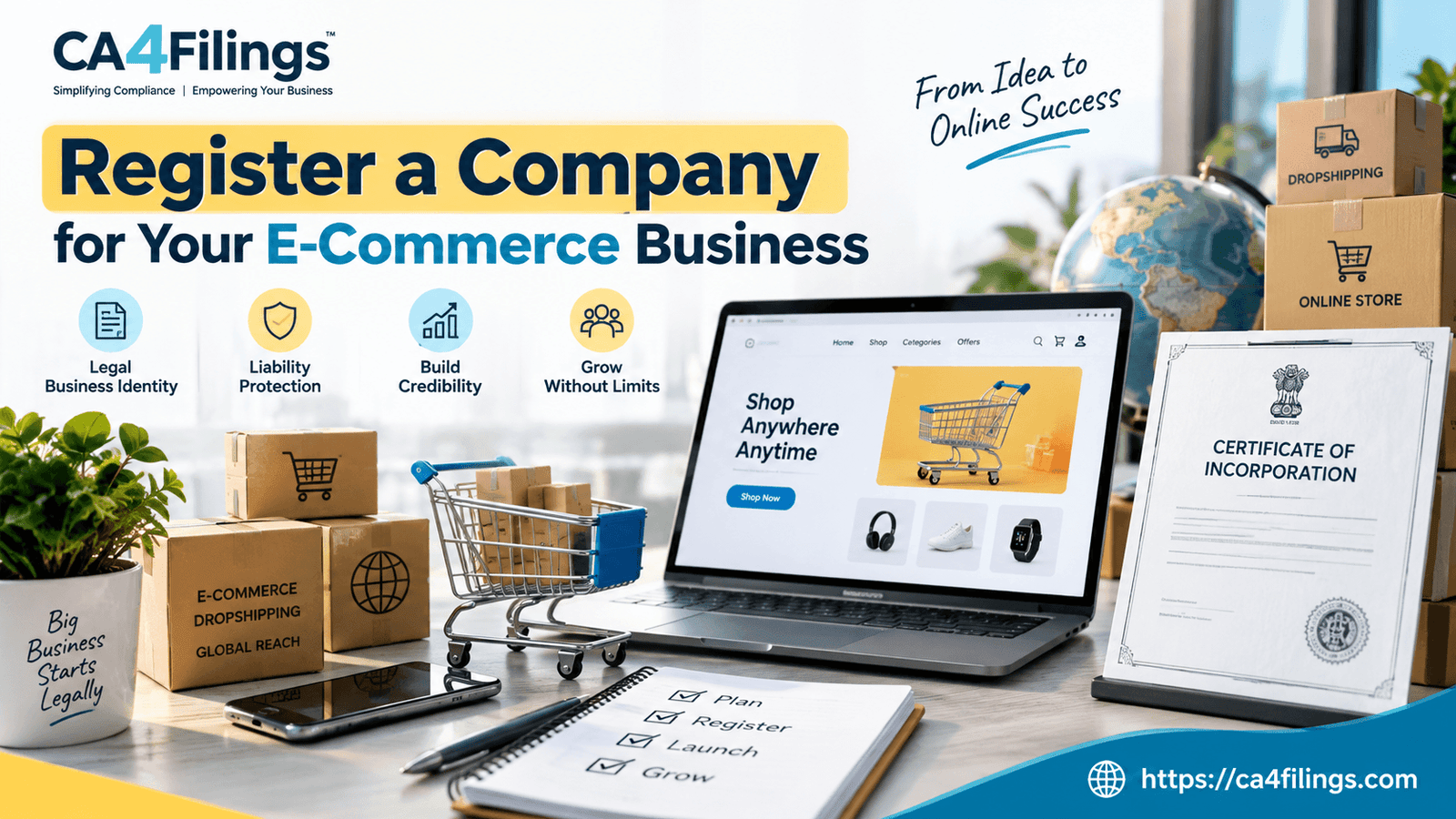
Starting an e-commerce or dropshipping business can be exciting, but choosing the right legal structure is an important decision before you start selling. If you are wondering how to register company for an online store in India, the process is more structured than simply creating a website and opening a seller account. A properly registered business can improve credibility, support banking and payment arrangements, and provide better liability protection. If you are ready to formalise your online venture, you can explore Company Registration with professional assistance from CA4Filings.
Whether you plan to sell through your own website, Amazon, Flipkart, Instagram, or a combination of platforms, understanding how to register company can help you avoid compliance problems later. The right structure depends on your business model, number of owners, expected turnover, investment plans, and long-term goals.
Why Should You Register a Company for an Online Business?
Before understanding how to register company, it is useful to know why formal registration matters.
An e-commerce business handles customer payments, supplier relationships, product returns, advertising expenses and potentially large transaction volumes. Running everything in an individual's name may work initially, but it may become inconvenient as the business grows.
A registered business can offer:
- Better credibility with customers and suppliers
- A separate business identity
- Easier access to a current bank account
- Improved liability protection, depending on the chosen structure
- Better opportunities for business loans and investment
- Easier onboarding with marketplaces and payment providers
- A more organised approach to accounting and taxation
For entrepreneurs asking how to register company for dropshipping, the important point is that dropshipping does not eliminate the need to comply with applicable Indian business and tax requirements.
How to Register Company: Choose the Right Business Structure
One of the first decisions in how to register company is selecting the appropriate legal structure.
Private Limited Company
A Private Limited Company is commonly considered by entrepreneurs who want to build a scalable e-commerce brand. It provides a separate legal identity and can be suitable when there are multiple founders or plans to raise external investment.
It may involve higher compliance than simpler structures, but it can provide a professional foundation for a growing online business.
One Person Company
An OPC can be considered by a single entrepreneur who wants a corporate structure while operating individually. It can provide a separate legal identity, subject to the applicable rules and compliance requirements.
Limited Liability Partnership
An LLP may be suitable when two or more people want to operate together while maintaining a limited-liability structure. It can be useful where the founders want a formal partnership arrangement without necessarily following the same structure as a private company.
Proprietorship
A proprietorship is relatively simple for an individual starting on a smaller scale. However, the business and owner are not separate legal persons, so the level of liability protection differs from that of a company.
The best answer to how to register company therefore depends on your specific circumstances rather than simply choosing the structure used by another online seller.
How to Register Company: Step-by-Step Process
Once you have selected the appropriate structure, the registration process can generally be approached in the following stages.
1. Decide Your Business Name
Choose a name that is relevant to your business but does not unnecessarily resemble an existing registered company or trademark.
For an e-commerce business, think beyond your first product. A broad brand name can be useful if you later expand from one product category into several.
2. Arrange Digital Signatures
For company incorporation, proposed directors generally need Digital Signature Certificates (DSCs) for electronically signing the required forms and documents.
3. Obtain Director Identification and Complete Incorporation Formalities
For a company, the relevant identification and incorporation details are submitted through the Ministry of Corporate Affairs' prescribed process.
The incorporation application generally includes information relating to:
- Proposed company name
- Registered office
- Directors and subscribers
- Shareholding
- Memorandum and Articles of Association
- Required declarations and supporting documents
This is the core part of understanding how to register company in India.
4. Obtain the Certificate of Incorporation
After the incorporation application is approved, the company receives its Certificate of Incorporation along with its corporate identification details.
At this stage, your company has been legally incorporated, but your e-commerce compliance work is not necessarily finished.
How to Register Company and Set Up GST for E-Commerce
GST requirements should be evaluated carefully because e-commerce transactions can involve different rules depending on the products, customers, marketplace and sales model.
If you sell through marketplaces, the platform may have specific tax and seller onboarding requirements. If you sell through your own website, you should separately examine whether GST registration is applicable to your business.
For international dropshipping or cross-border sales, additional considerations may arise, including import/export documentation and applicable tax rules.
Do not assume that every online seller has identical GST obligations. CA4Filings recommends evaluating your actual transaction flow before deciding what registrations are required.
How to Register Company for Amazon and Other Marketplaces
Marketplace registration is a separate commercial onboarding process from incorporation.
Depending on the platform and business model, you may need details such as:
- PAN
- GST registration details, where applicable
- Business bank account
- Registered business information
- Product and category information
- Address and identity documents
Entrepreneurs sometimes search for amazon fba registration when they plan to store products in Amazon fulfilment centres. FBA is a fulfilment arrangement, whereas company incorporation is a separate legal process. You should therefore treat these as two different steps in your business setup.
How to Register Company and Make Your Website Legally Ready
Your website is more than a digital storefront legal presentation. It is also where customers enter into transactions with your business.
Before launching, consider having appropriate pages and policies covering:
- Terms and conditions
- Privacy policy
- Shipping and delivery
- Cancellation and refunds
- Contact information
- Applicable consumer disclosures
You should also choose a reliable online payment gateway and ensure that your settlement account and business details are properly aligned.
What About Sales Tax Nexus and Seller's Permit?
Indian entrepreneurs entering overseas markets may encounter terminology that is different from Indian tax compliance.
For example, sales tax nexus is a concept associated with U.S. state sales tax obligations. A seller’s permit may also be required in certain U.S. jurisdictions depending on the nature and location of the seller's activities.
These concepts should not be confused with Indian GST registration.
If your dropshipping store targets customers outside India, review the tax requirements of the countries or states where you sell. Cross-border e-commerce can create obligations that are separate from the incorporation of your Indian business.
Common Mistakes New E-Commerce Entrepreneurs Should Avoid
Knowing how to register company is only the beginning. Many online entrepreneurs make avoidable mistakes after incorporation.
Some common ones include:
- Choosing a company structure without considering future growth
- Mixing personal and business transactions
- Launching without checking GST applicability
- Ignoring marketplace-specific documentation
- Not maintaining proper purchase and sales records
- Using unclear refund or cancellation policies
- Assuming dropshipping means zero legal or tax responsibility
- Ignoring foreign-market tax requirements
A small amount of professional planning at the beginning can prevent considerable administrative problems later.
How to Register Company: FAQs
Is company registration mandatory for every e-commerce business?
Not necessarily. Different business structures and registration requirements may apply depending on the nature and scale of the business. A professional assessment is advisable before choosing the structure.
Can I start a dropshipping business without a company?
Yes, depending on the structure and applicable legal and tax requirements. However, incorporating a company may be appropriate for entrepreneurs seeking a separate legal identity and stronger business credibility.
How long does it take to register a company?
The timeline depends on documentation, name availability, government processing and whether any clarification or correction is required. Properly prepared documents can help reduce avoidable delays.
Do I need GST registration for an online store?
GST requirements depend on factors such as turnover, products, sales channels and applicable provisions. E-commerce sellers should evaluate their individual circumstances rather than relying on assumptions.
Is Amazon FBA the same as company registration?
No. Amazon FBA is a fulfilment service, while company registration creates the legal business entity. An entrepreneur may use FBA after completing the registrations and compliance requirements applicable to the business.
How to Register Company: Final Thoughts
Understanding how to register company before launching an e-commerce or dropshipping business helps you build the business on a proper legal and financial foundation. From selecting the right structure and completing incorporation to reviewing GST, marketplace requirements, payment systems and customer policies, each step deserves attention.
At CA4Filings, we help entrepreneurs understand how to register company without getting lost in complicated compliance procedures. If you are planning an e-commerce store, dropshipping venture or online brand, take professional guidance before you begin selling. A well-planned registration today can make your business easier to manage as it grows.
Latest Updates
ca4filings.com Services





















-registration.png)