How to Register a Company for a Food Truck or Catering Business
Learn how to register company for a food truck or catering business in India, including FSSAI, GST, permits, compliance and practical setup tips.
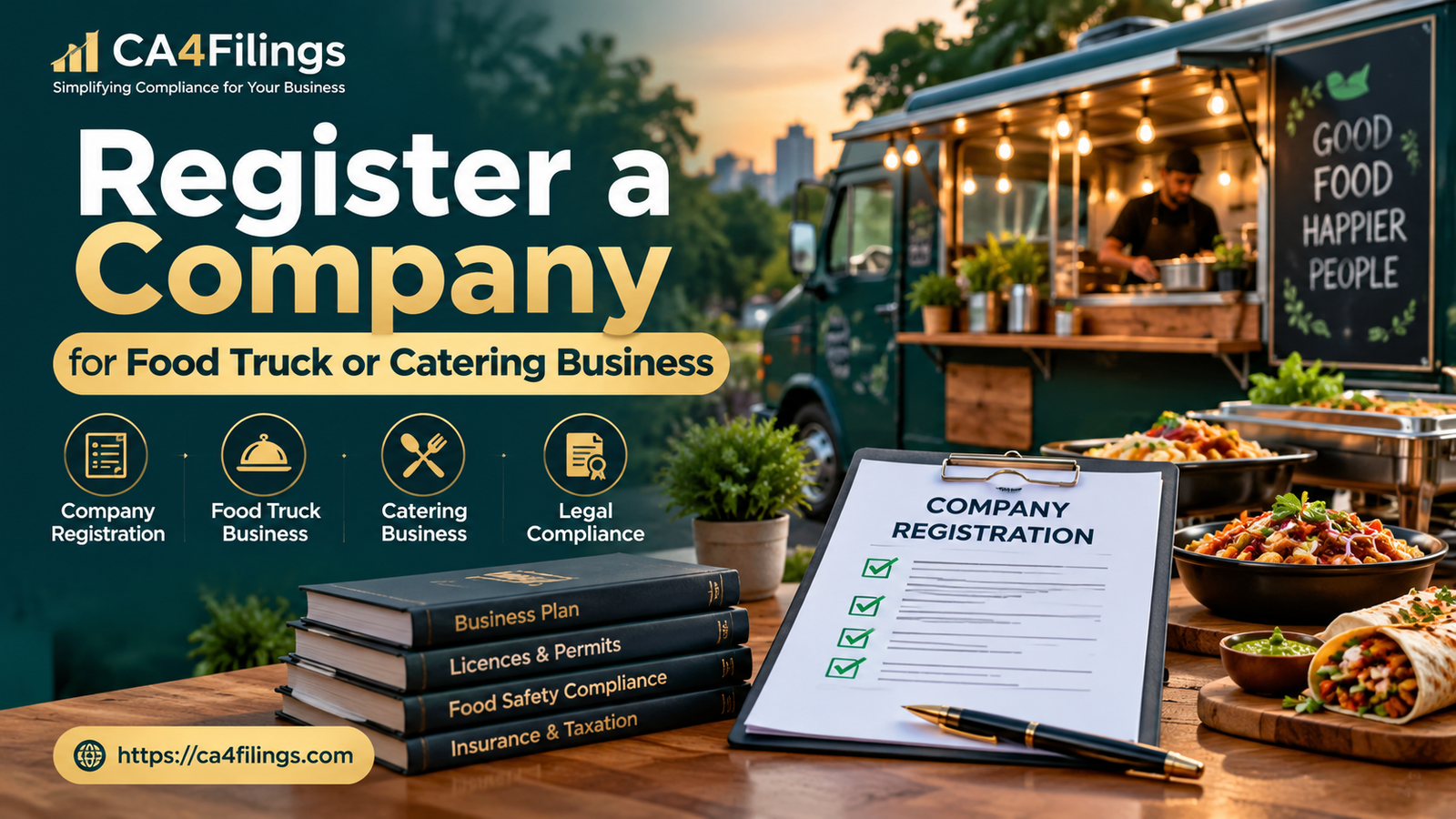
How to Register a Company for a Food Truck or Catering Business
Starting a food truck or catering business can be an exciting opportunity, but turning your culinary idea into a legally compliant business requires more than just a good menu. If you are wondering how to register company for a food business in India, the first step is to select the right business structure and complete the applicable registrations and food-related approvals. For entrepreneurs who want a structured setup with limited liability, Company Registration can provide a suitable foundation for the business.
A food truck, cloud kitchen-linked catering operation, or mobile catering service has additional compliance requirements because food preparation, transportation, storage and serving are involved. At CA4Filings, we recommend planning these requirements before investing heavily in equipment or branding.
How to Register Company for a Food Truck or Catering Business
Before understanding the filing process, decide what type of business entity suits your plans.
Choose the Right Business Structure
Common options include:
- Private Limited Company: Suitable when you want a separate legal entity, structured ownership and the possibility of bringing in investors.
- One Person Company (OPC): Useful for an individual entrepreneur who wants a corporate structure.
- Limited Liability Partnership (LLP): Can work well when two or more partners are starting the business and want limited liability.
- Partnership Firm: Suitable for traditional partnerships, although the liability structure differs from an LLP or company.
- Sole Proprietorship: Simpler for a small owner-operated business, but there is no separate legal identity between the owner and business.
If you expect to operate multiple food trucks, cater corporate events or expand into different cities, a company or LLP may provide a more organised structure.
How to Register Company Through the MCA Process
For a private limited company, the incorporation process is generally completed through the Ministry of Corporate Affairs (MCA).
The broad process includes:
- Decide the company name: Choose a unique and appropriate name that complies with applicable naming rules.
- Select directors and shareholders: Decide who will own and manage the company.
- Arrange digital signatures: Proposed directors generally require Digital Signature Certificates for electronic filings.
- Prepare incorporation documents: Identity, address and registered-office documents are required.
- File incorporation forms: The required incorporation application and linked registrations are submitted through the MCA system.
- Receive the Certificate of Incorporation: Once approved, the company receives its incorporation certificate and corporate identification details.
- Open a business bank account: Maintain business transactions separately from personal finances.
The exact documentation and approvals can vary depending on the entity, state and circumstances, so professional guidance can help avoid unnecessary delays.
Food Truck and Catering Licences You Should Consider
Company incorporation is only one part of starting a food business. Your food truck or catering operation may require additional registrations and permissions.
FSSAI Registration or Licence
Food businesses generally need to comply with the Food Safety and Standards Authority of India (FSSAI) framework. The appropriate registration or licence depends on the nature and scale of the operation.
This is particularly important for food trucks because the business is directly involved in preparing, storing, transporting or selling food.
GST Registration
GST registration may become applicable depending on turnover, business activities and other conditions under GST law. A catering business should also understand how GST applies to its specific supplies and customer transactions.
Do not assume that every food business follows the same GST treatment. Catering arrangements, restaurant services, packaged products and event-based supplies can have different tax implications.
Local Municipal Permissions
A food truck operates in public or commercial spaces, so local permissions can be particularly important.
Depending on the city and location, you may need:
- Trade or municipal registration
- Street vending or local authority permission
- Mobile vendor permits
- Fire-related permissions where applicable
- Parking or location-specific permissions
- Health department certifications
- Local establishment-related registrations, where applicable
Rules can differ considerably between states and municipalities. Check the requirements of the specific location where your food truck will operate.
Food Safety Compliance for a Mobile Business
A food truck has a different operational environment from a traditional restaurant. Limited space, water availability, refrigeration and waste disposal need careful planning.
Maintain Proper Hygiene Standards
Your operating process should cover:
- Safe storage of raw materials
- Proper refrigeration
- Clean water availability
- Personal hygiene for food handlers
- Prevention of cross-contamination
- Regular cleaning and sanitisation
- Safe disposal of food waste
- Temperature control for perishable ingredients
Food safety compliance should be treated as an everyday business process rather than something maintained only for an inspection.
Commissary Kitchen Agreements
Some food truck businesses use a separate commercial kitchen for preparation, storage or cleaning. In such cases, a commissary kitchen agreement can clearly establish responsibilities between the food truck operator and kitchen provider.
The agreement should ideally cover:
- Kitchen usage hours
- Storage arrangements
- Cleaning responsibilities
- Equipment usage
- Food preparation permissions
- Waste disposal
- Fees and payment terms
- Liability for damage or contamination
This arrangement can be particularly useful when the food truck itself has limited preparation and storage capacity.
Business Vehicle Insurance and Other Practical Considerations
Your food truck is not simply a vehicle; it is a mobile business asset. Apart from the legally required motor insurance applicable to the vehicle, entrepreneurs should discuss appropriate business vehicle insurance and other commercial risk coverage with an insurance professional.
You should also consider:
- Equipment insurance
- Public liability coverage
- Employee-related insurance where applicable
- Protection for inventory and business assets
- Fire and electrical safety
If expensive cooking equipment is installed inside the vehicle, document the equipment and its value properly for insurance and accounting purposes.
Accounting and Tax Setup After Registration
Once the business starts operating, proper financial records become essential.
Maintain separate records for:
- Food ingredients
- Packaging materials
- Fuel and vehicle expenses
- Kitchen rental
- Employee salaries
- Event and catering expenses
- Equipment purchases
- Advertising and marketing
- Online food delivery commissions
- Sales and GST, where applicable
For a catering business, customer advances and event-related expenses should also be tracked carefully. A professional accountant can help establish an appropriate bookkeeping and invoicing system from the beginning.
How to Register Company Without Missing Important Compliance
Many entrepreneurs focus on incorporation and overlook the approvals needed to actually operate the food business. A better approach is to create a compliance checklist before launching.
Pre-Launch Checklist
Before your first sale, check whether you have addressed:
- Business entity registration
- PAN and TAN requirements
- Business bank account
- FSSAI registration/licence
- GST registration, if applicable
- Local municipal permissions
- Mobile vendor permits, where applicable
- Health department certifications, where required
- Fire and safety requirements
- Food handler hygiene procedures
- Commissary kitchen agreements, if applicable
- Business vehicle insurance
- Accounting and invoicing system
The exact requirements depend on your location, business model, turnover and operating arrangements.
Common Mistakes Food Entrepreneurs Should Avoid
Choosing the Entity Only Based on Cost
The cheapest registration may not always be the most suitable structure. Consider ownership, liability, taxation, future investment and expansion plans.
Starting Operations Before Checking Local Permissions
A company may be legally incorporated while the food truck still lacks permission to operate at a particular location. Always check local requirements before finalising your operating spots.
Mixing Personal and Business Money
Using a personal bank account for business collections and expenses makes accounting and tax compliance unnecessarily difficult.
Ignoring Documentation
Keep invoices, licences, agreements, purchase records and tax documents organised from day one. Good documentation can save significant time during compliance reviews.
FAQs
1. Can I start a food truck as a private limited company?
Yes. A food truck can be operated through a private limited company, subject to completing the relevant incorporation, food safety, tax and local permissions.
2. Is FSSAI registration mandatory for a food truck?
Food businesses generally need to comply with FSSAI requirements. The applicable registration or licence depends on the nature and scale of the food business.
3. Do I need GST registration for a catering business?
GST registration depends on applicable legal conditions, including turnover and the nature of supplies. A CA can assess your specific business model before registration.
4. Can one company operate multiple food trucks?
Yes. A company can operate multiple food trucks, subject to applicable local permissions, food safety requirements and other location-specific regulations.
5. Is a company registration enough to legally operate a food truck?
No. Incorporation establishes the business entity, but a food truck may also require FSSAI compliance, municipal permissions, mobile vendor permits and other approvals depending on its operations and location.
How to Register Company for Your Food Business
Understanding how to register company is only the beginning of setting up a successful food truck or catering venture. The right business structure should be combined with FSSAI compliance, applicable GST requirements, local permissions, proper accounting, insurance and operational controls.
At CA4Filings, we help entrepreneurs approach company incorporation and related compliance in a structured manner, so they can focus more on building their food brand and serving customers. If you are planning a food truck or catering business, getting professional guidance at the beginning can help you avoid costly compliance mistakes later.
Start your food business with the right legal and compliance foundation. Connect with CA4Filings for professional assistance with company registration and business compliance.
Latest Updates
ca4filings.com Services
























-registration.png)