The Role of a Trust Deed: Essential Elements Explained
The Role of a Trust Deed: Essential Elements Explained – understand key clauses, legal importance, and registration process in India.
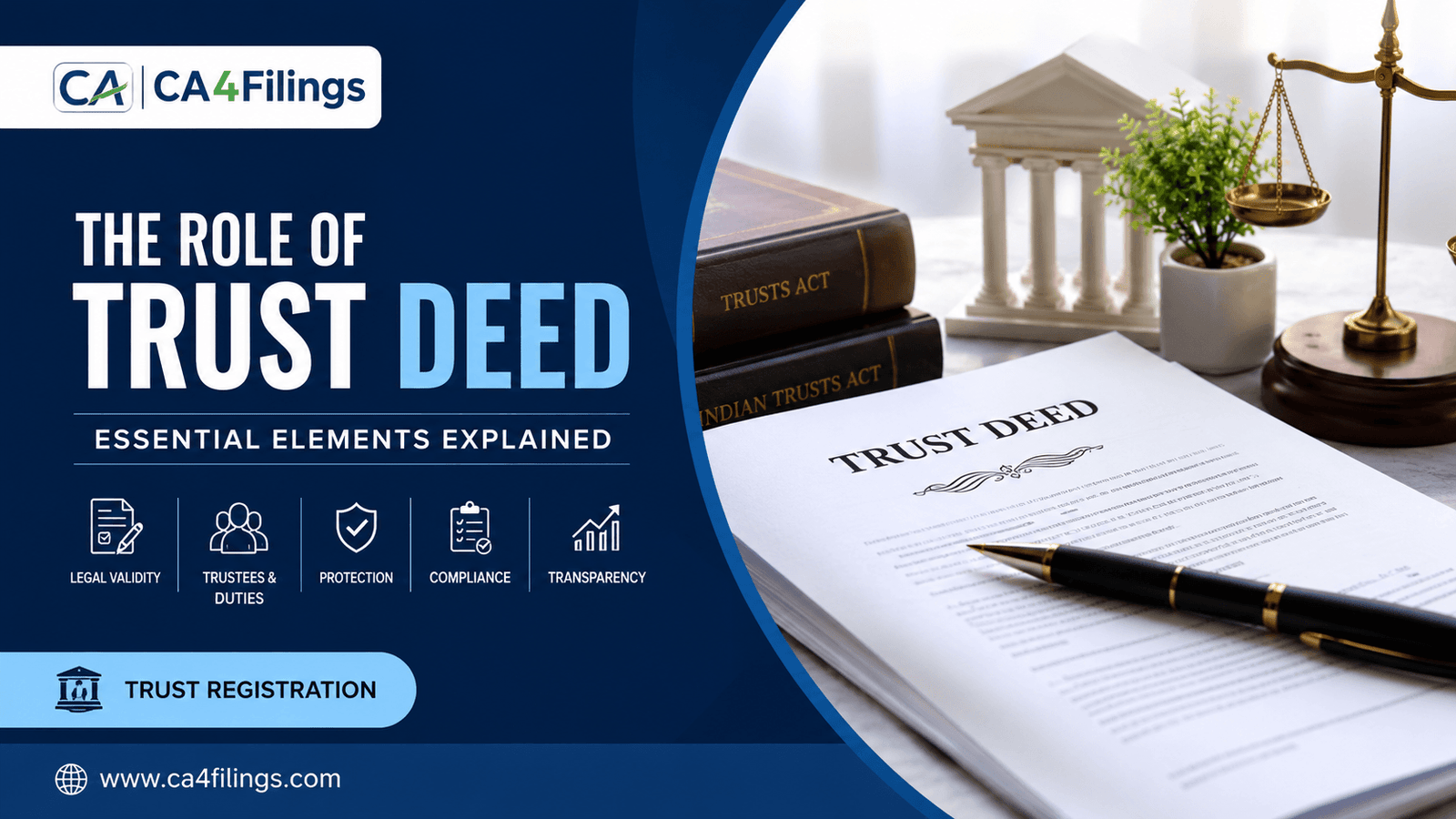
Trusts play a crucial role in managing charitable, religious, and private assets in India. However, many individuals establish a trust without fully understanding one of its most important legal documents — the trust deed. In simple terms, a trust deed acts as the foundation of the trust and defines how it will function, who will manage it, and how its assets will be utilized.
In this article, CA4Filings explains The Role of a Trust Deed: Essential Elements Explained in a practical and easy-to-understand manner. Whether you are planning to create a charitable trust, family trust, or NGO, understanding the trust deed is essential for smooth legal and operational management. If you are planning for Trust Registration, having a properly drafted trust deed is the first and most important step.
Understanding The Role of a Trust Deed: Essential Elements Explained
A trust deed is a legal document that establishes a trust and outlines the rules and regulations governing it. It clearly defines the purpose of the trust, powers of trustees, rights of beneficiaries, and procedures for administration.
When discussing The Role of a Trust Deed: Essential Elements Explained, it is important to understand that the deed serves as legal proof of the trust’s existence. It also helps avoid disputes among trustees and beneficiaries in the future.
In India, trust deeds are generally governed by the Indian Trusts Act, 1882 for private trusts, while public charitable trusts may also fall under state-specific laws.
Why a Trust Deed is Important
One of the biggest mistakes people make is assuming that a trust can function smoothly without proper documentation. In reality, a well-drafted trust deed offers legal clarity and protection.
Key Reasons Why a Trust Deed Matters
- Establishes the legal identity of the trust
- Defines the objectives of the trust
- Specifies duties and powers of trustees
- Protects beneficiaries’ interests
- Prevents future legal disputes
- Helps in tax registrations and exemptions
- Ensures regulatory compliance
From a CA’s perspective, proper documentation also simplifies accounting, audits, and income tax filings for the trust.
Essential Elements of a Trust Deed
To understand The Role of a Trust Deed: Essential Elements Explained, you must know the core components included in the document.
Name of the Trust
The deed must clearly mention the official name of the trust. The chosen name should not violate trademarks or resemble existing registered entities.
Example:
“ABC Educational and Charitable Trust”
Details of the Settlor
The settlor is the person who creates the trust and transfers property or assets into it.
The trust deed should include:
- Full name
- Address
- PAN details
- Occupation
Information About Trustees
Trustees are responsible for managing the trust according to its objectives.
The deed should clearly mention:
- Number of trustees
- Appointment process
- Roles and responsibilities
- Removal or resignation procedures
A practical suggestion from CA4Filings is to appoint trustworthy individuals with clear financial and administrative understanding.
Objectives of the Trust
This is one of the most critical sections.
The objectives must be:
- Clear
- Lawful
- Specific
- Practical
Examples of trust objectives include:
- Promoting education
- Medical relief
- Poverty alleviation
- Religious activities
- Community development
When analyzing The Role of a Trust Deed: Essential Elements Explained, the objectives section determines how the trust’s income and resources can legally be utilized.
Trust Property Details
The deed should specify the initial assets or property being transferred to the trust.
This may include:
- Cash
- Land
- Buildings
- Investments
- Other movable or immovable property
Proper valuation and documentation are extremely important for legal and tax purposes.
Powers and Duties of Trustees
A trust cannot function efficiently unless trustees’ powers are clearly defined.
Common trustee powers include:
- Opening bank accounts
- Managing investments
- Purchasing or selling property
- Hiring employees
- Conducting trust activities
Similarly, duties may include:
- Maintaining accounts
- Conducting meetings
- Filing tax returns
- Acting in beneficiaries’ interests
The Role of a Trust Deed: Essential Elements Explained in Legal Compliance
Many people underestimate the legal importance of a trust deed until complications arise. A properly drafted deed becomes extremely valuable during:
- Income tax registration under Sections 12A and 80G
- Bank account opening
- Government grant applications
- CSR funding approvals
- Legal disputes
Authorities carefully review the trust deed before granting registrations or tax exemptions.
From our experience at CA4Filings, trusts with vague or incomplete deeds often face unnecessary delays and objections.
Clauses That Should Never Be Ignored
Amendment Clause
This clause explains whether the trust deed can be modified in the future and under what conditions.
Without this clause, updating operational rules may become difficult.
Dissolution Clause
The dissolution clause defines what happens if the trust is closed.
Generally, for charitable trusts:
- Assets cannot be distributed among trustees
- Remaining assets must be transferred to another charitable organization
Beneficiary Clause
This clause specifies who will benefit from the trust.
For family trusts, beneficiaries are usually named individuals.
For charitable trusts, beneficiaries may include the public or specific communities.
Meeting and Voting Procedures
Operational clarity is very important for long-term management.
The deed should mention:
- Frequency of meetings
- Quorum requirements
- Voting rights
- Decision-making process
Common Mistakes While Drafting a Trust Deed
Understanding The Role of a Trust Deed: Essential Elements Explained also means knowing what errors to avoid.
Using Generic Templates
Every trust has unique objectives and operational requirements. Copy-paste templates often create compliance issues later.
Unclear Objectives
Vague objectives may result in rejection during tax registrations.
Incomplete Trustee Powers
If powers are not properly defined, trustees may face operational limitations.
Ignoring Tax Implications
Trust deeds should align with Income Tax Act requirements if the trust seeks exemptions.
Poor Drafting Language
Ambiguous wording can lead to legal disputes among trustees or beneficiaries.
Registration of a Trust Deed in India
Although registration requirements may vary by state, trust deed registration generally involves:
Step-by-Step Process
Drafting the Trust Deed
Prepare the deed on stamp paper of appropriate value.
Selecting Trustees
Appoint trustees and obtain their consent.
Signing the Document
The settlor and trustees must sign the deed in the presence of witnesses.
Registration Before Sub-Registrar
Submit the deed to the local sub-registrar office.
PAN and Bank Account
After registration, apply for PAN and open a trust bank account.
At CA4Filings, we recommend professional drafting to avoid future legal or taxation complications.
Tax Benefits Linked to a Proper Trust Deed
A properly drafted trust deed is essential for obtaining:
- 12A Registration
- 80G Certification
- CSR eligibility
- NGO DARPAN registration
Income Tax authorities carefully verify whether the deed includes:
- Charitable objectives
- Irrevocability clauses
- Proper dissolution provisions
Without these, tax exemptions may be denied.
FAQs on The Role of a Trust Deed: Essential Elements Explained
Is a trust deed mandatory in India?
Yes, a trust deed is essential for establishing and registering a trust legally.
Can a trust deed be amended later?
Yes, if the deed contains an amendment clause allowing modifications.
Who should draft a trust deed?
It is advisable to consult professionals such as Chartered Accountants or legal experts to ensure proper compliance.
Is registration of a trust deed compulsory?
For most public charitable trusts, registration is strongly recommended and often mandatory for legal recognition.
Can a trust operate without trustees?
No, trustees are legally responsible for managing the trust and implementing its objectives.
The Role of a Trust Deed: Essential Elements Explained
To conclude, The Role of a Trust Deed: Essential Elements Explained goes far beyond basic documentation. It acts as the legal backbone of the trust and ensures transparency, accountability, and smooth administration.
A professionally drafted trust deed protects the interests of the settlor, trustees, beneficiaries, and the organization itself. It also plays a major role in tax registrations, fundraising, and long-term credibility.
At CA4Filings, we help individuals, NGOs, charitable organizations, and family trusts draft legally sound trust deeds and complete the entire registration process smoothly. If you are planning to establish a trust, our expert team can guide you through every legal and compliance requirement with practical, reliable support.
Latest Updates
ca4filings.com Services





















-registration.png)