The Impact of Government Policies on Startup India Registration
The Impact of Government Policies on Startup India Registration and how policy changes help startups gain tax benefits, funding, and growth support.
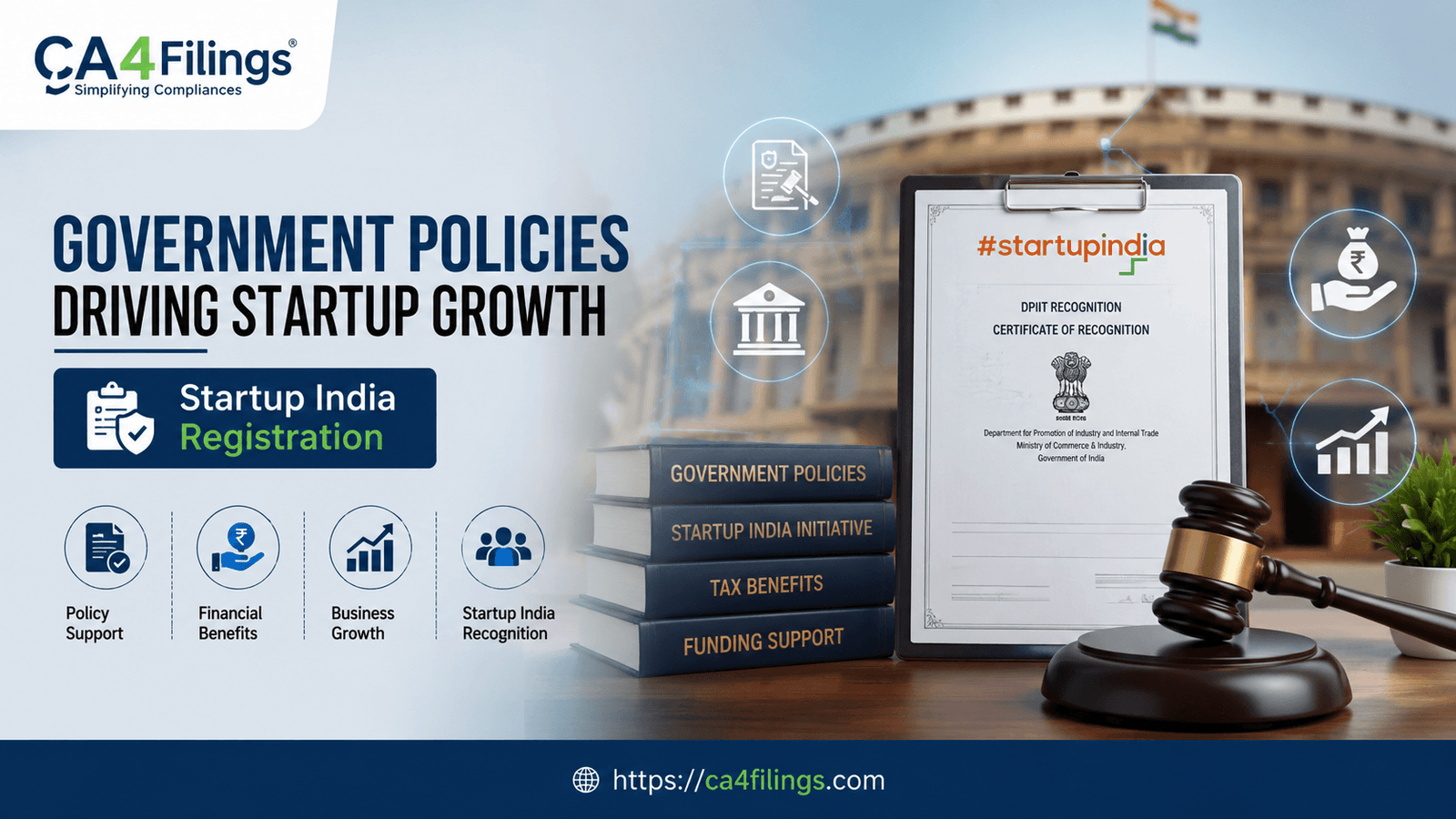
India’s startup ecosystem has grown rapidly over the last few years, and government initiatives have played a major role in this transformation. From tax exemptions to simplified compliance procedures, entrepreneurs today have better opportunities to build and scale their businesses. Understanding The Impact of Government Policies on Startup India Registration is essential for every founder who wants to take full advantage of the benefits offered under the Startup India initiative.
At CA4Filings, we regularly guide startups through legal registrations, tax planning, and compliance management. Many founders are unaware that proper Startup India Registration can unlock several government-backed benefits, including easier funding access and intellectual property support. However, these advantages are directly influenced by changing government policies, regulations, and startup reforms.
In this article, we will explain The Impact of Government Policies on Startup India Registration, how recent reforms affect startups, and what entrepreneurs should keep in mind before applying.
Understanding Startup India Registration
Startup India is a flagship initiative launched by the Government of India to encourage innovation, entrepreneurship, and employment generation. Under this scheme, eligible startups receive recognition from the Department for Promotion of Industry and Internal Trade (DPIIT).
Key Benefits of Startup India Registration
- Income tax exemption for eligible startups
- Self-certification under labor and environmental laws
- Faster patent and trademark processing
- Easier access to government tenders
- Better funding opportunities through government schemes
- Reduced compliance burden
Because of these benefits, The Impact of Government Policies on Startup India Registration becomes extremely important for startups planning long-term growth.
The Impact of Government Policies on Startup India Registration
Government policies directly influence how startups operate, raise funds, and manage compliance. Over the years, several policy reforms have made Startup India Registration more practical and beneficial.
Simplification of Registration Process
One of the biggest improvements has been the simplification of the registration process. Earlier, startups faced heavy paperwork and approval delays. The government introduced digital portals and online documentation systems to make the process smoother.
Today, startups can complete most formalities online, reducing time and administrative burden. This positive reform clearly highlights The Impact of Government Policies on Startup India Registration in improving ease of doing business.
Tax Exemptions and Financial Relief
Government tax policies have significantly encouraged startups to register under the Startup India scheme.
Important Tax Benefits Include:
- 3-year income tax exemption under Section 80-IAC
- Exemption from angel tax under certain conditions
- Capital gains tax exemptions for eligible investments
These tax relaxations help startups preserve working capital during their early stages. For many founders, tax savings become one of the strongest reasons for understanding The Impact of Government Policies on Startup India Registration.
Government Funding Support for Startups
Access to funding remains one of the biggest challenges for startups in India. Government-backed policies have improved this situation considerably.
Fund of Funds for Startups (FFS)
The Government of India introduced the Fund of Funds scheme managed by SIDBI to support startup investments indirectly through venture capital funds.
Credit Guarantee Schemes
Certain government programs provide collateral-free loans and credit support for startups and MSMEs.
State-Level Startup Policies
Many state governments now offer:
- Seed funding
- Rental subsidies
- Stamp duty exemptions
- Incubation support
These financial initiatives clearly demonstrate The Impact of Government Policies on Startup India Registration in helping startups survive and scale.
Impact of DPIIT Recognition Policies
DPIIT recognition is the backbone of Startup India Registration. The government has periodically revised eligibility criteria to include more innovative businesses.
Current Eligibility Conditions
A startup generally qualifies if:
- It is incorporated as a Private Limited Company, LLP, or Partnership Firm
- Annual turnover does not exceed prescribed limits
- It focuses on innovation, development, or scalable business models
- It is not formed through business reconstruction
Relaxed eligibility norms have enabled more startups to enter the formal ecosystem. This expansion further reflects The Impact of Government Policies on Startup India Registration across different sectors.
Compliance Reforms and Their Impact
Compliance management is often stressful for new businesses. The government has introduced several reforms to reduce unnecessary regulatory pressure.
Self-Certification Benefits
Eligible startups can self-certify compliance under certain labor and environmental laws.
Reduced Inspection Burden
Startups receive fewer inspections during their initial years unless serious violations are reported.
Faster Company Incorporation
The Ministry of Corporate Affairs (MCA) has streamlined company registration procedures through integrated online forms.
These changes save both time and operational costs, proving the practical value of The Impact of Government Policies on Startup India Registration.
How Government Policies Encourage Innovation
Innovation-focused policies are another major advantage for Indian startups.
Intellectual Property (IP) Support
The government offers:
- Fast-track patent applications
- Trademark fee rebates
- Facilitator support for IP filing
Incubation and Research Support
Several incubators and innovation centers receive government funding to support startup growth.
Startup Challenges and Competitions
Government departments regularly conduct startup competitions offering grants and exposure opportunities.
Such initiatives strengthen innovation culture and show the long-term positive Impact of Government Policies on Startup India Registration.
Challenges Still Faced by Startups
While government support has improved significantly, startups still face certain practical challenges.
Frequent Policy Changes
Policy amendments can sometimes create confusion regarding eligibility and compliance requirements.
Delays in Tax Benefit Approvals
Some startups experience delays in obtaining tax exemptions despite registration.
Complex Documentation
Although processes are more digital, documentation requirements can still be difficult for first-time entrepreneurs.
Limited Awareness
Many founders are unaware of the full benefits available under Startup India policies.
At CA4Filings, we help businesses overcome these challenges by ensuring proper documentation, compliance tracking, and timely registration support.
Step-by-Step Guide to Startup India Registration
Step 1: Incorporate Your Business
Register your company as:
- Private Limited Company
- LLP
- Partnership Firm
Step 2: Obtain Required Registrations
Complete:
- PAN
- TAN
- GST registration (if applicable)
Step 3: Prepare Supporting Documents
Keep ready:
- Certificate of Incorporation
- Business details
- Innovation description
- Director/Partner details
Step 4: Apply for DPIIT Recognition
Submit the online application through the Startup India portal.
Step 5: Claim Eligible Benefits
After approval, startups can apply for tax exemptions and other benefits.
Understanding The Impact of Government Policies on Startup India Registration helps founders complete this process strategically and avoid compliance issues later.
Future Outlook for Indian Startups
India is becoming one of the world’s largest startup ecosystems. Government policies are expected to continue evolving in areas such as:
- Artificial Intelligence
- FinTech
- Green Energy
- DeepTech
- Manufacturing
- Digital Infrastructure
With increasing policy support, startup founders can expect improved funding access, easier compliance systems, and stronger innovation incentives.
As reforms continue, The Impact of Government Policies on Startup India Registration will remain highly relevant for entrepreneurs planning sustainable business growth.
FAQs
What is Startup India Registration?
Startup India Registration is a government recognition process under DPIIT that provides startups with tax benefits, funding support, and compliance relaxations.
Who is eligible for Startup India Registration?
Private Limited Companies, LLPs, and Partnership Firms involved in innovation or scalable business models may qualify.
How do government policies affect Startup India Registration?
Government policies influence tax benefits, compliance rules, funding access, and eligibility criteria for startups.
Is Startup India Registration mandatory?
No, it is not mandatory. However, startups may miss important benefits and exemptions without registration.
Can startups receive tax exemptions after registration?
Yes, eligible startups can claim certain income tax exemptions and other financial benefits subject to government rules.
There is no doubt that The Impact of Government Policies on Startup India Registration has been highly positive for India’s entrepreneurial ecosystem. Simplified registration systems, tax incentives, funding support, and innovation-focused reforms have encouraged thousands of startups to formalize and grow.
However, startups must also stay updated with changing regulations and compliance requirements. Proper guidance can make a significant difference in successfully availing government benefits.
At CA4Filings, we help entrepreneurs navigate every stage of Startup India Registration with expert CA support, accurate documentation, and hassle-free compliance assistance. If you are planning to start your entrepreneurial journey, connect with CA4Filings today and build your startup on a strong legal and financial foundation.
Latest Updates
ca4filings.com Services

























-registration.png)