How to Leverage Incubators and Accelerators for Startup Registration
Learn How to Leverage Incubators and Accelerators for Startup Registration and simplify your startup journey with expert guidance.
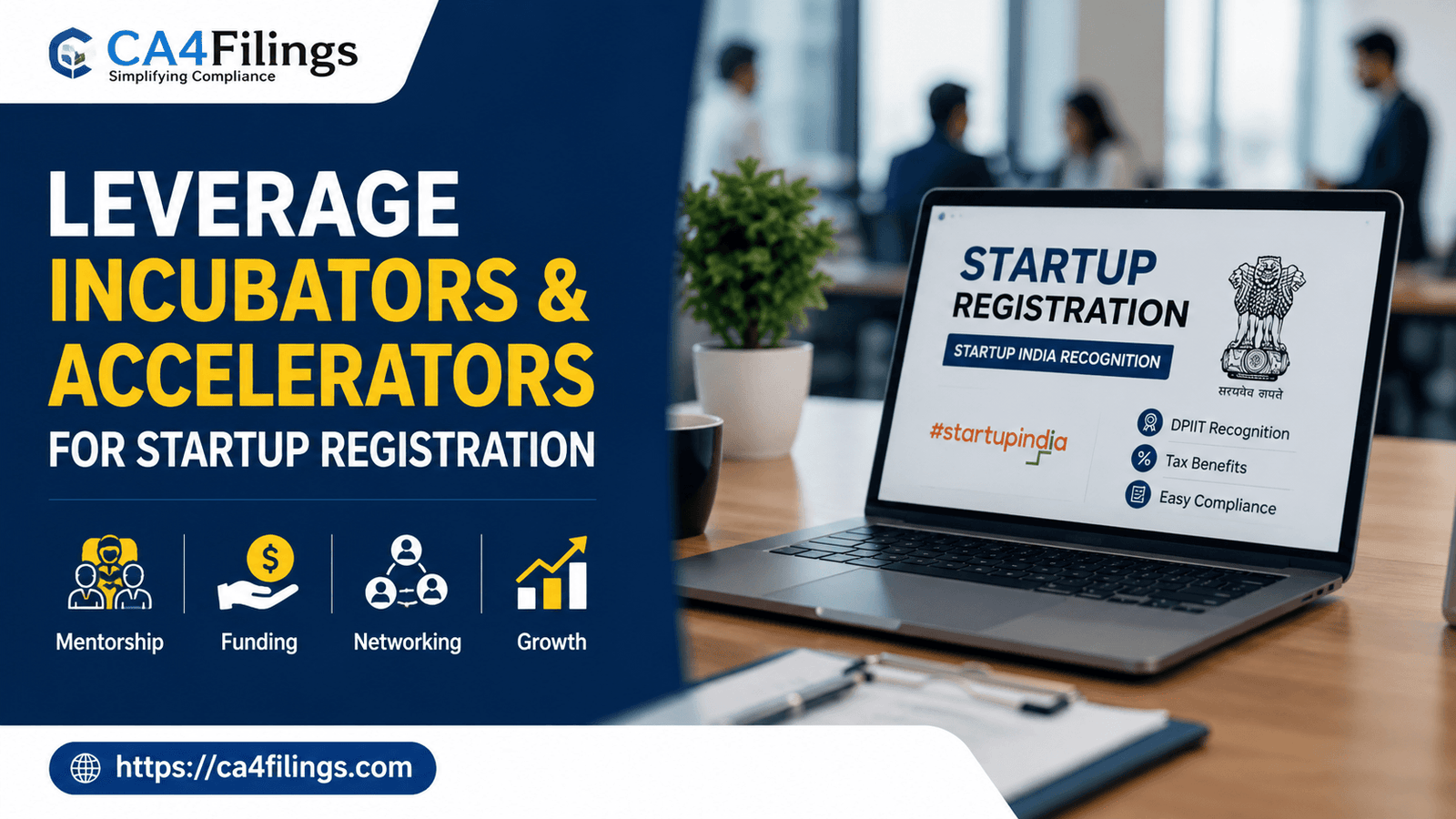
Starting a business in India is exciting, but the registration and compliance process can often feel overwhelming for first-time founders. Many entrepreneurs have innovative ideas but struggle with legal formalities, documentation, funding support, and business planning. This is where incubators and accelerators play a major role. Understanding How to Leverage Incubators and Accelerators for Startup Registration can help startups gain structured support, expert mentorship, and faster business growth.
At CA4Filings, we regularly assist startups that come through incubators, university innovation centres, and accelerator programs. These platforms not only help businesses become investment-ready but also simplify the registration process under government initiatives. If you are planning to apply for Startup India Registration, joining a reputed incubator or accelerator can significantly improve your startup ecosystem exposure and operational readiness.
In this article, we will explain How to Leverage Incubators and Accelerators for Startup Registration, their benefits, and how Indian startups can use them strategically.
Understanding Incubators and Accelerators
Before learning How to Leverage Incubators and Accelerators for Startup Registration, it is important to understand the difference between the two.
What is a Startup Incubator?
A startup incubator supports early-stage businesses that are still developing their ideas, products, or business models. Incubators usually provide:
- Office infrastructure
- Mentorship support
- Networking opportunities
- Legal and compliance guidance
- Funding assistance
- Market research support
Many Indian incubators are associated with educational institutions like IITs, IIMs, and government-backed innovation centres.
What is a Startup Accelerator?
Accelerators are designed for startups that already have a working business model or product. These programs focus on scaling businesses quickly within a limited timeframe.
Accelerators generally offer:
- Intensive mentorship
- Investor connections
- Business scaling strategies
- Pitch training
- Seed funding opportunities
Popular accelerators in India include programs run by venture capital firms, corporate groups, and startup networks.
Why Incubators and Accelerators Matter for Startup Registration
One of the biggest reasons founders explore How to Leverage Incubators and Accelerators for Startup Registration is because these platforms simplify the startup ecosystem journey.
Access to Expert Guidance
Many entrepreneurs register companies without understanding future compliance obligations. Incubators and accelerators connect founders with:
- Chartered Accountants
- Company Secretaries
- Legal advisors
- Tax consultants
- Startup mentors
This reduces mistakes during company incorporation and government registration.
Better Chances of Startup Recognition
Incubated startups often have stronger business documentation and structured business plans. This improves the chances of approval under Startup India and funding schemes.
Easier Investor Readiness
Investors prefer startups that have completed proper registration and compliance. Accelerator-backed startups usually appear more credible to angel investors and venture capitalists.
How to Leverage Incubators and Accelerators for Startup Registration Effectively
Founders should not simply join an incubator for branding purposes. They should strategically use available resources.
Choose the Right Incubator or Accelerator
Different programs focus on different industries. Some specialize in:
- FinTech
- EdTech
- HealthTech
- Agriculture
- SaaS
- Manufacturing
Select a platform aligned with your startup vision and business stage.
For example:
- Idea-stage founders should prefer incubators.
- Revenue-generating startups may benefit more from accelerators.
Use Their Legal and Compliance Support
One of the smartest ways regarding How to Leverage Incubators and Accelerators for Startup Registration is using their compliance support systems.
Most incubators help startups with:
- Private Limited Company registration
- LLP registration
- PAN and TAN applications
- GST registration
- DPIIT recognition
- Startup India documentation
This saves founders from expensive errors and delays.
Build a Strong Documentation Process
Many startups fail registration or funding applications because of poor documentation.
Accelerators often help founders prepare:
- Pitch decks
- Financial projections
- Founders’ agreements
- Cap tables
- Business plans
Well-prepared documents improve startup credibility significantly.
Take Advantage of Government Partnerships
Several incubators are directly associated with government departments and innovation missions. These collaborations can help startups access:
- Grants
- Subsidies
- Tax benefits
- Patent support
- Seed funding schemes
Understanding How to Leverage Incubators and Accelerators for Startup Registration also means understanding how these partnerships can reduce operational costs.
Key Benefits of Using Incubators and Accelerators
Faster Business Structuring
With expert guidance, startups can finalize the correct business structure quickly.
Networking Opportunities
Founders gain access to:
- Investors
- Industry experts
- Corporate leaders
- Fellow entrepreneurs
Networking often leads to collaborations and funding opportunities.
Mentorship from Experienced Entrepreneurs
Learning from successful founders helps avoid common startup mistakes.
Improved Compliance Management
Professional compliance management ensures startups stay legally secure from the beginning.
Real-World Example
Consider a technology startup founded by two engineering graduates in Bengaluru. Initially, they struggled with company registration, GST compliance, and funding documentation.
After joining a reputed incubator, they received:
- Legal consultation
- Business mentorship
- Investor introductions
- Startup India registration support
Within eight months, they secured seed funding and expanded operations to multiple cities. This is a practical example of How to Leverage Incubators and Accelerators for Startup Registration effectively.
Common Mistakes Startups Should Avoid
Choosing Programs Only for Brand Value
Many founders apply to famous accelerators without checking whether the program suits their business needs.
Ignoring Compliance Responsibilities
Even with mentor support, founders must stay involved in compliance and legal processes.
Not Utilizing Mentorship Properly
Mentorship is one of the most valuable resources. Startups should actively seek advice and feedback.
Delaying Registration
Some startups wait too long to formalize their business. Delayed registration can create tax and investment complications later.
Steps to Get Started
If you want to understand How to Leverage Incubators and Accelerators for Startup Registration, follow these practical steps:
Step 1: Finalize Your Business Idea
Clearly define:
- Product or service
- Target audience
- Revenue model
- Market opportunity
Step 2: Research Relevant Programs
Look for incubators and accelerators matching your industry and business stage.
Step 3: Prepare Required Documents
Common documents include:
- Founder details
- Business plan
- Financial estimates
- Pitch presentation
Step 4: Register Your Company
Choose the correct business entity structure before applying for government recognition.
Step 5: Apply for Startup Recognition
Complete Startup India and DPIIT recognition procedures to access benefits.
FAQs
What is the difference between an incubator and an accelerator?
Incubators support idea-stage startups, while accelerators help existing startups scale rapidly.
Can incubators help with Startup India registration?
Yes, many incubators provide guidance and documentation support for Startup India registration.
Are accelerator programs free in India?
Some are free, while others may take equity in exchange for mentorship and funding support.
Is joining an incubator mandatory for startup registration?
No, but understanding How to Leverage Incubators and Accelerators for Startup Registration can simplify the process and improve growth opportunities.
Which startups benefit the most from accelerators?
Startups with validated products, initial customers, and scaling potential benefit most from accelerator programs.
Understanding How to Leverage Incubators and Accelerators for Startup Registration can make a major difference in a startup’s success journey. These programs provide more than just mentorship — they offer structured business guidance, compliance support, funding opportunities, and investor access.
For Indian entrepreneurs, leveraging incubators and accelerators strategically can help build a legally compliant and investor-ready startup from day one. Instead of navigating complex registration procedures alone, founders can use expert-backed ecosystems to accelerate growth and reduce operational risks.
At CA4Filings, we help startups at every stage — from company incorporation and Startup India registration to tax compliance and business advisory. If you are planning to launch or scale your startup, connect with CA4Filings today and build your business on a strong legal and financial foundation.
Latest Updates
ca4filings.com Services

























-registration.png)