Sole Proprietorship vs. LLC: Which is Right for You?
Sole Proprietorship vs. LLC: Which is Right for You? Learn key differences, benefits, taxation, and legal aspects for businesses.
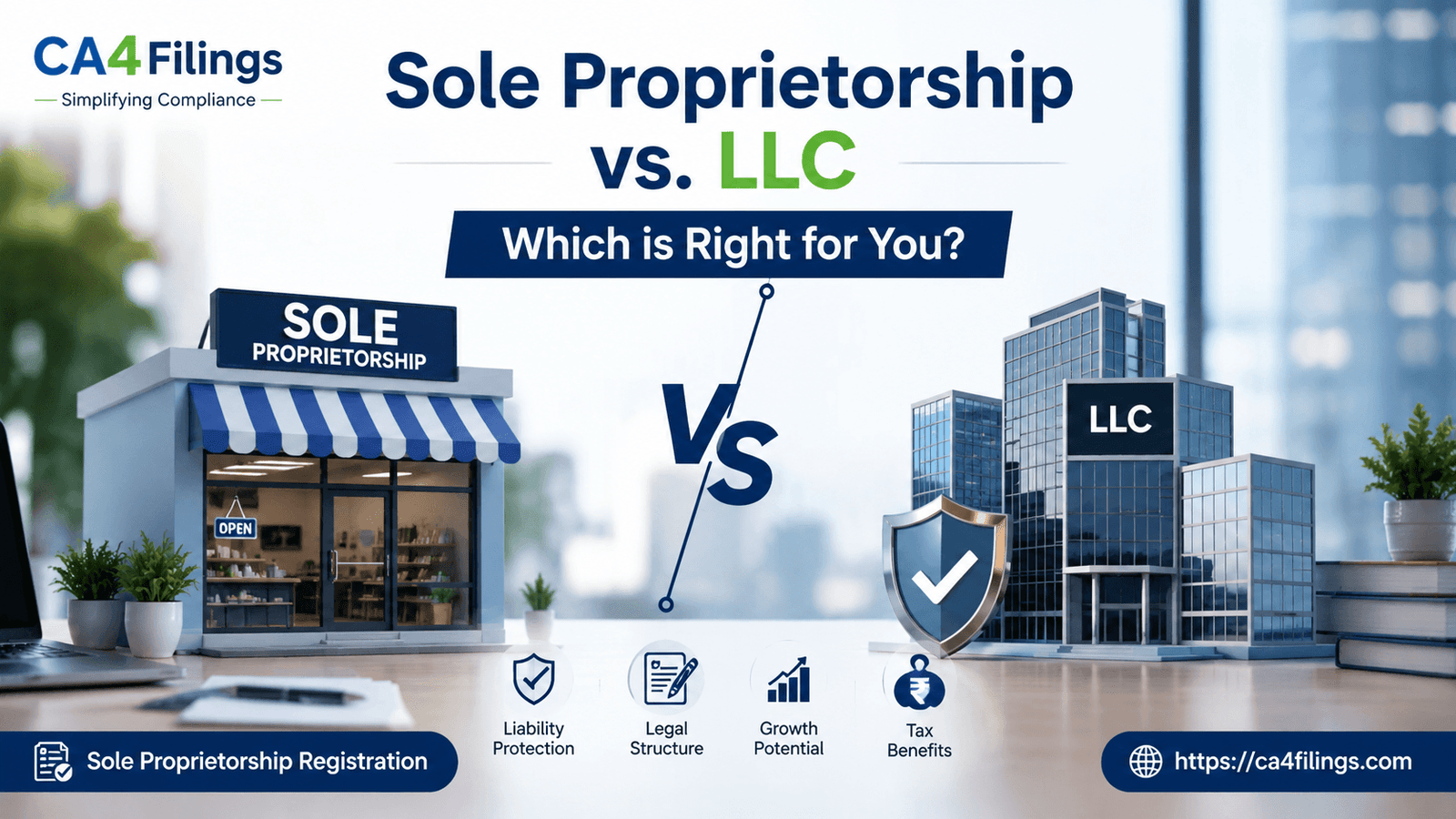
Starting a business is an exciting journey, but choosing the right business structure is one of the most important decisions you will make. Many entrepreneurs often struggle with the question: Sole Proprietorship vs. LLC: Which is Right for You? The answer depends on several factors such as business size, liability, taxation, future expansion plans, and compliance requirements.
In India, a sole proprietorship is one of the most common forms of business because it is simple to start and easy to manage. Many freelancers, shop owners, consultants, and small traders prefer this structure during the initial stage of business. If you are planning to start your own business, getting proper Sole Proprietorship Registration can help you operate legally and smoothly from day one.
At CA4Filings, we regularly guide startups and entrepreneurs on selecting the right business structure based on their long-term goals. In this article, we will explain Sole Proprietorship vs. LLC: Which is Right for You? in a practical and easy-to-understand manner.
Understanding Sole Proprietorship
A sole proprietorship is the simplest form of business structure where a single individual owns and manages the business.
Key Features of Sole Proprietorship
- Owned and controlled by one person
- Minimal legal formalities
- Easy to start and close
- No separate legal identity
- Owner bears all profits and losses
Advantages of Sole Proprietorship
Easy Setup
A sole proprietorship can be started quickly with basic registrations such as GST, Shop & Establishment License, or MSME registration.
Full Control
The owner has complete decision-making authority without needing approval from partners or directors.
Lower Compliance
Compared to companies, compliance requirements are minimal and cost-effective.
Direct Taxation
Income is taxed as personal income, which simplifies tax filing for small business owners.
Disadvantages of Sole Proprietorship
Unlimited Liability
The owner is personally liable for all debts and obligations of the business.
Limited Funding Opportunities
Banks and investors generally prefer companies or LLPs over sole proprietorships.
Business Continuity Issues
The business may not continue automatically after the owner’s death or incapacity.
What is an LLC?
When discussing Sole Proprietorship vs. LLC: Which is Right for You?, it is important to understand that “LLC” is more commonly used in countries like the United States. In India, the closest equivalent is usually a Limited Liability Partnership (LLP) or a Private Limited Company.
An LLC provides a separate legal identity and protects the personal assets of the owners.
Key Features of LLC
- Separate legal entity
- Limited liability protection
- Better business credibility
- Suitable for growth-oriented businesses
- Higher compliance requirements
Advantages of LLC
Limited Liability Protection
The owners are generally not personally responsible for business debts beyond their investment.
Better Credibility
An LLC structure creates more trust among customers, vendors, and investors.
Easier Fundraising
Investors and financial institutions are more comfortable dealing with registered entities.
Business Continuity
The business can continue even if ownership changes.
Disadvantages of LLC
Higher Compliance
Regular filings, audits, and statutory compliance increase operational responsibilities.
Increased Costs
Registration, annual compliance, and professional fees are comparatively higher.
More Documentation
Formation and management involve legal paperwork and formal procedures.
Sole Proprietorship vs. LLC: Which is Right for You? – Major Differences
Liability Protection
In a sole proprietorship, personal assets such as savings, property, or vehicles may be at risk if the business faces losses or legal claims.
In an LLC, liability is limited, offering protection to the owner’s personal assets.
Registration Process
A sole proprietorship is easier and faster to start with minimal documentation.
An LLC requires formal incorporation, legal agreements, and government filings.
Taxation
A sole proprietorship is taxed as personal income of the owner.
An LLC may have separate tax treatment depending on the structure chosen.
Compliance Requirements
Sole proprietorships have fewer annual compliance obligations.
LLCs must comply with annual filings, accounting standards, and statutory regulations.
Funding and Investment
Sole proprietorships often face limitations in raising capital.
LLCs attract investors more easily due to better transparency and structured ownership.
Sole Proprietorship vs. LLC: Which is Right for You? Based on Business Type
Best Situations for Sole Proprietorship
A sole proprietorship is suitable if:
- You are starting small
- You have limited investment
- You want simple compliance
- You are a freelancer or consultant
- Your business risk is low
Example
A local boutique owner, tuition teacher, or freelance graphic designer may prefer a sole proprietorship because of lower operational complexity.
Best Situations for LLC
An LLC is suitable if:
- You plan rapid business growth
- You want external funding
- Your business involves financial or legal risk
- You want brand credibility
- You plan to hire employees or partners
Example
A tech startup, manufacturing business, or e-commerce company may benefit from an LLC structure due to scalability and investor confidence.
Factors to Consider Before Choosing
When deciding Sole Proprietorship vs. LLC: Which is Right for You?, consider the following factors carefully:
Business Risk
Higher-risk businesses should prefer limited liability structures.
Future Expansion Plans
If you plan to scale nationally or internationally, an LLC may be more beneficial.
Budget
Sole proprietorships are cost-effective for beginners with limited capital.
Compliance Comfort
If you prefer minimal paperwork, sole proprietorship is easier to manage.
Investor Expectations
Investors generally prefer structured legal entities over informal business setups.
Step-by-Step Decision Guide
Choose Sole Proprietorship If:
- You are testing a business idea
- You want low setup costs
- You operate independently
- Your business risk is low
- You want simple taxation
Choose LLC If:
- You want liability protection
- You expect high revenue growth
- You plan to raise funding
- You want stronger business credibility
- You are entering competitive markets
Common Mistakes Entrepreneurs Make
Ignoring Liability Risks
Many small business owners underestimate the importance of personal asset protection.
Choosing Based Only on Cost
Lower setup cost should not be the only deciding factor.
Lack of Long-Term Planning
Business structure should align with future goals and expansion plans.
Delaying Registration
Operating without proper registration may create legal and taxation issues later.
FAQs
Is a sole proprietorship legally recognized in India?
Yes, a sole proprietorship is legally recognized and widely used in India, although it does not have a separate legal identity.
Is LLC available in India?
The exact LLC structure is not available in India, but LLPs and Private Limited Companies offer similar benefits.
Which is cheaper: Sole Proprietorship or LLC?
A sole proprietorship is generally cheaper to start and maintain.
Can a sole proprietorship be converted into an LLC later?
Yes, many businesses start as sole proprietorships and later convert into LLPs or Private Limited Companies as they grow.
Which structure is better for startups?
For scalable startups seeking funding and expansion, an LLC-type structure is usually more suitable.
Choosing the right business structure is a crucial step that can impact your legal protection, taxation, growth opportunities, and long-term success. When evaluating Sole Proprietorship vs. LLC: Which is Right for You?, there is no one-size-fits-all answer.
If you want simplicity, low cost, and easy management, a sole proprietorship may be ideal for your initial business journey. However, if you seek liability protection, investment opportunities, and long-term scalability, an LLC-style structure such as LLP or Private Limited Company may be the better option.
At CA4Filings, we help entrepreneurs make informed business decisions with expert guidance and hassle-free registration support. Whether you are starting small or planning a high-growth venture, our team can help you choose the right structure and complete all legal formalities smoothly.
Get in touch with CA4Filings today and take the first step toward building your business with confidence.
Latest Updates
ca4filings.com Services





















-registration.png)