Exploring the Role of Section 8 Companies in Education and Health Sectors
Exploring the Role of Section 8 Companies in Education and Health Sectors and how they support social impact initiatives in India.
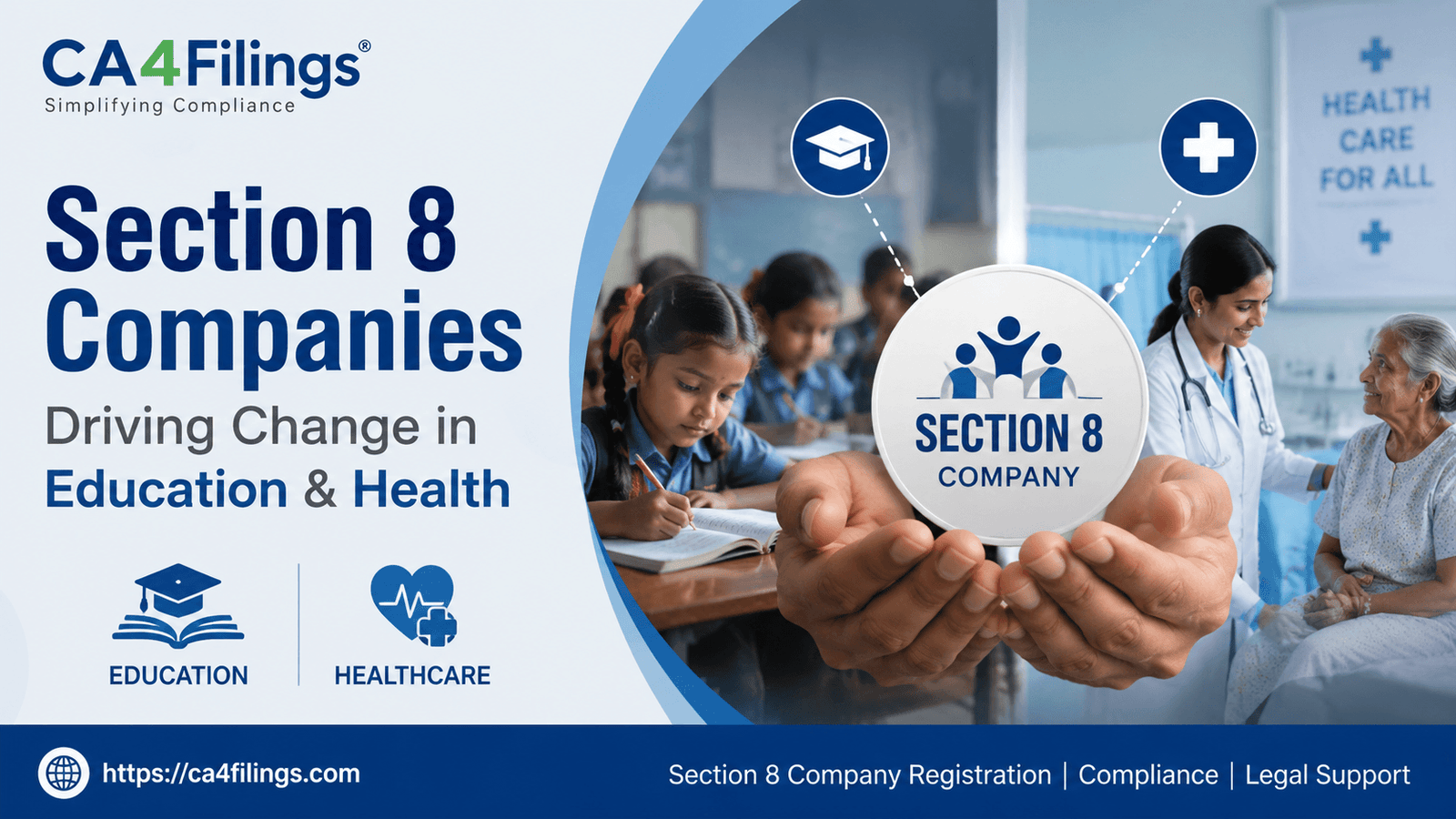
India has witnessed a significant rise in social enterprises and non-profit organizations working toward public welfare. Among the various legal structures available, Section 8 Companies have emerged as one of the most trusted and professionally managed entities for charitable and social activities. When it comes to Exploring the Role of Section 8 Companies in Education and Health Sectors, it becomes clear that these organizations are playing a major role in improving access to quality education and healthcare across the country.
At CA4Filings, we often guide NGOs, social entrepreneurs, trusts, and philanthropists who wish to create long-term social impact through a structured legal framework. Many organizations prefer Section 8 Company Registration because it offers better credibility, transparency, and regulatory recognition compared to other non-profit models.
In this article, we will be Exploring the Role of Section 8 Companies in Education and Health Sectors, their legal advantages, practical applications, and why they are becoming increasingly important in India’s development journey.
What is a Section 8 Company?
A Section 8 Company is a non-profit organization registered under the Companies Act, 2013. These companies are formed with the objective of promoting:
- Education
- Healthcare
- Social welfare
- Charity
- Research
- Environment protection
- Sports and arts
Unlike normal companies, a Section 8 Company cannot distribute profits among its members. Any surplus income must be used only for promoting the organization’s objectives.
Key Features of a Section 8 Company
- Separate legal identity
- Limited liability protection
- Higher credibility among donors and institutions
- Tax exemptions under certain conditions
- Better transparency and governance structure
While Exploring the Role of Section 8 Companies in Education and Health Sectors, one important aspect to understand is that this structure creates accountability and trust, which are essential for social welfare initiatives.
Exploring the Role of Section 8 Companies in Education and Health Sectors
India still faces several challenges in education and healthcare, especially in rural and underdeveloped areas. Government efforts alone are often not sufficient to bridge the gap. This is where Section 8 Companies contribute significantly.
These organizations work alongside government bodies, CSR initiatives, private donors, and international agencies to create meaningful social change.
Role of Section 8 Companies in the Education Sector
Education is one of the primary sectors where Section 8 Companies actively contribute.
Establishing Educational Institutions
Many non-profit organizations establish:
- Schools
- Skill development centres
- Vocational training institutes
- Libraries
- Digital learning platforms
While Exploring the Role of Section 8 Companies in Education and Health Sectors, we observe that these companies focus not only on formal education but also on practical skill development and employability training.
Supporting Underprivileged Students
Several Section 8 Companies provide:
- Scholarships
- Free study material
- Mid-day meal support
- Free coaching classes
- Career counselling
For example, many NGOs operating as Section 8 Companies offer free coaching for competitive exams to economically weaker students in rural India.
Promoting Digital Education
The rise of online education has encouraged Section 8 Companies to introduce:
- E-learning applications
- Smart classrooms
- Online skill courses
- Teacher training programs
This has become particularly important after the pandemic, where digital learning became essential for continuity in education.
Women and Child Education Initiatives
Another important aspect while Exploring the Role of Section 8 Companies in Education and Health Sectors is their contribution toward girl child education and women empowerment.
Many organizations conduct awareness programs related to:
- Female literacy
- Menstrual hygiene education
- Vocational training for women
- Self-employment skills
These initiatives help improve social and economic conditions in underserved communities.
Role of Section 8 Companies in the Health Sector
Healthcare is another critical area where Section 8 Companies are creating strong social impact.
Running Hospitals and Clinics
Many charitable hospitals and healthcare centres in India operate under the Section 8 Company structure. These institutions provide:
- Affordable treatment
- Free health check-ups
- Diagnostic services
- Rural medical camps
While Exploring the Role of Section 8 Companies in Education and Health Sectors, healthcare accessibility remains one of the biggest contributions made by these organizations.
Organizing Medical Awareness Campaigns
Section 8 Companies frequently conduct awareness drives related to:
- Vaccination
- Nutrition
- Sanitation
- Mental health
- Maternal healthcare
These awareness initiatives are especially beneficial in villages and remote regions where healthcare literacy remains low.
Supporting Public Health During Emergencies
During the COVID-19 pandemic, many Section 8 Companies played a crucial role by:
- Arranging oxygen supplies
- Providing food and medicines
- Conducting vaccination drives
- Offering telemedicine support
This highlighted the importance of non-profit organizations in strengthening India’s healthcare ecosystem.
Healthcare for Economically Weaker Sections
Many Section 8 Companies partner with donors and CSR contributors to provide subsidized healthcare services to underprivileged communities.
Some organizations also support:
- Cancer treatment funds
- Child healthcare programs
- Disability support services
- Mobile healthcare vans
Benefits of Section 8 Companies for Social Initiatives
While Exploring the Role of Section 8 Companies in Education and Health Sectors, it is equally important to understand why this structure is preferred.
Better Credibility
Government agencies, corporates, and donors generally trust Section 8 Companies more due to strict compliance requirements.
Easier CSR Funding Opportunities
Corporate Social Responsibility (CSR) funding has become a major source of support for educational and healthcare projects. Section 8 Companies are often preferred partners for CSR collaborations.
Tax Benefits
Subject to approvals and registrations, Section 8 Companies may avail benefits under:
- Section 12A
- Section 80G
This encourages donors to contribute toward social causes.
Strong Governance Structure
These companies follow a regulated framework under the Ministry of Corporate Affairs (MCA), ensuring:
- Financial transparency
- Annual compliance
- Proper record maintenance
Challenges Faced by Section 8 Companies
Even though the structure offers many advantages, organizations may face certain challenges.
Compliance Burden
Regular filing requirements and legal compliances must be maintained properly.
Fundraising Difficulties
Smaller organizations sometimes struggle to attract donors and CSR support.
Operational Limitations
Running large-scale educational and healthcare initiatives requires continuous funding, professional management, and skilled manpower.
At CA4Filings, we often advise organizations to maintain strong documentation and financial discipline to avoid compliance-related issues.
How to Register a Section 8 Company in India
The registration process generally includes the following steps:
Step 1: Obtain DSC and DIN
Digital Signature Certificate (DSC) and Director Identification Number (DIN) are required for directors.
Step 2: Name Approval
The proposed company name must align with the organization’s charitable objectives.
Step 3: Draft MOA and AOA
The Memorandum of Association and Articles of Association must clearly define the non-profit objectives.
Step 4: Apply for License
An application is submitted to the Registrar of Companies (ROC) for obtaining the Section 8 license.
Step 5: Certificate of Incorporation
After approval, the company receives the incorporation certificate.
While Exploring the Role of Section 8 Companies in Education and Health Sectors, proper registration and compliance play a crucial role in building long-term sustainability.
Why Section 8 Companies are Important for India’s Future
India’s growing population and developmental challenges require active participation from social organizations. Section 8 Companies act as a bridge between government initiatives and public welfare needs.
Their contribution toward:
- Rural education
- Affordable healthcare
- Women empowerment
- Child welfare
- Public awareness
continues to strengthen India’s social infrastructure.
When we are Exploring the Role of Section 8 Companies in Education and Health Sectors, it becomes evident that these organizations are not just charitable entities — they are drivers of long-term social transformation.
Frequently Asked Questions (FAQs)
What is the main purpose of a Section 8 Company?
A Section 8 Company is formed for charitable and non-profit objectives such as education, healthcare, social welfare, and environmental protection.
Can Section 8 Companies earn profits?
Yes, they can generate income, but profits cannot be distributed among members. The funds must be used only for promoting organizational objectives.
Are Section 8 Companies eligible for CSR funding?
Yes, many corporates prefer Section 8 Companies for CSR partnerships due to their transparent governance structure.
Is Section 8 Company registration mandatory for NGOs?
No, NGOs can also operate as trusts or societies. However, Section 8 Companies offer better credibility and structured governance.
Can a Section 8 Company run schools and hospitals?
Yes, Section 8 Companies can legally establish and operate educational institutions and healthcare facilities for public welfare.
In today’s rapidly evolving social environment, Exploring the Role of Section 8 Companies in Education and Health Sectors highlights how these organizations are transforming communities through structured, transparent, and impactful initiatives.
From running schools and skill development centres to providing affordable healthcare and awareness campaigns, Section 8 Companies are contributing significantly to India’s growth story. Their ability to attract CSR funding, maintain accountability, and operate with long-term vision makes them an ideal choice for social entrepreneurs and charitable institutions.
At CA4Filings, we help organizations establish and manage compliant Section 8 Companies with complete professional support. If you are planning to start a non-profit initiative in education or healthcare, our expert team can guide you through every stage of registration, compliance, and legal documentation.
Latest Updates
ca4filings.com Services




















-registration.png)