Exploring Collaborations and Partnerships for Section 8 Companies
Exploring Collaborations and Partnerships for Section 8 Companies: Learn strategies, benefits, and practical growth insights.
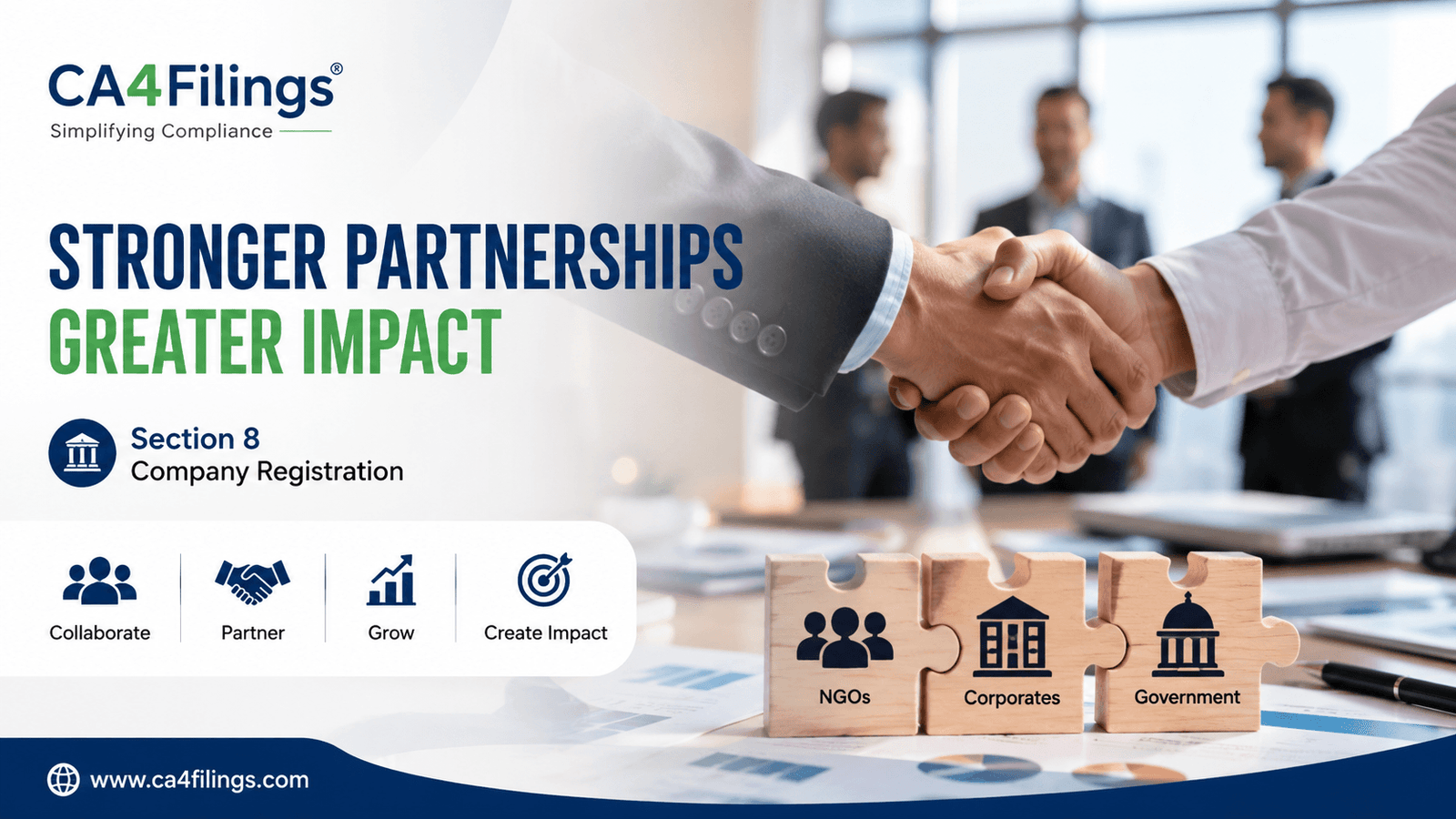
Section 8 Companies play an important role in India’s social and economic development. These organizations are formed with a purpose of promoting education, charity, environmental protection, social welfare, research, arts, and other non-profit activities. However, even with a strong mission and dedicated efforts, many organizations face challenges related to funding, outreach, resources, and long-term sustainability.
This is where Exploring Collaborations and Partnerships for Section 8 Companies becomes highly valuable. Strategic collaborations can help non-profit organizations expand their impact while sharing expertise and resources. If you are planning to establish a non-profit organization, selecting the right legal structure is equally important. Businesses and social entrepreneurs often begin their journey with Section 8 Company Registration to create a credible and legally recognized entity.
At CA4Filings, we have observed that successful Section 8 Companies rarely operate in isolation. The organizations that create lasting impact often build meaningful partnerships with businesses, government bodies, educational institutions, NGOs, and donors.
Understanding Exploring Collaborations and Partnerships for Section 8 Companies
Exploring Collaborations and Partnerships for Section 8 Companies refers to the process of creating mutually beneficial relationships with external entities to achieve broader social goals.
These collaborations can involve:
- Joint projects
- Resource sharing
- Financial support
- Knowledge exchange
- Community development initiatives
- Technology partnerships
- Research activities
The objective is simple — increase impact while reducing operational limitations.
For example, a Section 8 Company working in education may partner with a technology company to provide digital learning solutions in rural areas.
Instead of working independently, both parties contribute their strengths.
Why Exploring Collaborations and Partnerships for Section 8 Companies Matters
Partnerships are no longer optional in today's environment. Non-profit organizations often require external support to scale their activities.
Some major advantages include:
Access to Financial Resources
Funding is a common challenge for Section 8 Companies. Collaborations with corporations, CSR initiatives, and donor agencies can create better financial stability.
For example:
- CSR partnerships under Companies Act provisions
- Grants from institutions
- Donations from businesses
- International funding opportunities
Better Reach and Visibility
Partnerships help organizations reach a larger audience.
A healthcare-focused Section 8 Company working with hospitals or local authorities can spread awareness campaigns more effectively than operating alone.
Knowledge and Expertise Sharing
Different organizations bring different strengths.
A partnership may provide:
- Technical expertise
- Industry knowledge
- Legal support
- Marketing guidance
- Technology assistance
Improved Credibility
Organizations associated with reputed entities often gain trust among donors, beneficiaries, and stakeholders.
This credibility can support future fundraising and growth.
Types of Collaborations for Section 8 Companies
NGO-to-NGO Partnerships
Many organizations work toward similar objectives but serve different locations or communities.
Collaboration may include:
- Joint awareness programs
- Shared volunteers
- Community initiatives
- Training activities
For example, two organizations focusing on women's empowerment may jointly conduct skill development programs.
Corporate Partnerships Through CSR
Many Indian companies actively participate in Corporate Social Responsibility initiatives.
Section 8 Companies can collaborate with corporations for:
- Skill development projects
- Educational programs
- Health campaigns
- Environmental initiatives
This type of collaboration creates value for both organizations.
Government Partnerships
Government departments regularly partner with non-profit organizations for public welfare projects.
Examples include:
- Rural development programs
- Health awareness initiatives
- Educational campaigns
- Sanitation drives
Government partnerships can significantly increase outreach and impact.
Academic and Research Collaborations
Educational institutions can become valuable partners.
Potential activities include:
- Research projects
- Student internships
- Training programs
- Workshops
- Social innovation initiatives
International Partnerships
Some Section 8 Companies partner with global organizations for larger social initiatives.
Benefits include:
- International exposure
- Global funding access
- Research support
- Best practices implementation
However, compliance requirements should always be carefully managed.
Key Steps for Exploring Collaborations and Partnerships for Section 8 Companies
Successful partnerships do not happen by chance. They require planning and strategy.
Step 1: Define Your Goals
Before approaching any partner, identify your objectives clearly.
Ask questions such as:
- What problem are we trying to solve?
- What resources are required?
- What type of partner do we need?
Clear goals reduce confusion later.
Step 2: Identify Suitable Partners
Look for organizations with aligned values and objectives.
Potential partners may include:
- Corporates
- NGOs
- Educational institutions
- Government agencies
- Community groups
Step 3: Conduct Due Diligence
Never enter partnerships without proper evaluation.
Check:
- Reputation
- Financial stability
- Past work experience
- Legal status
- Compliance history
At CA4Filings, we often advise organizations to verify legal and financial records before signing agreements.
Step 4: Define Roles Clearly
Many partnerships fail because responsibilities are not clearly defined.
Document:
- Roles
- Timelines
- Funding responsibilities
- Reporting structures
- Deliverables
Step 5: Create Written Agreements
Formal agreements reduce misunderstandings.
Include:
- Scope of work
- Duration
- Confidentiality terms
- Exit clauses
- Compliance responsibilities
Common Challenges in Exploring Collaborations and Partnerships for Section 8 Companies
While partnerships provide benefits, they may also create challenges.
Difference in Objectives
Two organizations may initially appear aligned but later discover different priorities.
Communication Issues
Poor communication often leads to project delays and conflicts.
Compliance Risks
Section 8 Companies must comply with legal and regulatory requirements.
Areas requiring attention include:
- Income tax compliance
- CSR regulations
- Foreign funding rules
- Accounting standards
Resource Imbalance
Sometimes one organization contributes more resources than the other, leading to dissatisfaction.
Practical Example of Successful Collaboration
Consider a Section 8 Company working for rural education.
Instead of independently arranging teachers, infrastructure, and technology support, the organization creates partnerships:
- A corporate partner funds digital devices.
- A technology company provides educational software.
- Local schools provide infrastructure.
- Volunteers conduct training sessions.
The result:
- Lower operating costs
- Wider outreach
- Better learning outcomes
This is a practical example of Exploring Collaborations and Partnerships for Section 8 Companies in action.
FAQs
Can a Section 8 Company collaborate with private companies?
Yes. Section 8 Companies can collaborate with private companies, especially for CSR initiatives, social projects, and community development programs.
Are formal agreements necessary for partnerships?
Yes. Written agreements help define responsibilities, protect interests, and avoid future disputes.
Can Section 8 Companies receive foreign funding through partnerships?
Yes, but applicable legal provisions and regulatory requirements must be followed carefully.
How can a Section 8 Company identify suitable partners?
Organizations should evaluate potential partners based on objectives, reputation, experience, and legal compliance.
What is the biggest benefit of partnerships for Section 8 Companies?
The biggest benefit is increased impact through shared resources, expertise, and broader outreach.
Exploring Collaborations and Partnerships for Section 8 Companies is becoming increasingly important for organizations aiming to create sustainable social impact. Strong partnerships help non-profit organizations access resources, improve credibility, increase visibility, and achieve larger objectives efficiently.
However, successful collaborations require careful planning, legal clarity, and proper compliance management. Selecting the right partners and structuring agreements correctly can make a significant difference.
At CA4Filings, we help organizations navigate the legal and strategic aspects of Section 8 entities with practical guidance and professional expertise. If you are planning to establish or grow your non-profit organization, connect with CA4Filings today and take the next step toward building a stronger and more impactful future.
Latest Updates
ca4filings.com Services














-registration.png)