How to Navigate the ROC Portal: A Step-by-Step Guide
Learn How to Navigate the ROC Portal: A Step-by-Step Guide with expert insights from CA4Filings. Master filings, tracking, and compliance easily.
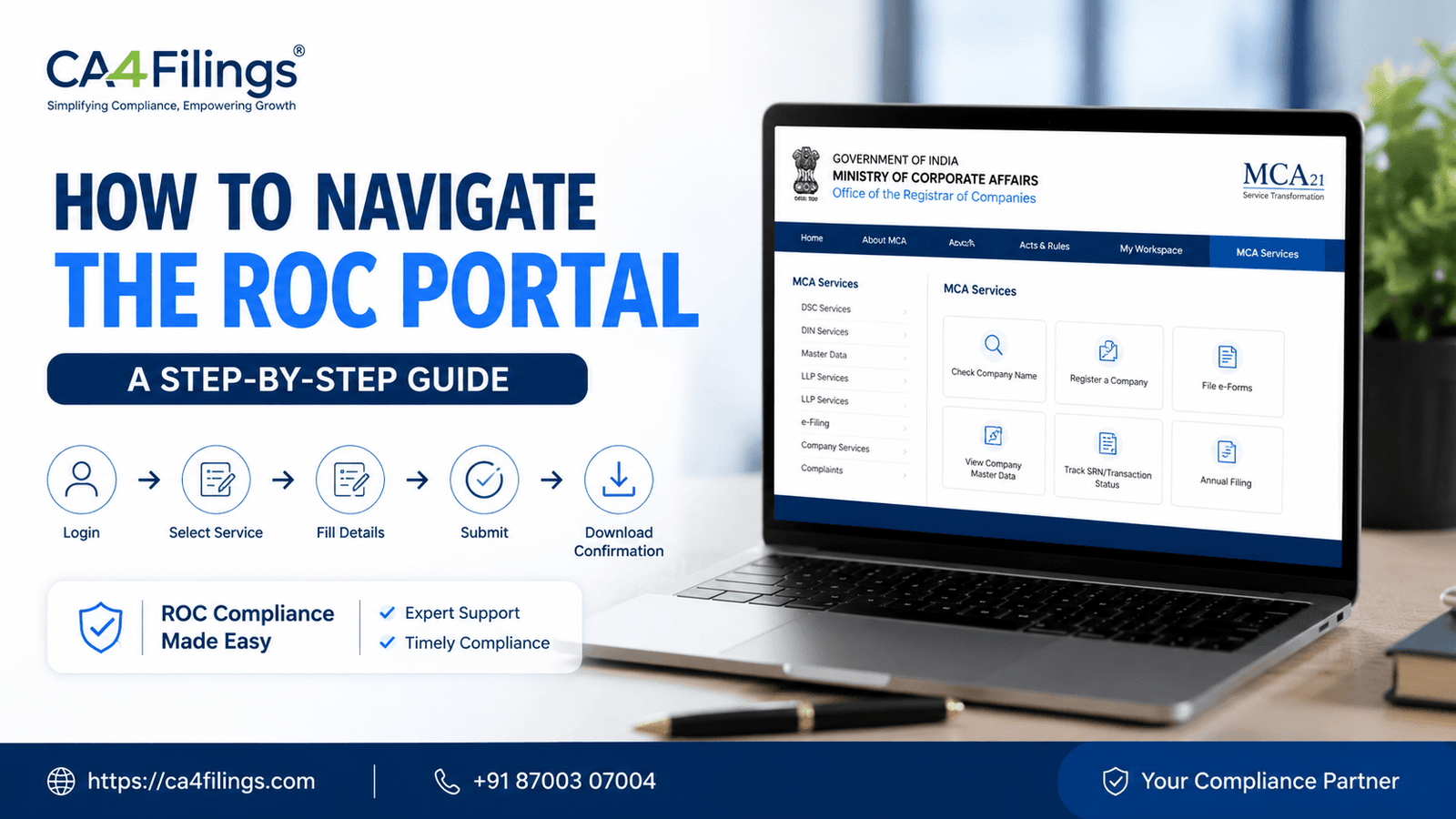
Running a successful company in India demands strict compliance, sharp planning, and timely secretarial filings. Every corporate entity registered under the Companies Act must constantly interact with the Ministry of Corporate Affairs (MCA). However, for many young entrepreneurs and traditional business owners, logging into the MCA V3 website can feel like entering a labyrinth. If you are struggling with compliances, understanding How to Navigate the ROC Portal: A Step-by-Step Guide will completely change your operational compliance workflows. At CA4Filings, we regularly witness clients facing friction with online filings due to small technical oversights. To help streamline your statutory corporate requirements, leveraging our comprehensive ROC Compliance Service ensures your enterprise stays clear of heavy regulatory penalties while maximizing structural transparency.
The transition of the MCA framework from V2 to the V3 ecosystem radically updated the traditional online portal experience. The modern portal utilizes robust web-based forms instead of conventional, bulky downloadable PDFs, drastically altering how businesses submit returns. In this master blueprint, we break down exactly how you can efficiently use the system, avoid common transactional pitfalls, and comfortably manage annual governance tasks.
Demystifying the Modern ROC Portal Architecture
Before jumping directly into technical data entry, it is absolutely essential to comprehend what the updated ROC Portal infrastructure stands for. Managed directly under the aegis of the Ministry of Corporate Affairs, this advanced ROC platform acts as the digital gateway for registering entities, executing name approvals, filing annual financial returns, uploading auditor documents, and modifying directorship records.
The modern version splits accounts into two unique categories: Registered Users and Business Users. As a business owner, ensuring your credentials match the right profile is critical for unblocking restricted forms. A Registered User can access basic informational tools, whereas a Business User profile—tailored for directors, managers, and practicing professionals like Chartered Accountants—enables complex secretarial actions, deep statutory updates, and professional digital signatures.
Essential Key Features and Functionalities
The foundational step in discovering How to Navigate the ROC Portal: A Step-by-Step Guide lies in uncovering the practical administrative tools built directly into your personalized workspace. Once you complete a structured login, the interactive dashboard consolidates your pending actions into a highly clean, intuitive view.
Let us closely examine the primary key features and functionalities available inside your workspace:
My Application Workspace: Your centralized command hub where draft applications are saved for up to 15 days, allowing your team to revisit filings seamlessly.
MCA Services Tab: A comprehensive drop-down menu giving you immediate access to company registration, LLP conversions, charge registration, and director updates.
Track CSR / LLP Status: Live verification monitors designed to review the real-time processing status of your submitted legal applications.
View Public Documents: A stellar public resource facilitating transparent background checks on competitors, creditors, or prospective corporate partners.
How to Navigate the ROC Portal: A Step-by-Step Guide for Seamless Filings
Filing corporate documents accurately requires systematic precision. Follow this detailed, field-tested step-by-step guide designed by our corporate compliance specialists at CA4Filings to smoothly process your mandatory returns without technical rejections.
Step 1: Completing the Registration Process and Account Setup
Your portal journey begins with proper credential provisioning. If you are setting up access for the first time, click the 'Sign In/Sign Up' option prominently placed on the main landing page. Choose the 'Business User' category if you intend to sign forms with a Digital Signature Certificate (DSC).
Enter your correct PAN details, corporate identification credentials, and a valid email address. The portal will validate this data against official government databases, sending a secure OTP to verify the registration process. Securely archiving these credentials protects your sensitive account management metrics from unauthorized leaks.
Step 2: Accessing Your Dashboard and Locating the Correct Form
Log in using your validated credentials. Head over to the 'MCA Services' segment and choose the appropriate module. For example, if your objective is to file annual financial reports, navigate ROC Portal menus directly to the company e-filing sub-menu to pick Form AOC-4 or Form MGT-7.
CA4Filings Pro-Tip: The V3 architecture relies on real-time saving mechanisms. Unlike legacy offline systems, you do not need to fill out everything in a single sitting. Your draft progress is saved dynamically after each section validation.
Step 3: Web-form Input and Dynamic Data Validation
Carefully fill in your data fields. The system automatically populates multiple fields based on your pre-entered Corporate Identification Number (CIN). Ensure you cross-verify these auto-fetched data blocks against your physical registers to eliminate discrepancies.
Step 4: Associating Digital Signatures and Executing Submission
Once data fields pass internal validation checks, transition the document into a downloadable PDF format to append your Digital Signature Certificates (DSC). Ensure your local MCA emBridge utility software is running smoothly on your computer, as it acts as the primary bridge linking your physical hardware token to the active browser environment. Upload the signed document and settle the statutory government processing fees through the integrated digital payment gateway.
Actionable Tips to Boost Your Platform User Experience
Even with a robust layout, navigating heavy transactional portals can occasionally trigger frustrating browser timeouts or unexpected errors. Here are a few expert tips from our desktop support desk to refine your online user experience:
Optimize Your Browser Choice: The modern system runs best on updated versions of Google Chrome or Microsoft Edge. Avoid using outdated Internet Explorer variants.
Clear Cache Routinely: If a specific form gets stuck during validation, clearing your browser history or utilizing an incognito window usually resolves the hitch.
Track Your SRN: Every individual transaction creates a Service Request Number (SRN). Copy this number down immediately to track your progress or raise grievance tickets if a form remains pending for too long.
Utilizing Free Resources and Public Information Tools
Beyond mandatory regulatory filings, the online platform provides a massive library of analytical resources. For example, the 'Master Data' tool allows anyone to verify a company's paid-up capital, active registered office address, and existing loan charges in under two minutes. Using these transparent investigative tools helps protect your business from fraudulent vendors and strengthens your B2B deal analysis.
Frequently Asked Questions (FAQs)
1. What is the fundamental difference between a Registered and a Business User profile?
A Registered User can access basic viewing tools, look up company master data, and pay minor transaction fees. A Business User account holds elevated privileges, allowing users to upload statutory compliance forms, connect professional credentials, and link Digital Signature Certificates for corporate filings.
2. Why is my DSC failing to link with the online portal forms?
This problem usually arises if the emBridge utility is missing or inactive on your operating system. Ensure you install the newest version of emBridge, run it as an administrator, and check that your browser allows pop-ups from the official MCA domain.
3. How long do my draft forms stay saved on the personal dashboard?
Under current V3 portal operational rules, incomplete or draft web-forms remain securely saved inside your 'My Application' folder for a maximum span of 15 calendar days, after which they are automatically cleared by the system.
4. What should I do if my payment gets debited but the SRN status says 'Payment Imperfect'?
Do not panic or attempt a double payment right away. The portal's banking engine often takes up to 2 hours to reconcile transactions. Check the payment status tool after some time; if it remains stuck, you can easily open a technical support ticket using your bank transaction ID.
Achieve Flawless Compliance with CA4Filings
Mastering How to Navigate the ROC Portal: A Step-by-Step Guide is a valuable skill that helps business owners track corporate timelines, maintain clean governance history, and avoid costly delays. While the modern interface brings incredible flexibility, keeping up with changing dynamic forms, resolving emBridge communication issues, and verifying complex financial disclosures can still feel overwhelming when you are busy scaling your core operations.
Why spend your valuable business hours tracking complex filings and troubleshooting technical portal glitches? Our elite team of experienced Chartered Accountants at CA4Filings is here to handle everything for you. From setting up your corporate profiles to ensuring error-free annual submissions, we make compliance smooth and worry-free. Reach out to the CA4Filings support desk today, and let our experts handle your corporate portal management with total precision!
Latest Updates
ca4filings.com Services

























-registration.png)