How to Navigate ROC Compliance During a Company Merger
Learn How to Navigate ROC Compliance During a Company Merger with expert guidance from CA4Filings and ensure smooth legal compliance.
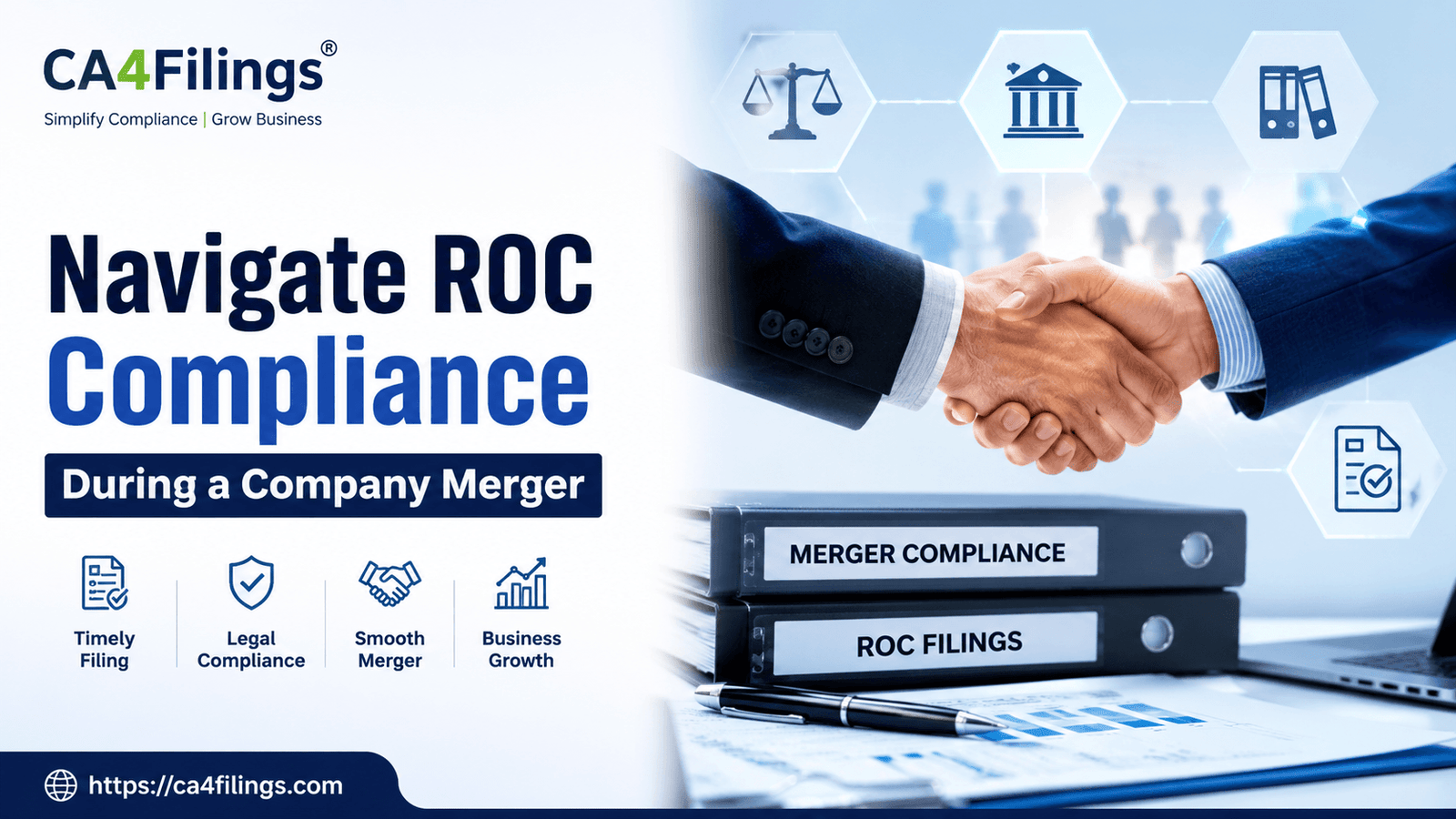
Mergers and acquisitions have become increasingly common in India as businesses look for expansion, operational efficiency, and stronger market positioning. However, while mergers may appear exciting from a strategic point of view, the legal and compliance side can quickly become overwhelming. One of the most critical aspects businesses must manage carefully is ROC compliance.
Understanding How to Navigate ROC Compliance During a Company Merger is essential for avoiding penalties, delays, and regulatory complications. At CA4Filings, we regularly assist companies in managing merger-related filings, documentation, and compliance requirements to ensure a smooth transition.
For businesses looking for expert assistance, our ROC Compliance Service helps companies stay compliant with Ministry of Corporate Affairs (MCA) regulations throughout the merger process.
Understanding ROC Compliance in a Company Merger
The Registrar of Companies (ROC) plays a major role in regulating company-related filings and ensuring that businesses comply with the Companies Act, 2013. During a merger, both transferor and transferee companies must submit various forms, resolutions, approvals, and financial documents to the ROC.
When discussing How to Navigate ROC Compliance During a Company Merger, companies must understand that compliance is not limited to just one filing. It involves multiple procedural steps before, during, and after the merger.
Why ROC Compliance Matters During Mergers
Proper ROC compliance ensures:
- Legal validity of the merger
- Smooth approval from authorities
- Avoidance of penalties and notices
- Protection of stakeholder interests
- Proper transfer of assets and liabilities
- Updated company records with MCA
Even a minor filing error can delay the merger process significantly.
Key Stages of ROC Compliance During a Company Merger
Understanding the merger timeline helps businesses manage compliance effectively. Here’s a practical breakdown of How to Navigate ROC Compliance During a Company Merger.
Board Meeting and Initial Approval
The merger process generally begins with board approval from both companies involved.
Key actions include:
- Passing board resolutions
- Approving draft scheme of merger
- Authorizing professionals for filings
- Fixing dates for shareholder meetings
The board resolution must be properly documented and maintained as part of statutory records.
Drafting the Scheme of Merger
The scheme of merger is one of the most important documents in the entire process. It contains:
- Merger objectives
- Share exchange ratio
- Transfer of liabilities
- Employee transition terms
- Appointed date and effective date
A professionally drafted scheme reduces the chances of objections from regulators.
Filing with NCLT
Under the Companies Act, mergers require approval from the National Company Law Tribunal (NCLT).
The application includes:
- Scheme of merger
- Financial statements
- Auditor certificates
- Board resolutions
- Valuation reports
This stage is critical in learning How to Navigate ROC Compliance During a Company Merger because improper documentation can lead to delays or rejection.
Important ROC Forms Required During a Merger
One of the biggest challenges businesses face is identifying the correct ROC forms.
Common ROC Forms Filed During Mergers
Form MGT-14
Filed for:
- Board resolutions
- Special resolutions
- Approval of merger scheme
Form INC-28
Filed after receiving NCLT order approving the merger.
Form PAS-3
Required if shares are allotted pursuant to the merger arrangement.
Form GNL-1 or GNL-2
Used for filing specific applications or documents with ROC.
Timely filing of these forms is crucial while understanding How to Navigate ROC Compliance During a Company Merger.
Documents Required for ROC Compliance During a Merger
Companies should prepare documentation in advance to avoid unnecessary delays.
Essential Documents Include
- Memorandum and Articles of Association
- PAN and incorporation certificates
- Audited financial statements
- Shareholder resolutions
- Board resolutions
- Valuation reports
- Auditor certificates
- List of creditors and shareholders
- NCLT orders
Maintaining accurate records helps avoid ROC scrutiny later.
Common ROC Compliance Challenges During Company Mergers
Many companies underestimate the complexity involved in merger compliance.
Delay in Filing ROC Forms
Late filing attracts:
- Additional fees
- Penalties
- Legal notices
Missing filing deadlines is one of the most common issues businesses face while learning How to Navigate ROC Compliance During a Company Merger.
Errors in Documentation
Even small errors such as mismatched names, incorrect CIN numbers, or missing attachments can result in rejection.
Non-Compliance with Statutory Registers
After the merger, companies must update:
- Register of members
- Register of directors
- Shareholding records
- Charges and asset registers
Ignoring post-merger updates creates future legal complications.
Practical Tips on How to Navigate ROC Compliance During a Company Merger
Businesses can simplify the process by following a structured approach.
Conduct a Compliance Due Diligence
Before initiating the merger:
- Review pending ROC filings
- Verify annual return compliance
- Check financial statement filings
- Identify unresolved notices
A company with unresolved compliance issues may face obstacles during merger approval.
Maintain a Detailed Compliance Calendar
Tracking deadlines is essential.
Your compliance calendar should include:
- ROC filing dates
- NCLT hearing dates
- Shareholder meeting schedules
- Auditor certification timelines
Coordinate with Professionals Early
A merger requires collaboration between:
- Chartered Accountants
- Company Secretaries
- Legal advisors
- Valuers
Professional guidance reduces the risk of procedural mistakes.
Keep Stakeholders Informed
Transparent communication with:
- Shareholders
- Creditors
- Employees
- Regulators
helps build confidence and reduces objections.
Post-Merger ROC Compliance Requirements
Many businesses assume compliance ends after merger approval. In reality, post-merger compliance is equally important.
Update Company Records
The transferee company must update:
- Share capital structure
- Director details
- Registered office records
- Authorized signatories
File Revised Financial Statements
Merged entities may need to prepare revised accounts reflecting:
- Combined assets
- Liabilities
- Revenue
- Shareholding pattern
Cancellation of Transferor Company
The transferor company eventually ceases to exist legally after the merger becomes effective.
This process must be properly reflected in ROC records.
Real-World Example of ROC Compliance During a Merger
Consider a manufacturing company merging with its distribution subsidiary.
Initially, the merger seemed straightforward. However, during the process, they discovered:
- Pending annual filings
- Incorrect director KYC filings
- Unregistered charges on assets
These issues delayed NCLT approval by several months.
After correcting the pending ROC matters and filing revised documents, the merger was finally approved.
This example clearly shows why understanding How to Navigate ROC Compliance During a Company Merger is crucial before starting the process.
Benefits of Proper ROC Compliance During a Merger
Businesses that maintain proper compliance enjoy several advantages:
- Faster approvals
- Reduced legal risk
- Improved investor confidence
- Better corporate governance
- Smooth operational transition
Compliance also enhances the company’s credibility with banks, investors, and government authorities.
FAQs on How to Navigate ROC Compliance During a Company Merger
Is ROC filing mandatory during a company merger?
Yes. ROC filings are mandatory at various stages of the merger process under the Companies Act, 2013.
What happens if ROC forms are filed late?
Late filing attracts additional fees, penalties, and possible regulatory scrutiny.
Does every merger require NCLT approval?
In most cases, yes. NCLT approval is required for schemes of arrangement and mergers unless exempted under specific provisions.
How long does ROC compliance during a merger take?
The timeline depends on documentation quality, regulatory approvals, and filing accuracy. It may take several months.
Can a merger proceed if a company has pending ROC filings?
Pending filings can create obstacles during approval. It is advisable to regularize compliance before initiating the merger process.
Successfully understanding How to Navigate ROC Compliance During a Company Merger can save businesses from unnecessary delays, penalties, and legal complications. From board approvals and NCLT filings to post-merger updates, every step requires careful planning and accurate documentation.
At CA4Filings, we help businesses handle merger-related ROC requirements efficiently and professionally. Our experienced team ensures that companies remain fully compliant throughout the merger journey while minimizing procedural risks.
If your business is planning a merger or restructuring, connect with CA4Filings today for expert guidance and seamless ROC compliance support.
Latest Updates
ca4filings.com Services




















-registration.png)