How to Maintain Company Books and Records for a Private Limited Company
How to Maintain Company Books and Records for a Private Limited Company effectively with proper accounting, compliance, and legal practices.
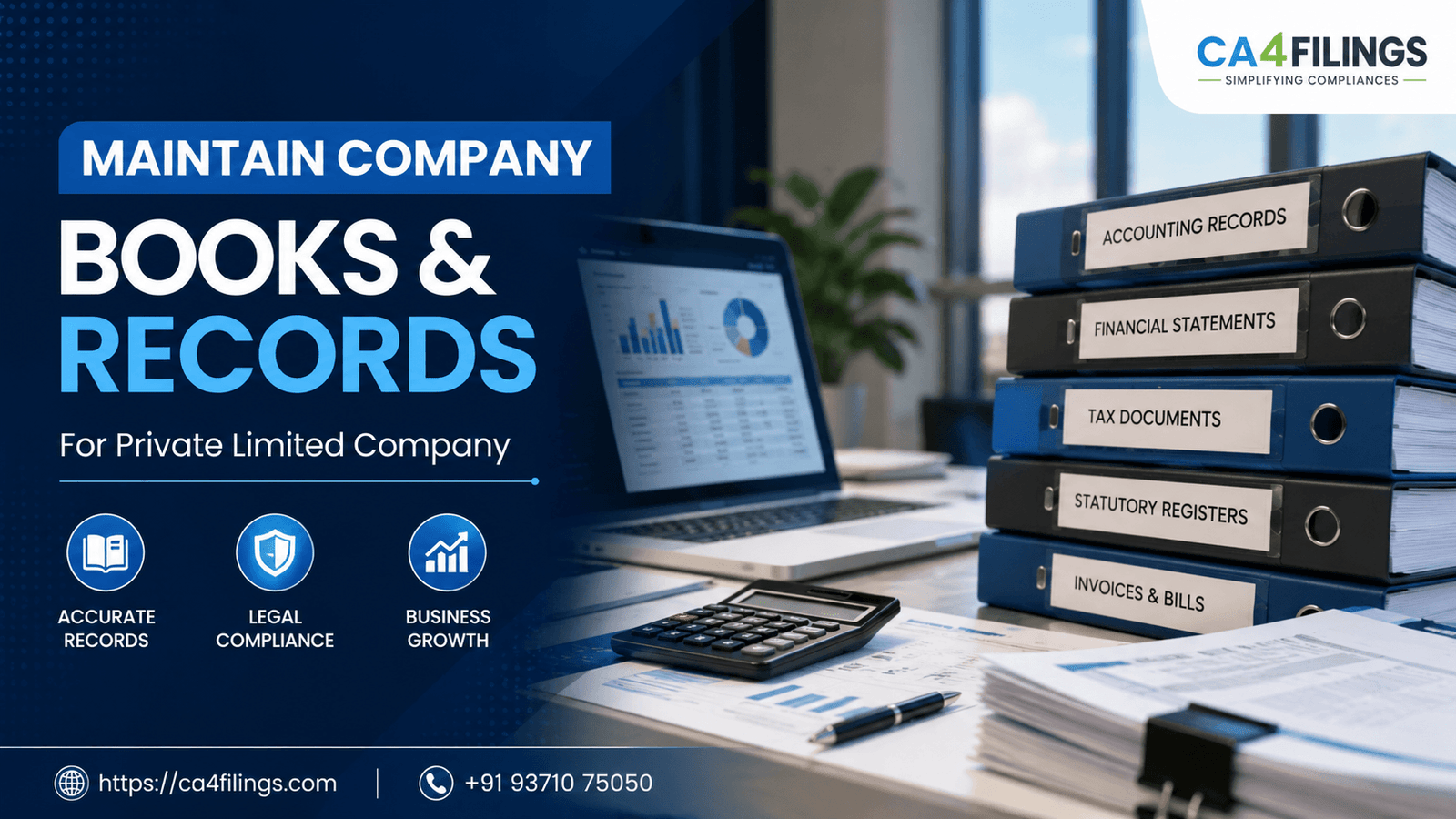
Maintaining proper books and records is one of the most important responsibilities of every business owner running a private limited company in India. Many entrepreneurs focus heavily on sales, operations, and growth but often overlook documentation and accounting compliance until notices, audits, or penalties arise.
Understanding How to Maintain Company Books and Records for a Private Limited Company is essential not only for legal compliance but also for better financial management, tax planning, investor confidence, and smooth business operations.
Whether you are a startup founder, small business owner, or growing enterprise, maintaining accurate records can save your company from unnecessary legal and financial complications in the future. Businesses that complete their Private Limited Company Registration should immediately establish a proper bookkeeping and compliance system from day one to avoid future issues.
Why Maintaining Company Books and Records Is Important
When discussing How to Maintain Company Books and Records for a Private Limited Company, the first thing business owners must understand is why these records matter.
Under the Companies Act, 2013, every private limited company is legally required to maintain proper books of accounts and statutory records. These documents help in:
- Tracking income and expenses
- Preparing financial statements
- Filing GST and Income Tax returns
- Conducting statutory audits
- Securing loans or investments
- Avoiding penalties and notices
- Ensuring transparency in operations
For example, many startups face issues during funding rounds because investors discover incomplete accounting records or missing statutory registers during due diligence.
How to Maintain Company Books and Records for a Private Limited Company Properly
A structured system is necessary for maintaining compliance and operational efficiency. Below are the major areas every company must focus on.
Maintain Proper Books of Accounts
The foundation of How to Maintain Company Books and Records for a Private Limited Company begins with maintaining accurate books of accounts.
Every company should regularly record:
- Sales transactions
- Purchase entries
- Expenses
- Bank transactions
- Cash flow
- Assets and liabilities
- Payroll records
Essential Financial Records to Maintain
Cash Book
Tracks all cash receipts and payments.
Ledger Accounts
Contains all account-wise entries including creditors, debtors, assets, and liabilities.
Purchase and Sales Register
Maintains records of all purchases and sales invoices.
Bank Statements and Reconciliation
Monthly bank reconciliation helps identify mismatches and errors.
Expense Bills and Invoices
All supporting bills must be preserved properly for audit and taxation purposes.
Businesses that fail to maintain these records often struggle during GST audits and Income Tax assessments.
Maintain Statutory Registers
Another important aspect of How to Maintain Company Books and Records for a Private Limited Company is maintaining statutory registers as required under the Companies Act.
Common Statutory Registers Include
- Register of Members
- Register of Directors
- Register of Charges
- Register of Share Transfers
- Register of Loans and Investments
These records must remain updated and accessible for inspection whenever required.
For instance, if a company allots new shares but fails to update the register of members, it may face legal complications later.
Preserve Important Company Documents
Many business owners maintain accounts but ignore document preservation. This becomes a major issue during legal disputes or departmental inquiries.
Important Documents to Preserve
- Certificate of Incorporation
- PAN and TAN copies
- GST Registration Certificate
- Memorandum and Articles of Association
- Share Certificates
- Board Meeting Minutes
- Annual Returns
- Financial Statements
- Audit Reports
- Tax Filing Acknowledgements
A good practice is to maintain both physical and digital copies of these records.
Use Accounting Software for Better Record Management
One of the smartest ways to implement How to Maintain Company Books and Records for a Private Limited Company is by using professional accounting software.
Popular accounting software options include:
- Tally Prime
- Zoho Books
- QuickBooks
- Busy Accounting
- Marg ERP
Benefits of Accounting Software
- Reduces manual errors
- Generates financial reports instantly
- Simplifies GST filing
- Maintains invoice history
- Tracks outstanding payments
- Improves compliance management
For growing businesses, cloud-based accounting systems provide better accessibility and data security.
Maintain GST and Tax Records Carefully
Tax compliance is a critical part of How to Maintain Company Books and Records for a Private Limited Company.
GST Records Every Company Must Maintain
- GST invoices
- E-way bills
- Input tax credit records
- GST returns filed
- Debit and credit notes
Income Tax Records
- TDS records
- Advance tax challans
- Income Tax returns
- Tax audit reports
Improper tax records can result in penalties, disallowed expenses, or tax notices.
For example, many businesses lose eligible GST input credit simply because invoices are missing or vendor details are incorrect.
Conduct Regular Internal Reviews
Maintaining records is not just about storing documents. Regular review and monitoring are equally important.
Monthly Review Checklist
- Verify bank reconciliations
- Review outstanding receivables
- Match GST returns with books
- Check payroll entries
- Review vendor balances
- Ensure invoice numbering consistency
This proactive approach helps identify issues before they become serious compliance problems.
Maintain Board Meeting and Compliance Records
Under company law, private limited companies must maintain proper records of meetings and resolutions.
Important Compliance Records
- Board meeting notices
- Attendance registers
- Meeting minutes
- Resolutions passed
- Annual compliance filings
Failure to maintain these records may create complications during ROC inspections or legal proceedings.
Store Records for the Required Time Period
When learning How to Maintain Company Books and Records for a Private Limited Company, companies must also know how long records should be preserved.
Generally, books of accounts and supporting documents should be maintained for at least 8 financial years under the Companies Act.
Tax-related documents may also need longer preservation depending on ongoing assessments or disputes.
Common Mistakes Companies Should Avoid
Many private limited companies make avoidable errors while maintaining records.
Common Mistakes Include
- Delayed bookkeeping
- Mixing personal and business expenses
- Missing invoices
- Ignoring bank reconciliation
- Improper GST documentation
- Not maintaining statutory registers
- Delaying annual filings
These mistakes can create financial confusion and increase compliance risks.
Practical Tips from CA4Filings
At CA4Filings, we regularly guide businesses on How to Maintain Company Books and Records for a Private Limited Company efficiently and legally.
Expert Tips for Business Owners
- Maintain separate business bank accounts
- Update books weekly instead of yearly
- Digitize important records
- Hire professional accountants when needed
- Conduct quarterly compliance reviews
- Track statutory due dates carefully
A disciplined accounting system helps businesses grow confidently and attract investors more easily.
FAQs
Is maintaining books of accounts mandatory for a private limited company?
Yes. Every private limited company must maintain proper books of accounts under the Companies Act, 2013.
How long should company records be preserved?
Generally, records should be maintained for at least 8 financial years.
Can a private limited company maintain digital records?
Yes. Companies can maintain records electronically, provided they remain accessible and secure.
What happens if proper books are not maintained?
Non-maintenance of records may lead to penalties, legal action, tax notices, and audit complications.
Is accounting software necessary for small companies?
While not mandatory, accounting software significantly improves accuracy, compliance, and efficiency.
Understanding How to Maintain Company Books and Records for a Private Limited Company is crucial for every entrepreneur who wants to run a legally compliant and financially healthy business. Proper accounting and documentation not only help during audits and tax filings but also strengthen operational transparency and long-term business credibility.
Many companies ignore compliance during the early stages and later face penalties, funding issues, or legal complications. A systematic approach to bookkeeping, statutory maintenance, and document preservation can protect your business from unnecessary risks.
At CA4Filings, we help businesses simplify accounting, compliance, ROC filings, taxation, and corporate governance requirements with practical expert support. If you want professional assistance in maintaining your company records correctly and staying fully compliant, CA4Filings is here to guide you every step of the way.
Latest Updates
ca4filings.com Services






















-registration.png)