Common Mistakes to Avoid When Registering a Private Limited Company
Common Mistakes to Avoid When Registering a Private Limited Company in India and how entrepreneurs can ensure smooth company incorporation.
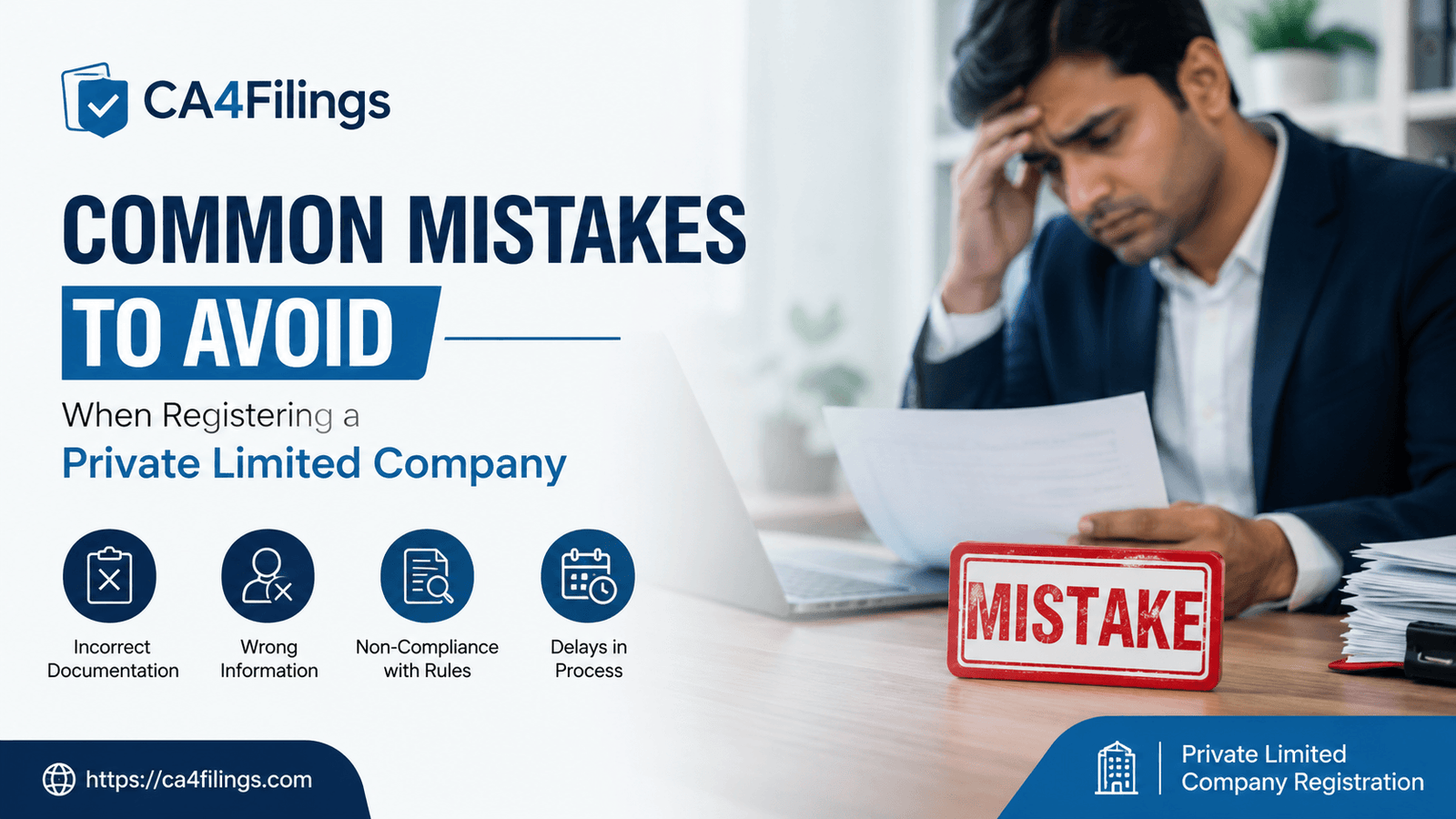
Starting a business in India is an exciting journey, and choosing a Private Limited Company structure is one of the most preferred options among startups, entrepreneurs, and growing businesses. However, many business owners make avoidable errors during the incorporation process that later create legal, financial, and compliance-related complications.
Understanding the Common Mistakes to Avoid When Registering a Private Limited Company can save you from unnecessary delays, penalties, and future disputes. At CA4Filings, we regularly assist entrepreneurs who face issues simply because the registration process was not handled properly from the beginning.
If you are planning to apply for Private Limited Company Registration, it is important to understand the practical aspects of company incorporation and compliance requirements before submitting your application.
In this article, we will discuss the most common errors businesses make during company registration and how you can avoid them professionally.
Why Proper Company Registration Matters
A Private Limited Company is governed under the provisions of the Ministry of Corporate Affairs and the Companies Act, 2013. Once incorporated, the company becomes a separate legal entity with legal responsibilities and compliance obligations.
Improper registration may lead to:
- Rejection of incorporation applications
- Delay in company approval
- Trademark disputes
- ROC penalties
- Tax complications
- Future shareholder conflicts
That is why understanding the Common Mistakes to Avoid When Registering a Private Limited Company becomes extremely important for every entrepreneur.
Common Mistakes to Avoid When Registering a Private Limited Company
Choosing an Incorrect Company Name
One of the biggest mistakes entrepreneurs make is selecting a company name without proper verification.
Common Problems
- Name already registered by another company
- Similarity with an existing trademark
- Use of restricted words without approval
- Non-compliance with MCA naming guidelines
For example, many startups choose trendy names without checking trademark availability. Later, they receive objections or legal notices from existing brands.
How to Avoid This Mistake
Before finalizing your company name:
- Conduct MCA name availability checks
- Verify trademark databases
- Choose a unique and relevant business name
- Avoid prohibited or sensitive words
At CA4Filings, we always recommend reserving 2–3 alternative names to avoid unnecessary delays.
Not Defining Business Activities Properly
Another important point in the list of Common Mistakes to Avoid When Registering a Private Limited Company is improper selection of business activities.
During registration, businesses must mention the main objectives and nature of operations in the Memorandum of Association (MOA).
Problems Caused
- Incorrect NIC code selection
- Difficulty in obtaining licenses later
- Banking issues
- GST registration complications
Practical Advice
Clearly define:
- Primary business activity
- Future expansion plans
- Industry-specific services
- Product categories
For example, if your company plans to offer both software development and digital marketing services, both should be appropriately drafted in the object clause.
Using Incorrect Director Documents
Documentation mistakes are extremely common during incorporation.
Frequent Errors
- Mismatch in PAN and Aadhaar details
- Incorrect address proof
- Blurred scanned documents
- Expired utility bills
- Wrong email or mobile number
Even small spelling mismatches can result in application resubmission.
Best Practices
Ensure that:
- PAN details exactly match Aadhaar
- Address proof is recent
- Documents are properly self-attested
- Email IDs and phone numbers are active
These small checks can significantly speed up company approval.
Ignoring Capital Structure Planning
Many entrepreneurs randomly choose an authorised capital amount without understanding its implications.
This is one of the overlooked Common Mistakes to Avoid When Registering a Private Limited Company.
Why It Matters
Authorised capital affects:
- ROC fees
- Future funding flexibility
- Shareholding structure
- Investor confidence
Smart Approach
Plan your capital based on:
- Initial investment requirements
- Business expansion plans
- Potential investor entry
- Compliance cost considerations
A properly planned capital structure helps businesses avoid future restructuring complications.
Selecting the Wrong Shareholding Pattern
Improper share allocation among founders often creates conflicts later.
Common Founder Mistakes
- Equal ownership without defined roles
- No shareholder agreement
- Giving excessive shares too early
- Ignoring future dilution
For instance, many startups distribute shares equally among friends without considering actual investment or responsibilities. Later, disputes arise regarding management control and profit sharing.
Recommended Solution
Before incorporation:
- Clearly define founder responsibilities
- Discuss future funding expectations
- Prepare a shareholder agreement
- Maintain transparent communication
Proper planning prevents long-term legal disputes.
Ignoring Registered Office Requirements
The registered office address is a crucial compliance requirement.
Mistakes Businesses Make
- Using incomplete address proof
- Submitting invalid NOC
- Using temporary addresses without planning
- Incorrect utility bill submission
Documents Generally Required
- Electricity bill or utility bill
- Rent agreement (if rented)
- NOC from property owner
Incorrect address documentation is one of the major reasons for incorporation delays.
Delaying Post-Incorporation Compliance
Many entrepreneurs think the process ends after receiving the Certificate of Incorporation. This is completely incorrect.
Understanding post-registration compliance is equally important while discussing the Common Mistakes to Avoid When Registering a Private Limited Company.
Post-Incorporation Tasks Include
- Opening company bank account
- Appointment of auditor
- Filing INC-20A
- GST registration
- Maintaining accounting records
- ROC annual filings
Ignoring these requirements can lead to penalties and even company strike-off proceedings.
Not Taking Professional Guidance
Many business owners try to complete incorporation independently without understanding legal complexities.
While online registration appears simple, improper filing can create future compliance issues.
Risks of DIY Registration
- Incorrect MOA drafting
- Shareholding mistakes
- ROC objections
- Trademark conflicts
- Compliance gaps
Professional guidance ensures smooth registration and legal protection from day one.
At CA4Filings, we help businesses handle the entire incorporation process professionally while ensuring proper compliance support.
Overlooking Trademark Protection
Registering a company name does not automatically provide trademark ownership.
This is another highly ignored aspect among the Common Mistakes to Avoid When Registering a Private Limited Company.
Why Trademark Matters
Without trademark registration:
- Competitors may copy your brand
- Legal disputes may arise
- Branding investments become risky
Practical Recommendation
Apply for trademark registration alongside company incorporation whenever possible.
This provides stronger legal protection for your business identity.
Failing to Understand Compliance Costs
Some entrepreneurs assume that incorporation is a one-time expense.
In reality, Private Limited Companies involve recurring compliance obligations.
Ongoing Costs Include
- ROC annual filing
- Income tax return filing
- Accounting and bookkeeping
- GST compliance
- Auditor fees
Proper budgeting helps businesses avoid future financial pressure.
Step-by-Step Tips to Avoid Registration Mistakes
Here are some practical steps entrepreneurs should follow:
Before Registration
- Finalize unique company name
- Verify trademarks
- Decide shareholding clearly
- Prepare proper documents
- Plan authorised capital wisely
During Registration
- Verify all details carefully
- Use correct business activities
- Ensure document consistency
- Review incorporation forms properly
After Registration
- Complete bank account formalities
- Maintain accounting records
- Track ROC due dates
- Obtain necessary licenses
Following these steps helps businesses avoid most incorporation-related issues.
FAQs
What is the most common mistake during company registration?
The most common issue is incorrect documentation and improper company name selection, which often results in MCA resubmission or rejection.
Can I change company details after incorporation?
Yes, certain details like registered office, directors, and authorised capital can be changed later, but the process involves additional compliance and costs.
Is trademark registration mandatory for a Private Limited Company?
No, but it is strongly recommended to protect your brand identity and avoid future legal disputes.
How long does Private Limited Company registration take in India?
Generally, the process takes around 7–15 working days depending on document accuracy and MCA approvals.
Why should I take professional help for company incorporation?
Professional experts ensure proper drafting, accurate filings, compliance support, and reduced risk of legal or procedural mistakes.
Understanding the Common Mistakes to Avoid When Registering a Private Limited Company is essential for every entrepreneur planning to start a business in India. Small mistakes during incorporation can lead to major legal, operational, and financial complications in the future.
From selecting the right company name to planning shareholding structures and ensuring post-incorporation compliance, every step requires careful attention and professional expertise.
At CA4Filings, we help startups, entrepreneurs, and growing businesses complete the incorporation process smoothly with end-to-end compliance support. Our experienced professionals ensure that your company registration is handled accurately, efficiently, and in accordance with all MCA regulations.
If you are planning to start your business journey, connect with CA4Filings today and build your company on a strong legal foundation.
Latest Updates
ca4filings.com Services


























-registration.png)