How to Ensure Compliance with ESIC Registration Requirements
Master the step-by-step process of How to Ensure Compliance with ESIC Registration Requirements and protect your business from costly penalties.
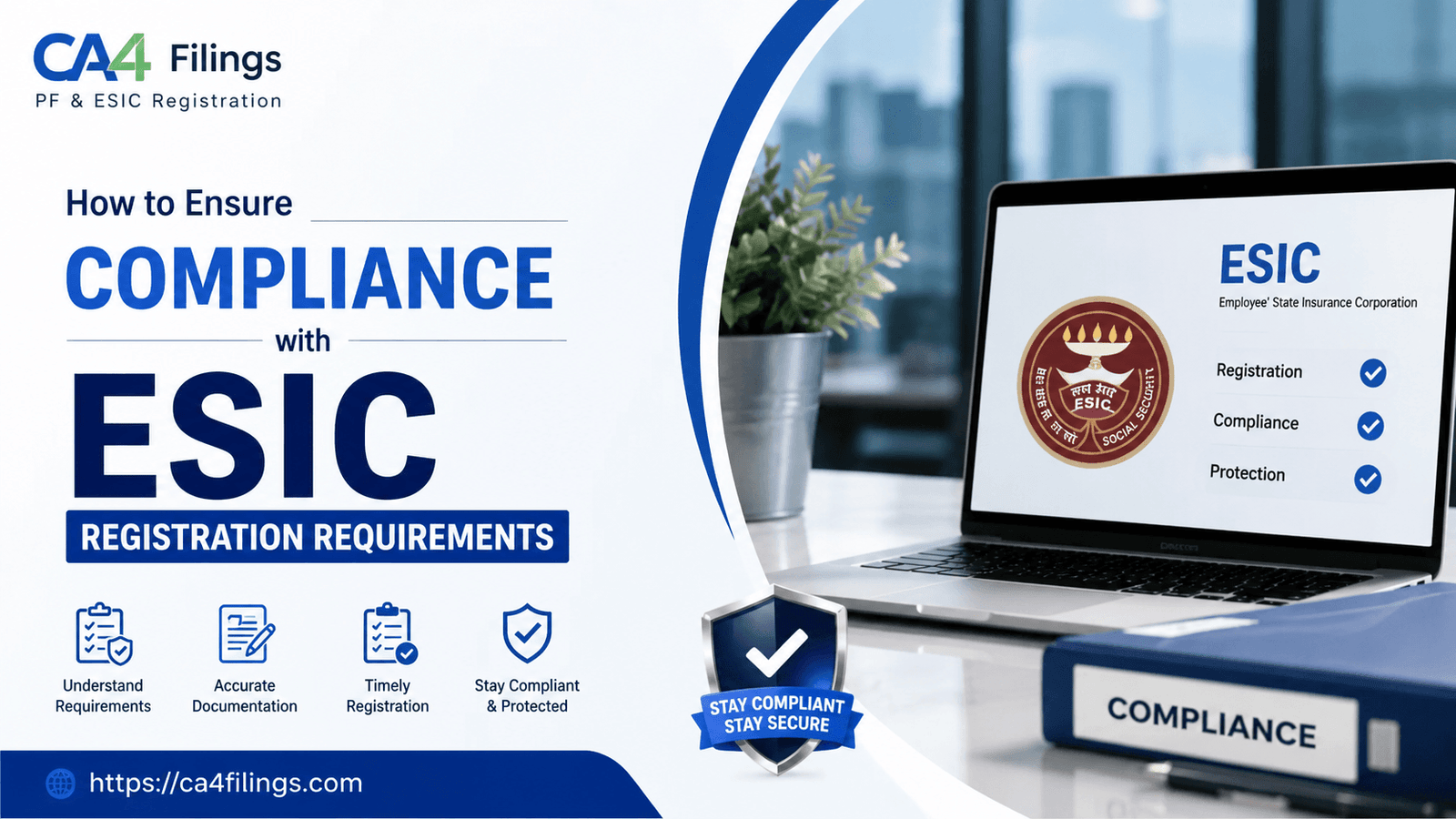
Running a business in India is an exciting journey, but it comes with a complex web of statutory responsibilities. As a business owner, your focus is naturally on growth, revenue, and building a great team. However, neglecting labor law compliance can quickly derail your progress. Among these regulations, the Employees' State Insurance Corporation (ESIC) scheme stands out as one of the most critical social security frameworks. Knowing How to Ensure Compliance with ESIC Registration Requirements is not just about avoiding legal friction—it is about securing the health and well-being of your workforce.
The ESIC framework is structured to provide medical, sickness, maternity, and disablement benefits to employees. For expanding organizations, managing this alongside other statutory funds can feel overwhelming. Integrating these systems systematically is the most efficient way forward. Seamlessly combining your corporate welfare schemes under a single umbrella—such as a unified PF & ESIC Registration strategy—saves hours of administrative work and ensures your payroll processes align perfectly with Indian labor laws from day one. In this comprehensive guide, we will break down exactly How to Ensure Compliance with ESIC Registration Requirements so you can keep your focus entirely on scaling your business.
Understanding the Core Applicability Criteria
Before looking at the documentation or portal navigation, you must first determine if your business falls under the legal radar of the ESI Act. Many startup founders and small business owners mistakenly believe that ESIC is only meant for heavy manufacturing industries. This is a common misconception that can lead to severe back-dated penalties.
The ESIC scheme applies across India to a wide variety of commercial establishments. To figure out if your business must register, check these statutory baselines:
The Employee Threshold: Any factory or establishment employing 10 or more persons on any day of the preceding 12 months must mandatorily register. (Note: A few states still maintain a threshold of 20 employees for specific non-factory establishments, but the national standard has widely shifted toward 10).
The Wage Ceiling: The scheme specifically covers employees whose gross monthly wages do not exceed ₹21,000. If you have an employee with a disability, the wage ceiling is extended to ₹25,000 per month to encourage inclusive hiring.
The Nature of Establishments: It covers shops, hotels, restaurants, cinemas, road motor transport undertakings, private educational institutions, medical institutions, and even modern IT firms or logistics setups.
Expert CA Insight: The "10-employee count" includes all types of workers—whether they are permanent, temporary, casual, or contract workers. Even if only two of your ten employees earn below the ₹21,000 threshold, your establishment still needs to register, and those two eligible employees must be enrolled.
How to Ensure Compliance with ESIC Registration Requirements: Step-by-Step
Remaining compliant requires a structured operational routine. At CA4Filings, we advise our clients to break the process down into distinct stages: initial setup, employee enrollment, and routine maintenance. Here is your operational blueprint on How to Ensure Compliance with ESIC Registration Requirements:
Step 1: Initial Registration on the Shram Suvidha Portal
When your organization hits the 10-employee mark, you have a statutory window of 15 days to apply for your ESIC registration number. The process is completely digitalized through the centralized Shram Suvidha portal. You will need to provide primary business proofs, such as your PAN card, factory/shop license, bank statements, and the digital signatures of the directors or proprietors.
Step 2: Immediate Employee Enrollment (The 10-Day Window)
Getting the company registered is only half the battle. Once your business is live on the system, you must register every single eligible employee. Under the compliance guidelines, you must enroll a new employee within 10 days of their joining date. You will need to collect their Aadhaar details, bank account numbers, and family photographs to ensure they receive their unique Insurance Number and Pehchan Card (health card).
Step 3: Precise Wage Calculation and Deductions
The monthly contribution totals 4% of an employee’s gross wages. The math breaks down as follows:
Employer’s Share: 3.25% of the gross wages (borne entirely by the business).
Employee’s Share: 0.75% of the gross wages (deducted from their salary).
Gross wages include basic pay, dearness allowance, house rent allowance (HRA), overtime payments, and other regular cash incentives. If a worker’s daily average wage is ₹176 or less, they are legally exempt from paying their 0.75% share, but you as the employer must still pay your 3.25% contribution.
Step 4: Strict Adherence to the Monthly Deposit Deadline
All collected and matched contributions must be deposited online through the ESIC portal by the 15th of the following month. For instance, ESI deductions made for the month of April must clear into the government's account on or before May 15th. Missing this date by even 24 hours triggers automatic interest charges.
Navigating the Dynamic Traps of ESIC Compliance
Even the most meticulous internal accounts teams can make mistakes due to the subtle operational rules embedded within the ESI Act. To protect your business from surprise audits, pay close attention to these three areas:
The "Once Covered, Always Covered" Cycle Rule
ESIC operates on two fixed six-month contribution cycles: April to September and October to March. If an employee's gross monthly salary is ₹19,000 in April but increases to ₹23,000 in July due to an appraisal, you cannot stop their ESI deductions immediately. They must remain active in the system, and you must continue deducting contributions on their higher salary until that specific contribution period ends (September 30th). Their eligibility is reassessed only at the start of the next cycle.
The Impact of Overtime on Thresholds
Overtime wages are fully subject to ESI deductions. If a worker’s regular wage is ₹18,000, but heavy festive demand pushes their total monthly payout to ₹22,500 due to overtime, they remain fully covered. You must calculate the 4% contribution on the entire amount of ₹22,500 for that month.
Mandatory Record Maintenance
During statutory inspections, the authorities expect your books to be immaculate. Every covered establishment must maintain:
Form 6 (Register of Employees)
Attendance Registers & Master Payroll Sheets
Inspection Book
Accident Register (Crucial for verifying on-the-job injuries)
What Happens If Your Business Becomes Non-Compliant?
The cost of non-compliance far outweighs the investment required to maintain clean payroll records. The ESIC authorities have broad enforcement powers to penalize defaulting businesses.
Interest on Late Deposits: Any delay beyond the 15th of the month attracts a mandatory interest rate of 12% per annum for every day of default.
Progressive Financial Damages: Extended delays can lead to penal damages ranging from 5% to 25% of the overdue amount, depending on the length of the default.
Prosecution Risks: Under Section 85 of the ESI Act, persistent failure to pay contributions or deliberately making false statements can result in a fine of up to ₹10,000 and imprisonment for up to three years.
Frequently Asked Questions (FAQs)
1. Is ESIC compliance mandatory if our company already provides private health insurance?
Yes, it is completely mandatory. Private group medical insurance policies do not exempt an eligible establishment from the statutory requirements of the ESI Act. If you meet the applicability criteria, you must register and contribute.
2. Can we adjust our salary structures to deliberately keep employees outside the ₹21,000 ESIC ceiling?
Artificially splitting wages into excessive, unverified allowances to lower your statutory liability can trigger scrutiny during an inspection. Your salary structures should reflect realistic, transparent industry standards.
3. Do we need separate ESIC registrations if we operate branches in multiple states?
Yes. Because medical infrastructure is administered locally, you must obtain a separate sub-code or distinct registration for branches operating in different states to ensure your employees can access regional ESIC dispensaries and hospitals.
4. What happens if an eligible employee does not have an Aadhaar card?
Aadhaar linkage is mandatory on the ESIC portal to complete employee enrollment and prevent duplicate registrations. Employees must provide their Aadhaar details to activate their benefits and receive healthcare access.
Let CA4Filings Handle Your Regulatory Burden
Figuring out How to Ensure Compliance with ESIC Registration Requirements takes time, precision, and regular monitoring of changing rules. As your business grows, handling monthly calculations, portal uploads, employee enrollments, and half-yearly returns can drain your internal resources.
At CA4Filings, we take the guesswork out of labor law compliance. Our dedicated team of corporate compliance professionals handles your registration, organizes your monthly payroll deductions, files your returns on time, and keeps your business fully protected from costly penalties. Let us manage the paperwork while you focus on running your business. Reach out to CA4Filings today to streamline your company's statutory compliance framework!
Latest Updates
ca4filings.com Services























-registration.png)