How to Prepare for an NGO Registration Audit
Learn How to Prepare for an NGO Registration Audit with expert tips, compliance steps, and document checklists from CA4Filings.
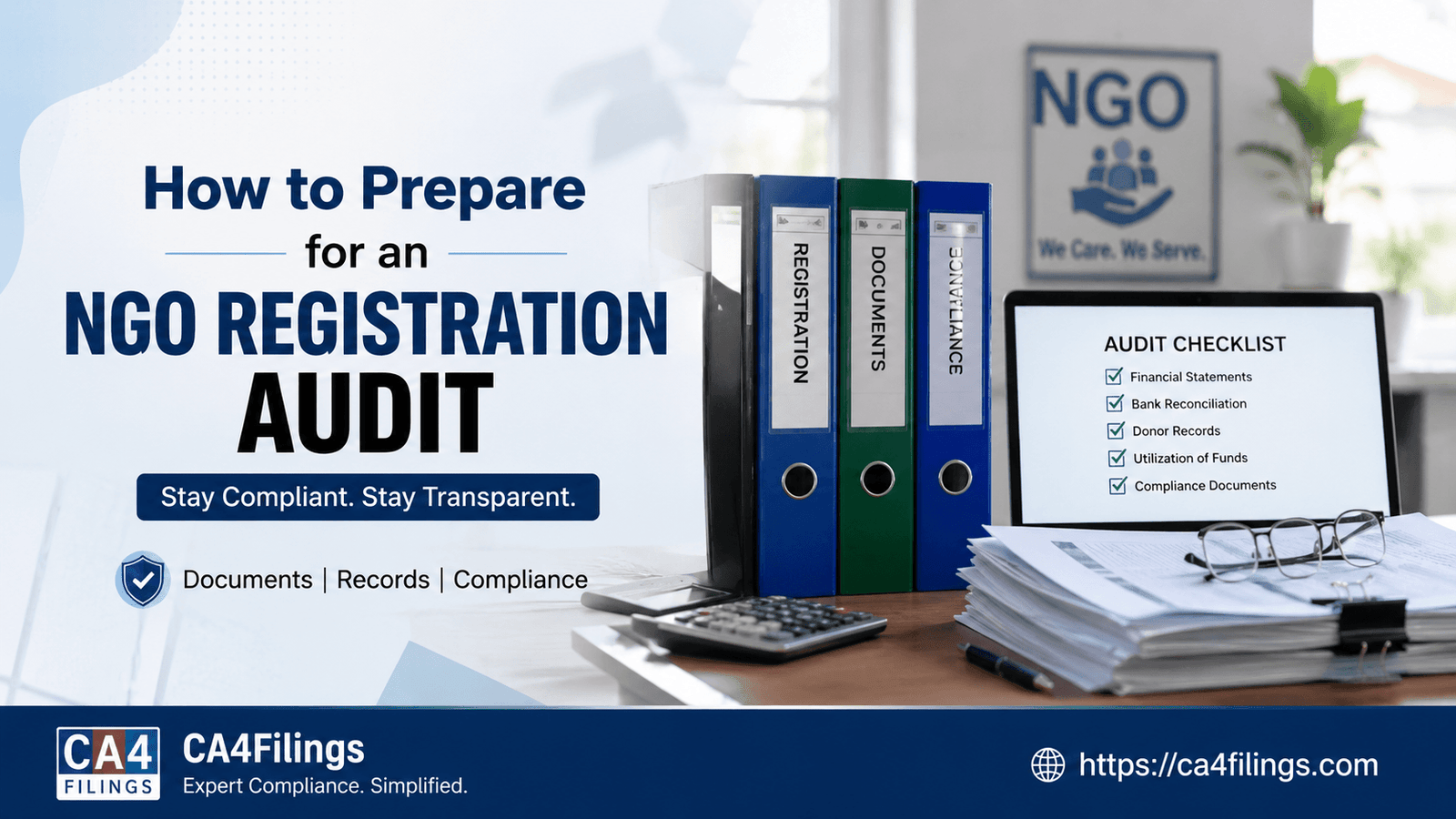
Preparing for an audit can feel overwhelming for many NGOs, especially when compliance rules and documentation requirements keep changing. However, understanding How to Prepare for an NGO Registration Audit can save your organisation from penalties, unnecessary delays, and legal complications.
For NGOs in India, maintaining transparency and proper records is not just a legal formality—it builds trust among donors, government authorities, and beneficiaries. Whether your NGO is registered as a Trust, Society, or Section 8 Company, audits play a major role in ensuring accountability.
At CA4Filings, we often guide NGOs through registration, compliance, and audit preparation. If you are planning your NGO Registration, it is equally important to understand future audit responsibilities from day one.
Why NGO Audits Are Important
Before discussing How to Prepare for an NGO Registration Audit, it is important to understand why audits matter.
An NGO audit helps:
- Verify financial transparency
- Ensure proper utilisation of funds
- Maintain donor confidence
- Comply with Income Tax and FCRA regulations
- Avoid legal notices and penalties
- Improve governance practices
In India, NGOs receiving donations, grants, or foreign contributions are often required to maintain audited financial statements annually.
How to Prepare for an NGO Registration Audit: Step-by-Step Guide
Understanding How to Prepare for an NGO Registration Audit becomes easier when the process is broken into practical steps.
Maintain Proper Financial Records
The first and most important step in How to Prepare for an NGO Registration Audit is maintaining accurate financial records.
Your NGO should regularly update:
- Cash book
- Bank book
- General ledger
- Donation records
- Expense vouchers
- Salary registers
- Grant utilisation reports
Many NGOs make the mistake of updating records only during the audit season. This creates confusion and increases the chances of errors.
Organise Registration Documents
Auditors usually begin by checking legal registration documents. Keep the following documents ready:
- Trust deed or Memorandum of Association
- Registration certificate
- PAN card
- TAN details
- 12A and 80G certificates
- FCRA registration certificate (if applicable)
- GST registration details
Proper organisation of documents reflects professionalism and simplifies the audit process.
Reconcile Bank Statements Regularly
One of the common issues auditors identify is mismatch in bank reconciliation.
To understand How to Prepare for an NGO Registration Audit, NGOs should:
- Reconcile bank statements monthly
- Match donation entries properly
- Verify cheque clearances
- Track online transactions carefully
This simple practice can prevent major audit observations later.
Ensure Compliance with Income Tax Rules
NGOs in India enjoy certain tax exemptions, but these benefits come with compliance responsibilities.
File Income Tax Returns on Time
Timely filing of returns is essential. Delays can attract penalties and even impact exemption benefits.
Make sure your NGO files:
- ITR-7
- Audit reports in Form 10B or 10BB
- TDS returns, if applicable
Maintain Donation Records
For NGOs claiming benefits under Section 80G, proper donor documentation is necessary.
Maintain:
- Donor names and addresses
- PAN details for large donations
- Donation receipts
- Purpose of donations
This is an important aspect of How to Prepare for an NGO Registration Audit because auditors verify donation authenticity carefully.
Prepare Supporting Documents for Expenses
Expense verification is one of the most detailed parts of an NGO audit.
Keep Bills and Vouchers Properly
Every expense should have:
- Original invoice
- Payment proof
- Approval note
- Supporting agreement (if any)
For example, if your NGO spends money on educational activities, maintain attendance sheets, photographs, and vendor invoices together.
Separate Personal and NGO Expenses
A common mistake in small NGOs is mixing personal and organisational transactions.
To improve audit readiness:
- Use dedicated NGO bank accounts
- Avoid cash withdrawals without explanation
- Approve expenses through authorised signatories
How to Prepare for an NGO Registration Audit for FCRA Compliance
If your NGO receives foreign donations, FCRA compliance becomes critical.
Maintain Separate FCRA Accounts
Under FCRA regulations:
- Foreign funds must be received in designated bank accounts
- Domestic and foreign transactions should remain separate
- Utilisation accounts should be properly tracked
Maintain Grant Utilisation Reports
Auditors may verify whether foreign grants were used for approved objectives.
Prepare:
- Project-wise expenditure statements
- Donor agreements
- Activity reports
- Beneficiary details
Proper documentation is essential while learning How to Prepare for an NGO Registration Audit under FCRA regulations.
Conduct Internal Reviews Before the Audit
One practical approach many successful NGOs follow is conducting internal reviews before the actual audit begins.
Create an Internal Audit Checklist
Your checklist can include:
- Pending vouchers
- Missing receipts
- Unreconciled bank entries
- Statutory filing status
- Grant utilisation verification
This proactive step reduces last-minute stress significantly.
Review Governing Body Meeting Records
Auditors may ask for meeting resolutions and approvals.
Maintain updated:
- Board meeting minutes
- Annual General Meeting records
- Resolution copies
- Appointment records
Good governance practices improve audit credibility.
Digitise Important Records
Modern NGOs are increasingly shifting toward digital documentation.
Benefits of Digital Recordkeeping
Digital systems help in:
- Faster document retrieval
- Better transparency
- Reduced paperwork
- Easier auditor access
- Improved backup security
Cloud storage solutions can simplify audit preparation, especially for growing NGOs.
Common Mistakes NGOs Should Avoid
While discussing How to Prepare for an NGO Registration Audit, it is equally important to understand common errors.
Delayed Bookkeeping
Waiting until year-end to update accounts creates unnecessary complications.
Missing Supporting Documents
Expenses without proper bills often lead to audit qualifications.
Non-Compliance with Statutory Filings
Ignoring Income Tax or FCRA deadlines can create legal trouble.
Improper Fund Utilisation
Using funds for activities outside approved objectives may attract penalties.
Practical Example: A Real-World NGO Audit Situation
Recently, a small educational NGO approached CA4Filings after receiving an audit notice. The organisation had genuine charitable activities but lacked organised records.
The issues included:
- Missing donation receipts
- Unreconciled bank entries
- Delayed bookkeeping
- Incomplete board resolutions
After systematic documentation and compliance correction, the NGO successfully completed its audit without penalties.
This example shows why understanding How to Prepare for an NGO Registration Audit is essential from the beginning.
FAQs on How to Prepare for an NGO Registration Audit
Is an audit mandatory for every NGO in India?
Audit requirements depend on the NGO’s income, funding source, and registration type. NGOs claiming tax exemptions generally require audits.
What documents are required during an NGO audit?
Common documents include registration certificates, financial statements, bank statements, vouchers, donor records, and statutory compliance filings.
How often should NGO accounts be updated?
Ideally, bookkeeping should be updated weekly or monthly to avoid year-end complications.
Can NGOs face penalties for non-compliance?
Yes. Failure to maintain records or file returns can result in penalties, cancellation of exemptions, or legal notices.
Why is FCRA compliance important during audits?
FCRA compliance ensures foreign donations are properly utilised according to government regulations.
Understanding How to Prepare for an NGO Registration Audit is not just about passing an annual compliance requirement. It is about building transparency, strengthening governance, and ensuring long-term sustainability for your organisation.
Proper bookkeeping, timely filings, organised documentation, and internal reviews can make the audit process smooth and stress-free. NGOs that maintain disciplined financial systems are more likely to gain donor trust and regulatory confidence.
At CA4Filings, we help NGOs manage registration, taxation, audit preparation, and ongoing compliance with practical and professional support. If your organisation wants expert guidance for smooth NGO compliance and audit readiness, our team is here to assist you at every step.
Latest Updates
ca4filings.com Services
























-registration.png)