How to Obtain Necessary Licenses and Permits for an LLP
Learn How to Obtain Necessary Licenses and Permits for an LLP in India with step-by-step guidance from CA4Filings experts.
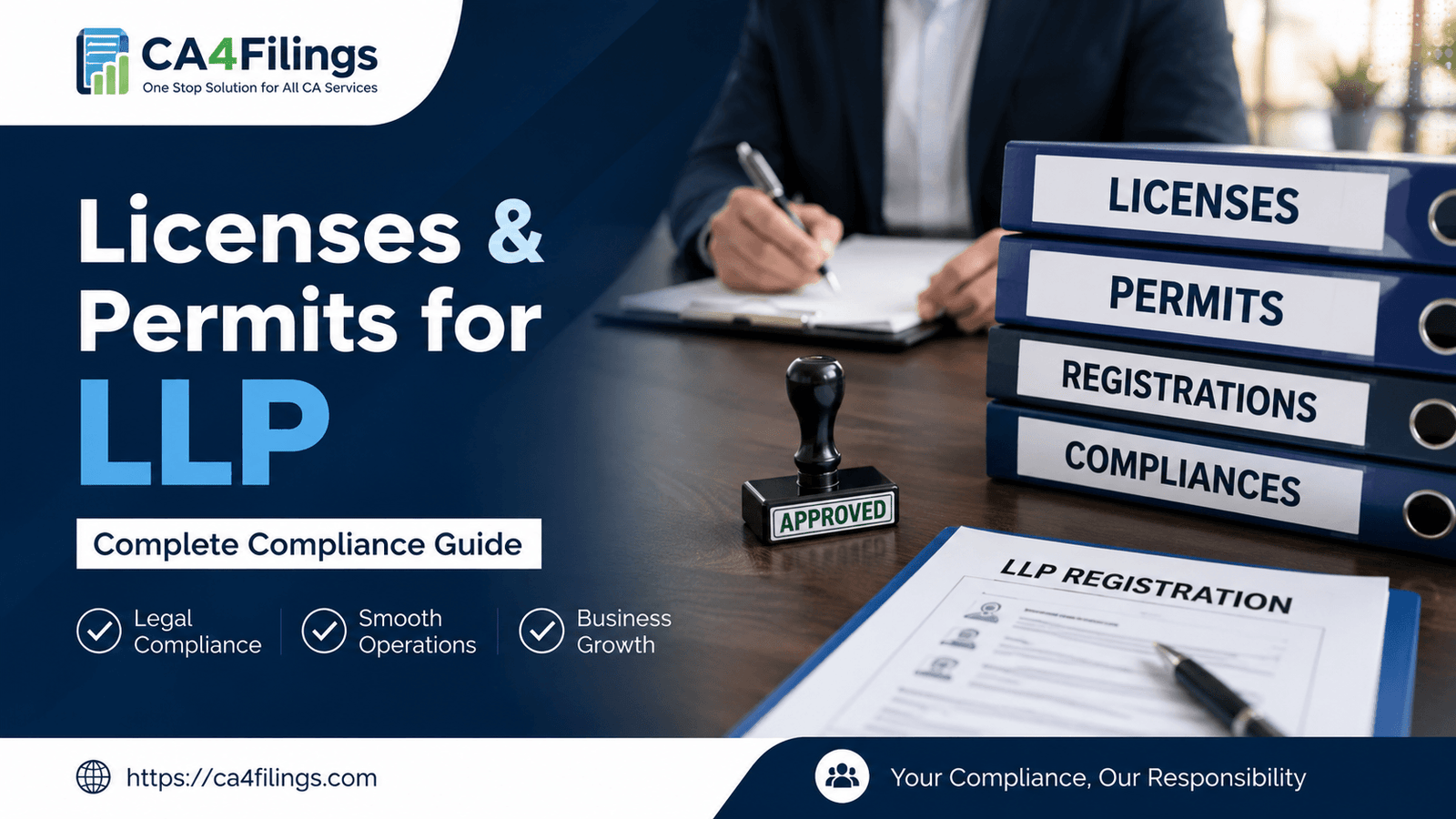
Starting a Limited Liability Partnership (LLP) in India is a smart business decision for entrepreneurs looking for flexibility, limited liability protection, and ease of management. However, after incorporation, many business owners often overlook an important compliance requirement — understanding How to Obtain Necessary Licenses and Permits for an LLP.
At CA4Filings, we regularly guide startups, professionals, traders, consultants, and service providers through the legal process of setting up and running an LLP smoothly. While completing your LLP Registration is the first step, obtaining the right licenses and permits is equally essential to operate legally and avoid penalties in the future.
The licenses required for an LLP depend on the nature of the business, industry regulations, location, and turnover. In this article, we will explain How to Obtain Necessary Licenses and Permits for an LLP in a practical and easy-to-understand manner.
Why Licenses and Permits Are Important for an LLP
Before discussing How to Obtain Necessary Licenses and Permits for an LLP, it is important to understand why these approvals matter.
Licenses and permits help:
- Ensure legal compliance
- Build customer trust
- Avoid penalties and legal notices
- Enable smooth business operations
- Improve eligibility for loans and tenders
- Prevent business interruptions
For example, a food business LLP operating without an FSSAI license may face heavy penalties or even closure by authorities.
How to Obtain Necessary Licenses and Permits for an LLP in India
The process may vary based on the type of business, but the overall approach remains similar. Here is a step-by-step guide.
Identify the Nature of Your Business Activity
The first step in understanding How to Obtain Necessary Licenses and Permits for an LLP is identifying your business activity clearly.
Different businesses require different approvals. For example:
- Food businesses need FSSAI registration
- Import-export businesses require IEC
- Shops and commercial establishments need Shop & Establishment registration
- GST registration is required for taxable supplies
- Financial services may require RBI or SEBI approval
At CA4Filings, we advise businesses to prepare a clear business activity list before applying for licenses.
Common Licenses Required for an LLP
GST Registration
GST registration is one of the most common requirements for LLPs.
You must obtain GST registration if:
- Annual turnover exceeds the prescribed limit
- You sell goods or services interstate
- You operate through e-commerce platforms
- Your business falls under mandatory registration categories
GST registration can be completed online through the GST portal using LLP incorporation documents.
Shop and Establishment License
Most states in India require businesses to register under the Shops and Establishments Act.
This license regulates:
- Working hours
- Employee conditions
- Business operations
Even small offices and consultancy LLPs may require this registration.
FSSAI License
If your LLP deals with food manufacturing, catering, restaurants, cloud kitchens, or packaged foods, obtaining an FSSAI license is mandatory.
The type of license depends on:
- Annual turnover
- Business scale
- Nature of food operations
Import Export Code (IEC)
Businesses involved in import or export activities need an IEC from DGFT.
Without IEC, customs clearance and international trade transactions are not possible.
Professional Tax Registration
Certain states require LLPs to obtain Professional Tax registration if they employ staff.
This registration is state-specific and applicable in states like Maharashtra, Karnataka, and West Bengal.
Trade License
Municipal authorities issue trade licenses to regulate commercial activities within city limits.
The requirement depends on:
- Business type
- Office location
- Local municipal rules
Documents Required for LLP Licenses and Permits
When learning How to Obtain Necessary Licenses and Permits for an LLP, preparing proper documentation is extremely important.
Generally required documents include:
- LLP Incorporation Certificate
- LLP Agreement
- PAN Card of LLP
- Address proof of business
- Identity proof of partners
- Utility bills
- NOC from property owner
- Bank account details
- Digital Signature Certificate (for online filings)
Some industry-specific licenses may require additional documents.
Step-by-Step Process to Obtain Licenses for an LLP
Step 1: Complete LLP Incorporation
You must first incorporate the LLP with the Ministry of Corporate Affairs (MCA).
Only after incorporation can you apply for business licenses.
Step 2: Understand Industry-Specific Requirements
Different industries have different compliance obligations.
For example:
- Healthcare businesses require health department approvals
- Educational institutions need educational authority approvals
- Pharma businesses require drug licenses
A CA or compliance expert can help identify applicable registrations.
Step 3: Apply Through Relevant Government Portals
Most registrations are now online.
Examples include:
- GST Portal for GST registration
- FSSAI Portal for food licenses
- DGFT Portal for IEC registration
Ensure all details match your LLP incorporation records.
Step 4: Submit Supporting Documents
Upload accurate documents in the prescribed format.
Incorrect or mismatched documents are one of the most common reasons for rejection.
Step 5: Verification and Approval
Authorities may conduct:
- Online verification
- Physical inspections
- Clarification requests
Once approved, the license certificate is issued.
Practical Tips from CA4Filings
As professionals handling LLP compliance regularly, we suggest the following while understanding How to Obtain Necessary Licenses and Permits for an LLP:
Avoid Delays in Registration
Many entrepreneurs start operations before obtaining licenses. This can create legal issues later.
Always complete registrations before commercial operations begin.
Keep Business Activities Clear
Do not mention vague business activities in your LLP documents. Specific descriptions help avoid licensing confusion.
Monitor Renewal Dates
Some licenses require periodic renewal.
Missing renewal deadlines may result in penalties or cancellation.
Maintain Proper Records
Keep copies of:
- Registration certificates
- Tax filings
- Compliance documents
- Inspection reports
This helps during audits and funding processes.
Common Mistakes Businesses Make
While learning How to Obtain Necessary Licenses and Permits for an LLP, many LLPs make avoidable mistakes.
Ignoring Local Registrations
Businesses often focus only on GST and forget municipal or state-level approvals.
Using Incorrect Business Addresses
Address mismatches between LLP records and license applications can delay approvals.
Delaying Compliance
Late applications can attract penalties and impact business credibility.
Applying Without Professional Guidance
Different industries have unique compliance requirements. Professional assistance saves time and reduces errors.
Benefits of Obtaining Proper Licenses for an LLP
Obtaining proper licenses provides several long-term advantages.
These include:
- Better business credibility
- Easier bank loan approvals
- Smooth vendor onboarding
- Increased customer confidence
- Reduced legal risks
- Eligibility for government tenders
Proper compliance also helps during fundraising and investor discussions.
FAQs on How to Obtain Necessary Licenses and Permits for an LLP
Is GST mandatory for every LLP?
No. GST is mandatory only if turnover crosses the prescribed limit or the business falls under compulsory registration categories.
Can an LLP operate without licenses?
No. Operating without mandatory licenses may lead to penalties, business closure, or legal action.
How much time does it take to obtain licenses for an LLP?
The timeline depends on the type of registration. Some approvals take 3–7 days, while others may take several weeks.
Are licenses different for every state?
Yes. Certain registrations like Shop & Establishment and Professional Tax vary from state to state.
Can CA4Filings help with LLP licenses and registrations?
Yes. CA4Filings assists businesses with LLP incorporation, GST registration, FSSAI licenses, IEC registration, and ongoing compliance support.
Understanding How to Obtain Necessary Licenses and Permits for an LLP is crucial for running a legally compliant and successful business in India. Every LLP has unique compliance requirements depending on its industry, turnover, and operational structure.
Ignoring licenses can create unnecessary legal and financial risks, while timely registrations help businesses grow confidently and professionally.
At CA4Filings, we simplify the entire process by helping entrepreneurs identify applicable licenses, prepare documentation, complete registrations, and maintain ongoing compliance. Whether you are starting a consultancy, trading business, startup, restaurant, or service company, our experts ensure your LLP remains fully compliant from day one.
If you are planning to start an LLP or need help with licenses and permits, connect with CA4Filings today for expert guidance and hassle-free compliance support.
Latest Updates
ca4filings.com Services






















-registration.png)