The Process of Transitioning to New ISO Standards in India
The Process of Transitioning to New ISO Standards in India explained with step-by-step guidance for businesses seeking smooth compliance.
In today’s competitive business environment, maintaining quality, compliance, and operational efficiency is no longer optional for Indian businesses. Whether you are a startup, manufacturer, IT company, healthcare provider, or exporter, ISO standards play a major role in building credibility and customer trust. However, many organizations struggle with The Process of Transitioning to New ISO Standards in India whenever updated ISO versions are introduced.
At CA4Filings, we regularly assist businesses in understanding regulatory updates and implementing compliance frameworks without disrupting daily operations. If your organization already holds ISO certification, shifting to the revised standards within the prescribed transition timeline is essential to maintain certification validity and market reputation.
Businesses looking for professional guidance for ISO Certification often seek expert support to simplify documentation, training, audits, and implementation requirements during this transition phase.
This article explains The Process of Transitioning to New ISO Standards in India in a practical and easy-to-understand manner.
Understanding The Process of Transitioning to New ISO Standards in India
ISO standards are periodically revised to align with changing industry practices, technology advancements, risk management frameworks, and global compliance expectations. When a revised ISO standard is released, certified organizations must migrate from the older version to the updated one within a specified transition period.
For example:
- ISO 9001 quality management standards receive periodic updates
- ISO 27001 information security standards are revised to address modern cyber risks
- ISO 14001 environmental management standards evolve based on sustainability requirements
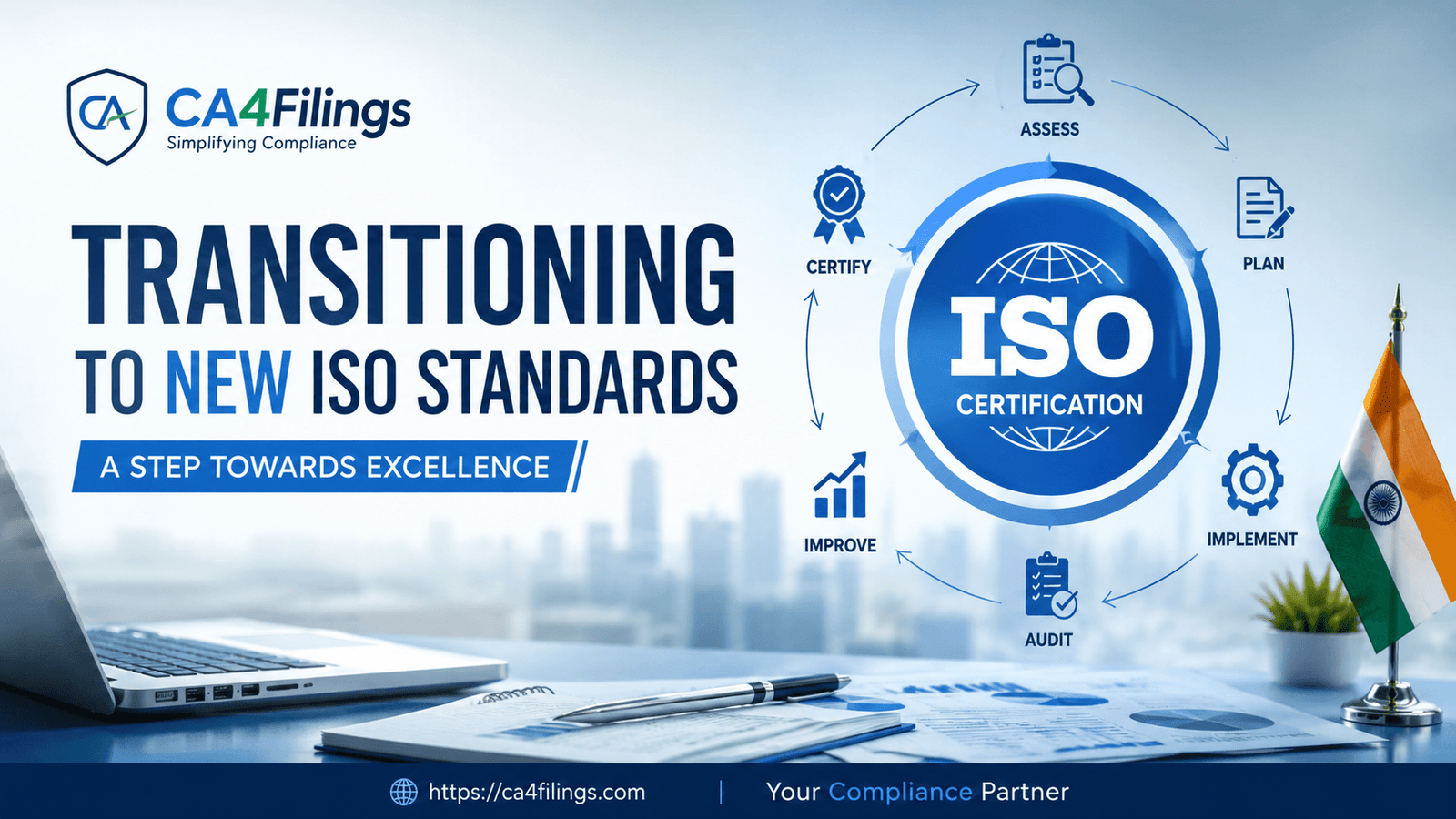
The Process of Transitioning to New ISO Standards in India involves evaluating the changes, updating internal systems, training employees, revising documentation, and successfully clearing transition audits.
Why Transitioning to Updated ISO Standards Is Important
Many businesses underestimate the importance of timely transition. Delays can create serious operational and reputational issues.
Key Benefits of Transitioning
- Maintains certification validity
- Improves operational efficiency
- Enhances customer confidence
- Ensures regulatory compliance
- Reduces business risks
- Supports global trade requirements
- Strengthens process management
Indian businesses involved in exports or government tenders especially need updated ISO certifications to remain competitive.
The Process of Transitioning to New ISO Standards in India Step-by-Step
Step 1: Understand the Revised ISO Requirements
The first step in The Process of Transitioning to New ISO Standards in India is understanding what has changed in the revised version.
Businesses should carefully review:
- New clauses introduced
- Updated terminology
- Additional compliance obligations
- Risk management expectations
- Documentation changes
For example, newer ISO standards often focus heavily on:
- Risk-based thinking
- Data security
- Leadership involvement
- Sustainability
- Continuous improvement
A detailed gap analysis helps identify areas requiring modification.
Step 2: Conduct a Gap Analysis
A gap analysis compares your existing management system with the revised ISO standard.
This stage helps businesses identify:
- Missing processes
- Weak documentation
- Non-compliance areas
- Training requirements
- Operational improvements needed
At CA4Filings, we recommend conducting a structured internal assessment before scheduling the certification audit.
Example
Suppose a company certified under an older ISO 27001 framework lacks updated cybersecurity controls required in the latest version. The gap analysis will identify these missing controls so corrective action can begin immediately.
Step 3: Update Documentation and Policies
Documentation is a critical part of The Process of Transitioning to New ISO Standards in India.
Businesses must revise:
- Standard Operating Procedures (SOPs)
- Quality manuals
- Risk registers
- HR policies
- Security procedures
- Compliance records
Outdated documentation can lead to audit observations or certification delays.
Important Tip
Avoid copying generic templates from the internet. Documentation should reflect your actual business operations and workflows.
Employee Training and Awareness
Why Training Matters
Even the best compliance framework fails if employees do not understand the updated requirements.
Training sessions should cover:
- New ISO clauses
- Department responsibilities
- Compliance expectations
- Risk handling procedures
- Reporting mechanisms
Practical Insight
Many Indian SMEs face audit issues because staff members continue following outdated processes despite updated documentation. Proper awareness programs eliminate this gap.
Implementing Operational Changes
Once documentation and training are completed, businesses must implement the revised procedures in actual operations.
Common Operational Updates Include
- Enhanced cybersecurity controls
- Improved quality checks
- Revised vendor evaluations
- Updated environmental practices
- Better record management systems
This implementation stage is one of the most important parts of The Process of Transitioning to New ISO Standards in India because auditors assess practical execution, not just paperwork.
Internal Audit Before Certification Audit
Before approaching the certification body, organizations should conduct an internal audit.
Purpose of Internal Audit
- Detect non-conformities
- Verify implementation effectiveness
- Identify improvement opportunities
- Prepare teams for external audits
Internal audits help avoid last-minute surprises during certification assessment.
Certification Body Transition Audit
The certification body conducts the transition audit to verify compliance with the revised ISO standard.
Auditors Usually Check
- Updated documentation
- Process implementation
- Employee awareness
- Risk management practices
- Corrective actions
- Compliance records
If the organization meets all requirements, the certification body issues the updated ISO certificate.
Common Challenges in The Process of Transitioning to New ISO Standards in India
Many businesses encounter practical difficulties during the transition process.
1. Lack of Awareness
Small businesses often remain unaware of revised ISO requirements until renewal deadlines approach.
2. Improper Documentation
Using outdated or copied templates can lead to major audit observations.
3. Employee Resistance
Teams may resist adopting new systems or additional compliance procedures.
4. Budget Constraints
Some SMEs delay implementation due to cost concerns, although non-compliance may eventually become more expensive.
5. Poor Planning
Rushed implementation near audit deadlines creates unnecessary stress and increases the risk of failure.
Best Practices for Smooth ISO Transition
To simplify The Process of Transitioning to New ISO Standards in India, businesses should follow a structured approach.
Recommended Best Practices
- Start transition planning early
- Conduct professional gap analysis
- Train employees regularly
- Maintain proper records
- Schedule periodic internal audits
- Use experienced consultants
- Monitor implementation continuously
A proactive strategy always delivers better audit outcomes.
Industries That Commonly Require ISO Transition Support
Several sectors in India frequently upgrade their ISO certifications.
Major Industries Include
- Manufacturing
- Information Technology
- Healthcare
- Food Processing
- Pharmaceuticals
- Construction
- Logistics
- Educational Institutions
- Export Businesses
Each sector has unique compliance expectations that must be addressed carefully.
Role of Professional Consultants in ISO Transition
Professional consultants simplify The Process of Transitioning to New ISO Standards in India by handling technical compliance requirements efficiently.
How Experts Help
- Conducting gap analysis
- Preparing documentation
- Training staff
- Coordinating audits
- Managing corrective actions
- Reducing compliance risks
At CA4Filings, we help businesses complete ISO transitions smoothly while minimizing operational disruption.
FAQs
What is The Process of Transitioning to New ISO Standards in India?
It is the process of upgrading from an older ISO certification version to the latest revised ISO standard through documentation updates, implementation, audits, and compliance verification.
How long does ISO transition take?
The timeline depends on business size, existing compliance levels, and operational complexity. Most businesses complete the transition within a few weeks to several months.
Is employee training mandatory during ISO transition?
Yes. Employee awareness and training are essential because auditors assess whether staff understand and follow updated procedures.
What happens if businesses fail to transition before the deadline?
The existing ISO certificate may become invalid, affecting customer trust, contracts, and business opportunities.
Can small businesses transition to new ISO standards easily?
Yes. With proper planning and professional guidance, SMEs can complete the transition efficiently without major difficulties.
Understanding The Process of Transitioning to New ISO Standards in India is essential for businesses that want to maintain compliance, strengthen operational efficiency, and remain competitive in the market. Transitioning is not just about renewing certificates—it is about improving systems, reducing risks, and aligning with global best practices.
Businesses that start early, train employees properly, and maintain accurate documentation usually experience a smooth certification journey. On the other hand, delayed preparation can create unnecessary compliance issues and business disruptions.
At CA4Filings, we provide end-to-end support for businesses seeking expert assistance with ISO implementation, documentation, transition audits, and certification management. If your organization is planning to upgrade to the latest ISO standards, our experienced professionals can help you complete the process efficiently and confidently.
Latest Updates
ca4filings.com Services

























-registration.png)