How to Prepare for an ISO Certification Audit: A Practical Guide
How to Prepare for an ISO Certification Audit: A Practical Guide for businesses to ensure smooth compliance and successful certification.
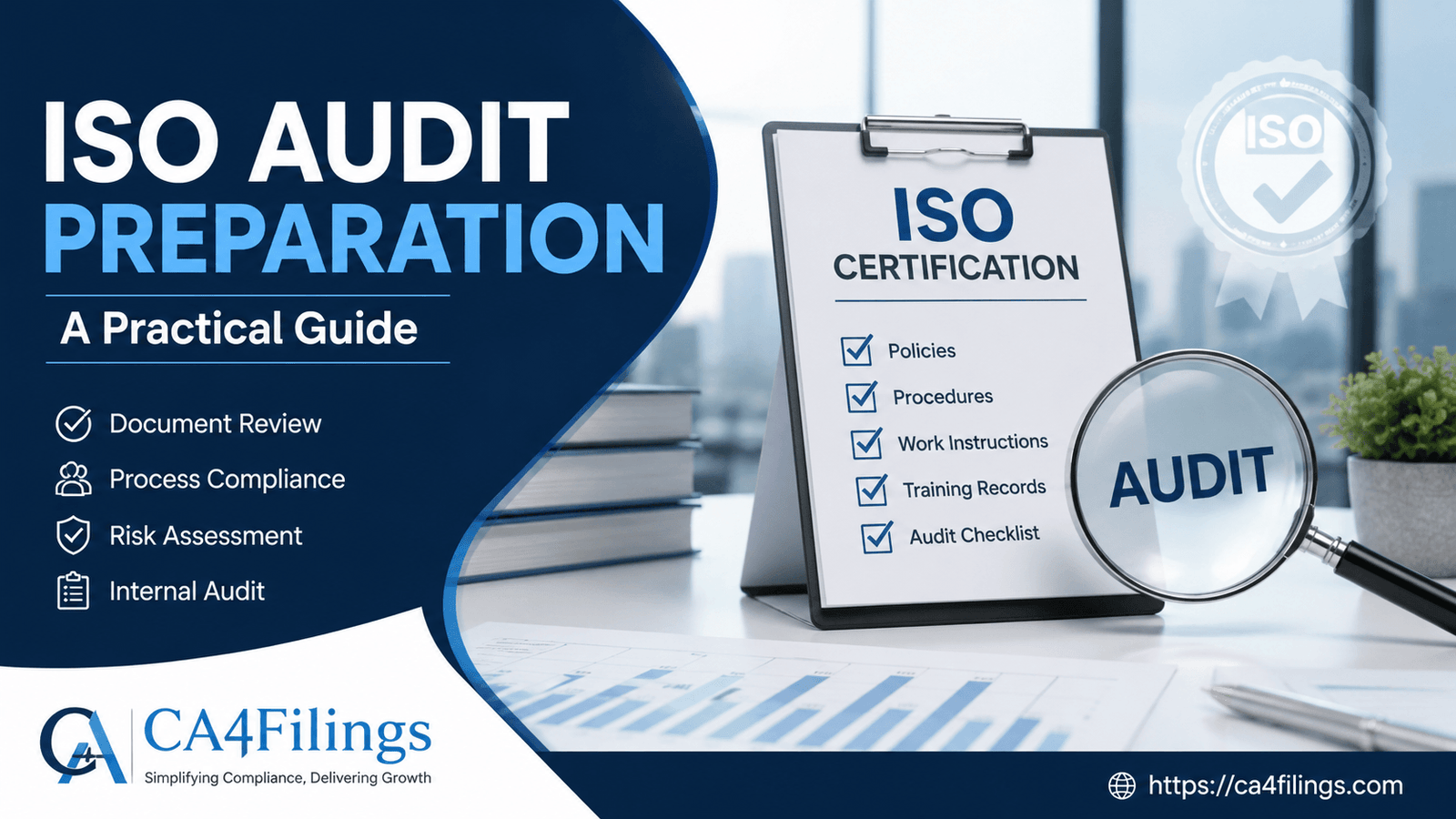
For many businesses, achieving ISO certification is a major milestone that improves credibility, customer trust, and operational efficiency. However, the audit process can feel stressful if your organisation is not properly prepared. At CA4Filings, we often work with companies that are unsure about what auditors expect and how they should organise their systems before the audit date.
This article on How to Prepare for an ISO Certification Audit: A Practical Guide will help you understand the complete preparation process in a practical and business-friendly way. Whether you are applying for ISO 9001, ISO 14001, ISO 27001, or any other standard, proper planning can make the audit process smooth and successful.
Businesses seeking professional assistance for ISO Certification often benefit from expert guidance in documentation, compliance checks, and internal audit preparation before the final certification audit begins.
Understanding ISO Certification Audits
Before discussing How to Prepare for an ISO Certification Audit: A Practical Guide, it is important to understand what an ISO audit actually means.
An ISO certification audit is an independent assessment conducted by a certification body to verify whether your company complies with the required ISO standard. The auditor checks:
- Policies and procedures
- Process implementation
- Employee awareness
- Documentation and records
- Compliance with ISO requirements
The purpose is not to find faults alone, but to ensure that your organisation follows standardised systems effectively.
Why Proper Audit Preparation Matters
Many businesses underestimate the importance of preparation. In reality, poor preparation can lead to:
- Audit failures
- Non-conformities
- Delays in certification
- Increased compliance costs
- Loss of business opportunities
A well-prepared company, on the other hand, demonstrates professionalism and operational control.
That is why understanding How to Prepare for an ISO Certification Audit: A Practical Guide becomes essential for every organisation aiming for successful certification.
How to Prepare for an ISO Certification Audit: A Practical Guide
Understand the Relevant ISO Standard
The first step is understanding the specific ISO standard applicable to your business.
For example:
- ISO 9001 – Quality Management
- ISO 14001 – Environmental Management
- ISO 27001 – Information Security
- ISO 22000 – Food Safety Management
Each standard has unique compliance requirements. Your team should thoroughly review:
- Clauses
- Mandatory procedures
- Documentation requirements
- Risk management expectations
Practical Tip: Create a checklist based on the ISO standard clauses to monitor compliance internally.
Conduct a Gap Analysis
One of the most practical steps in How to Prepare for an ISO Certification Audit: A Practical Guide is conducting a gap analysis.
A gap analysis helps identify:
- Missing processes
- Weak documentation
- Non-compliance areas
- Training deficiencies
For example, a manufacturing company may discover that quality inspection records are incomplete or not maintained consistently.
This exercise gives your organisation enough time to correct deficiencies before the external audit.
Organise Documentation Properly
Documentation is the backbone of ISO compliance. Auditors heavily rely on records to verify implementation.
Important Documents to Maintain
Depending on the ISO standard, you may need:
- Quality manuals
- SOPs (Standard Operating Procedures)
- Risk assessment reports
- Employee training records
- Internal audit reports
- Corrective action reports
- Policy documents
- Compliance registers
Avoid Common Documentation Mistakes
Businesses often make mistakes such as:
- Keeping outdated documents
- Missing approvals
- Lack of version control
- Inconsistent record maintenance
When implementing How to Prepare for an ISO Certification Audit: A Practical Guide, maintaining organised and updated documentation is absolutely critical.
Train Employees Before the Audit
One major area auditors evaluate is employee awareness.
Your staff should understand:
- Company policies
- Their roles and responsibilities
- Process workflows
- Safety and compliance procedures
Practical Example
Suppose an auditor asks a warehouse employee about inventory handling procedures. If the employee is unaware of the documented process, it reflects poor implementation.
Conduct Mock Interviews
A useful strategy includes:
- Mock audit sessions
- Department-wise training
- Awareness workshops
- Process demonstrations
Employee confidence can significantly improve audit outcomes.
Perform an Internal Audit
A strong internal audit is one of the most effective methods discussed in How to Prepare for an ISO Certification Audit: A Practical Guide.
An internal audit helps identify issues before the certification body does.
Internal Audit Checklist
Review the following:
- Process compliance
- Record accuracy
- Equipment calibration
- Customer complaint handling
- Corrective action implementation
- Departmental coordination
Benefits of Internal Audits
- Early detection of non-conformities
- Better preparedness
- Improved employee awareness
- Reduced audit stress
Ideally, internal audits should be conducted at least a few weeks before the final certification audit.
Correct Non-Conformities Immediately
Finding issues during internal review is normal. What matters is how quickly and effectively they are corrected.
Examples of Non-Conformities
- Missing records
- Unapproved procedures
- Lack of employee training
- Process deviations
Corrective Action Process
Your corrective action should include:
- Root cause analysis
- Corrective measures
- Responsibility assignment
- Timeline for completion
- Monitoring effectiveness
Quick resolution shows auditors that your organisation is committed to continuous improvement.
Ensure Management Involvement
ISO standards require leadership commitment.
Top management should actively participate in:
- Policy approvals
- Management review meetings
- Resource allocation
- Compliance monitoring
Auditors often interact directly with senior management to evaluate organisational commitment.
A business owner who understands compliance goals creates a positive impression during the audit process.
Maintain Operational Consistency
One important lesson in How to Prepare for an ISO Certification Audit: A Practical Guide is that ISO compliance should not be limited to paperwork alone.
Auditors compare documentation with actual operations.
For example:
- If SOPs mention daily equipment inspections, records should support this.
- If quality checks are mandatory, employees should follow them practically.
Consistency between documented procedures and real implementation is essential.
Prepare for Stage 1 and Stage 2 Audits
Stage 1 Audit
This is mainly a documentation review where auditors assess readiness.
Stage 2 Audit
This involves detailed operational verification and employee interaction.
How to Handle Both Stages
For Stage 1:
- Ensure documents are complete
- Organise records properly
For Stage 2:
- Prepare departments
- Train employees
- Verify implementation consistency
Understanding these stages is a crucial part of How to Prepare for an ISO Certification Audit: A Practical Guide.
Common Mistakes Businesses Should Avoid
Ignoring Employee Training
Even perfect documentation cannot compensate for untrained staff.
Last-Minute Preparation
Rushed compliance work usually creates confusion and errors.
Poor Record Management
Missing records are among the most common audit observations.
Lack of Internal Reviews
Skipping internal audits increases the risk of major non-conformities.
Treating ISO as a One-Time Activity
ISO compliance requires continuous improvement, not temporary adjustments.
FAQs
What is the purpose of an ISO certification audit?
An ISO audit verifies whether a business complies with international management system standards and follows documented procedures effectively.
How long does an ISO certification audit take?
The duration depends on company size, employee count, and the applicable ISO standard. It may range from one day to several days.
Can a business fail an ISO audit?
Yes. Major non-conformities or serious compliance gaps can delay or prevent certification until corrective actions are completed.
Is internal auditing mandatory before certification?
Yes, most ISO standards require internal audits before the certification audit.
How often are surveillance audits conducted?
Usually once every year after certification to ensure continued compliance.
Preparing for an ISO audit does not have to be overwhelming when approached systematically. This article on How to Prepare for an ISO Certification Audit: A Practical Guide highlights the importance of planning, documentation, employee training, internal audits, and management involvement.
Businesses that focus on genuine process improvement rather than temporary compliance usually achieve smoother audit outcomes and long-term operational benefits.
At CA4Filings, we help businesses simplify the ISO certification journey through expert guidance, compliance support, and practical audit preparation assistance. If your business is planning for ISO certification, our experienced professionals can help you prepare confidently and achieve certification successfully.
Latest Updates
ca4filings.com Services






















-registration.png)